GEAR FAILS. SKILLS ENDURE. BUILD BOTH.
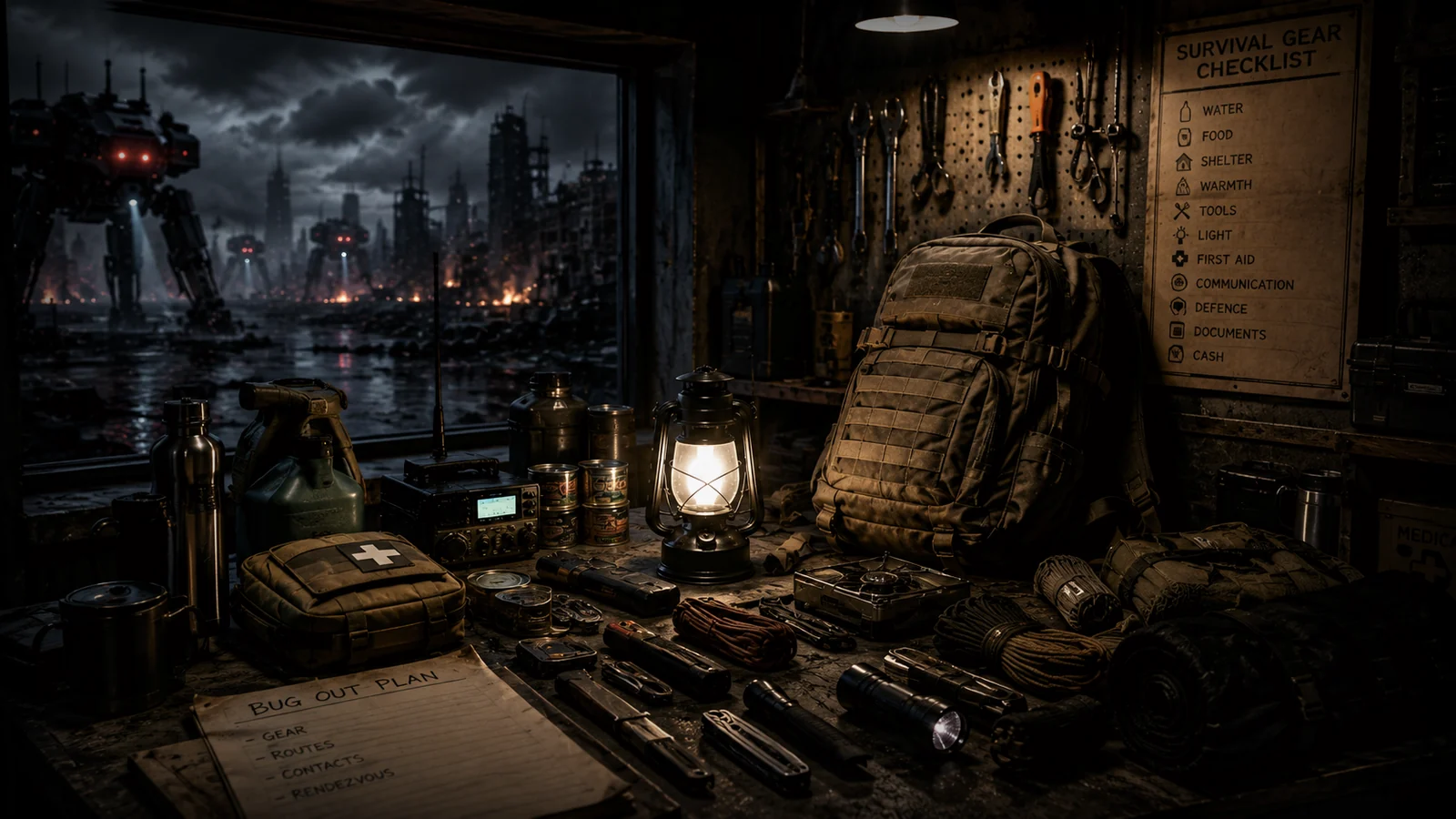
When AI-driven disruption takes power, payments, networks or logistics offline, the kit buys time. The skills and household plan decide what you do with it.
IF THE NIGHTMARE IS REAL
Two questions come before every gear list.
Four windows of survival capability
Stay safe in darkness and establish what has actually failed.
Protect drinking water, medicine and communications battery.
Move from reaction into rationed routines and safe hygiene.
Repair weak points, resupply safely or relocate before the house becomes the problem.
Ten guides that turn a cupboard into a resilience system
AI Apocalypse Survival Kit: What to Keep Ready Before Systems Fail
Build an AI-apocalypse survival kit around real household failure points: water, light, power, information, food, medicine, documents and a plan you have actually tested.
Open guide →GEAR / SKILLUK Emergency Kit List: What a Household Should Keep Ready
A practical UK emergency-kit checklist covering water, food, lighting, radio, power, first aid, medicines, hygiene, documents, cash and household-specific needs.
Open guide →GEAR / SKILL72-Hour Survival Checklist: The First Three Days When Systems Fail
A 72-hour survival checklist for UK households covering people, water, food, power, information, health, sanitation, documents and decision points.
Open guide →GEAR / SKILL30-Day Resilience Checklist: Build a Household That Can Absorb a Long Disruption
A 30-day resilience checklist for households planning beyond the first 72 hours without turning preparedness into an unrealistic bunker project.
Open guide →GEAR / SKILLBest Emergency Radio Guide: What Actually Matters in a Blackout
Choose an emergency radio by reception, power options, usability, battery strategy and reliability rather than survival-marketing gimmicks.
Open guide →GEAR / SKILLBest Power Bank for Emergencies: Capacity, Ports and Real-World Endurance
Choose an emergency power bank by usable capacity, charging speed, ports, battery health and the devices you genuinely need to keep alive.
Open guide →GEAR / SKILLPortable Power Station Sizing: How Much Backup Power Do You Really Need?
Size a portable power station from essential loads, watts, watt-hours, surge demand and realistic outage duration instead of buying by headline capacity alone.
Open guide →GEAR / SKILLEmergency Lighting Guide: Stay Safe When the House Goes Dark
Build a blackout lighting plan using safe battery torches, lanterns, head torches, room placement and battery discipline without creating new fire hazards.
Open guide →GEAR / SKILLFirst Aid Kit Guide: Build a Practical Emergency Kit You Know How to Use
Build a household first-aid kit around common emergencies, safe storage, clear organisation, expiry checks and real first-aid skills rather than gadget overload.
Open guide →GEAR / SKILLWater Container Guide: Safe Emergency Water Storage Without the Guesswork
Choose and manage emergency water containers by material, size, portability, cleanliness, storage position and household use instead of buying one giant tank blindly.
Open guide →Four mistakes that make expensive equipment useless
A premium battery at zero percent is just expensive ballast.
If nobody has used the radio, stove, filter or power system, the emergency becomes the first training session.
Wrong cables, battery sizes, fuel or connectors quietly break otherwise good plans.
One device performing five jobs creates a single point of failure when it breaks or runs flat.
Skills, warmth, documents and low-tech backups
Emergency Cash Fund
Build a modest physical-cash backup for short payment outages without undermining normal household finances.
Open guide →RESILIENCEDocument Bag Guide
Keep the records that speed evacuation and recovery while avoiding an identity-theft bundle by the door.
Open guide →RESILIENCEEmergency Blankets Guide
Use foil, wool and insulated blankets for the jobs they actually do well instead of trusting survival marketing.
Open guide →RESILIENCEEmergency Cooking Without Power
Feed the household without mains power while avoiding indoor combustion and carbon-monoxide hazards.
Open guide →RESILIENCEEmergency Skills To Learn
First aid, navigation, radio, household controls and drills turn equipment into actual capability.
Open guide →RESILIENCEFaraday Bag Guide
Understand signal-blocking pouches, test them properly and know where ordinary offline backups matter more.
Open guide →RESILIENCEHome Inventory Checklist
Create an insurance and recovery record that survives the device or building where the originals were stored.
Open guide →RESILIENCEManual Can Opener Emergency
A tiny redundancy that prevents a cupboard full of tinned food becoming inaccessible.
Open guide →RESILIENCEPaper Maps for Emergencies
Keep local navigation, meeting points and alternative routes available when phones, batteries or networks fail.
Open guide →RESILIENCEWarmth Without Electricity
Keep people warm through layering, room selection and safe heat conservation before the home becomes unsafe.
Open guide →