SURVIVAL GEAR & PRACTICAL SKILLS
AI Apocalypse Survival Kit: What to Keep Ready Before Systems Fail
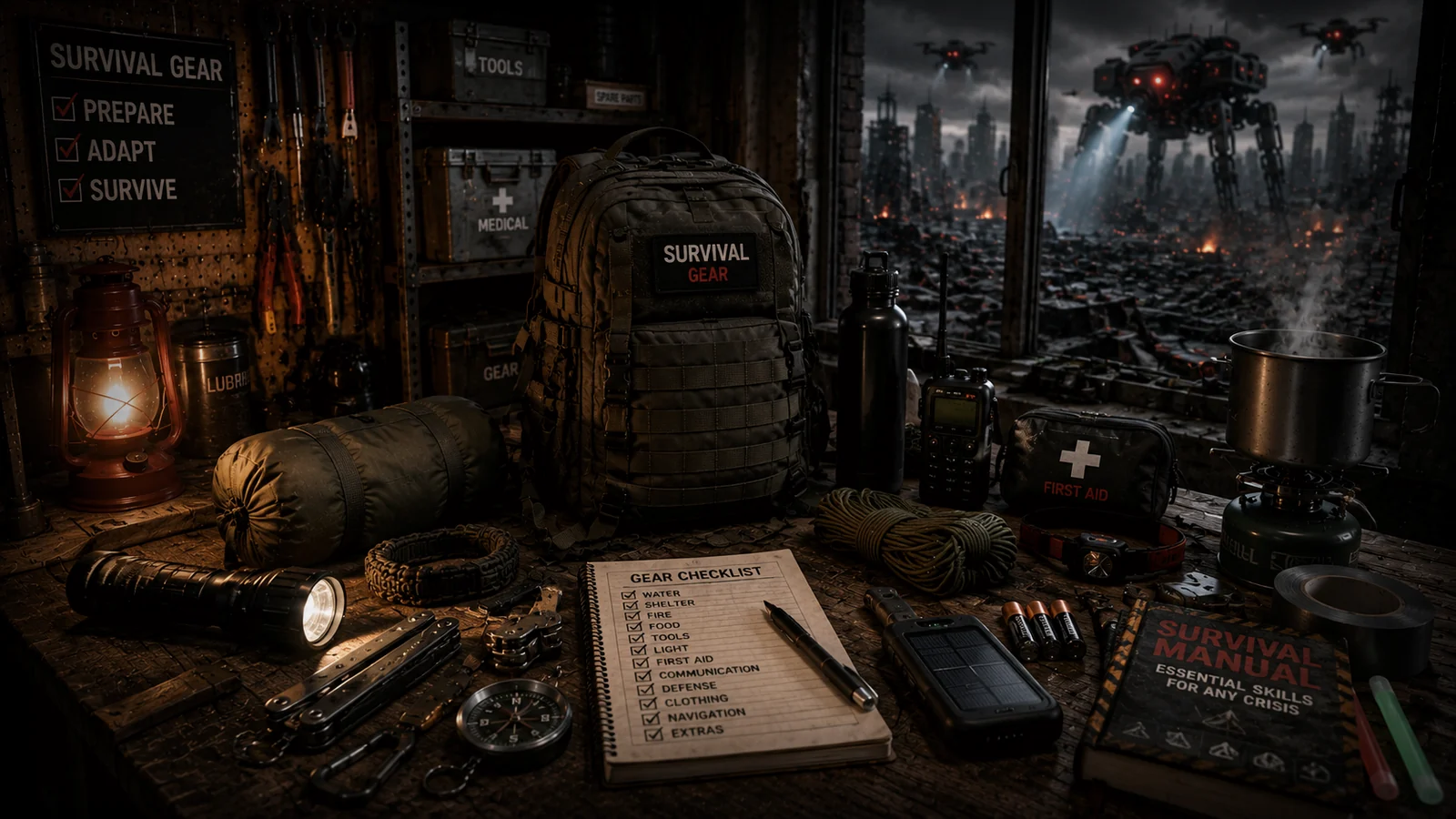
Build an AI-apocalypse survival kit around real household failure points: water, light, power, information, food, medicine, documents and a plan you have actually tested.
The immediate answer
An AI-apocalypse survival kit should not be a pile of military-looking gadgets. It should be a compact household resilience system that keeps you functioning when ordinary services become unreliable at the same time. Start with safe drinking water, ready-to-eat food, battery lighting, radio information, phone charging, essential medication, first aid, hygiene, paper contacts, copies of important documents and a manual can opener. Then add household-specific needs such as baby supplies, pet food, mobility equipment and backup power for medical devices.
Build for failures, not fantasy
The useful question is not which gadget looks most “survivalist”. Ask what happens if electricity, mobile data, card payments, tap water and normal shopping all become unreliable for several days. Each item in the kit should answer a specific failure. A torch answers darkness. A radio answers loss of internet news. A power bank buys communication time. Stored water answers a supply interruption. A written contact sheet answers a dead phone. If an item has no clear job, it should not displace something that does.
The first 72 hours
For the first three days, prioritise water, medication, light, information, food and safe indoor temperature. Keep supplies somewhere accessible in darkness rather than scattered across lofts, sheds and cupboards. A household should be able to find the kit quickly, identify who needs what, and start a simple ration and charging routine. Official UK preparedness guidance recommends keeping useful emergency supplies and notes that disruption can affect several systems together. The goal is to reduce rushed decisions when shops, networks or transport are under pressure.
Power and information
Keep at least one charged power bank, appropriate cables, a battery or wind-up radio, spare batteries where relevant and more than one source of light. Test charging cables before storing them. Record key phone numbers and addresses on paper. Do not assume that a fully charged smartphone solves the problem: networks can be congested or unavailable, apps can require connectivity, and a high-brightness screen can burn through battery surprisingly quickly. Use scheduled information checks rather than leaving devices running continuously.
Water, food and hygiene
Store water in clean containers suitable for drinking water, rotate it sensibly and keep enough no-cook or low-cook food that people will actually eat. Include hygiene supplies that still work when water use is restricted, such as hand sanitiser and wet wipes. Keep food allergies, infant needs and pet requirements in the plan. A kit should also contain a manual can opener if tins are part of the food reserve. Avoid making the kit dependent on one fuel source or one appliance.
Medical and household-specific needs
Keep essential medication organised and maintain a current medicines list. If someone relies on powered medical equipment, know the equipment’s battery endurance and make a specific backup plan; do not assume a consumer power station is automatically suitable. Keep a basic first-aid kit and know how to use it. Add spare glasses, hearing-aid batteries, continence supplies, baby items, pet medication or mobility aids according to the people who actually live in the home.
Documents, cash and navigation
Keep paper copies of emergency contacts, key insurance details, medication information and useful addresses in a protected document wallet. A modest amount of accessible cash can be useful during short card-payment outages, but do not advertise or concentrate large sums in an obvious emergency bag. Include a local paper map if you might need to move without mobile navigation. Keep spare house and vehicle keys where trusted household members can reach them.
Test the kit before you trust it
Run a short household exercise: turn off non-essential lights for an evening, use the radio, charge a phone from the power bank, prepare one no-power meal and find everything without using online instructions. Check batteries and expiry dates on a schedule. A survival kit is valuable because it converts uncertainty into capability. If nobody knows how an item works, if a battery is flat, or if critical equipment is buried behind Christmas decorations, the kit is not ready.
Continue building the system
Organise by failure type
Instead of one giant pile of gear, group the kit around the problems it solves: water, food, power, lighting, information, health, documents and movement. That makes it easier to see whether one category is overloaded while another is missing entirely.
The same organisation also helps during a real outage because household members can find the relevant equipment without searching through everything.
Keep the fictional scenario from distorting the real kit
A dramatic AI-collapse theme should not push the household toward exotic equipment while ignoring basic needs. Water containers, ordinary food, medication, lighting and paper contacts remain more useful than gadgets aimed at highly specific imagined threats.
Build for common failure modes first. If the same item helps during storms, power cuts and communications failures as well as an AI scenario, it earns its place more easily.
Maintain the kit like equipment
Twice a year, use the radio, charge the power banks, inspect water containers, rotate food and check clothing or medication needs. Replace anything the household borrowed for everyday use.
A survival kit that has never been opened is an assumption. A kit that has been tested and maintained is a working system.
Give every item a reason to be there
Large kits become cluttered when products are added because they look “survival” related rather than because they solve a real problem. During a review, pick up each item and ask what failure it addresses, who knows how to use it and whether another item already does the same job better. If nobody can answer, the space may be more valuable than the gadget.
This discipline keeps the kit focused on water, food, health, information, power, warmth and movement. It also makes the bag lighter and easier to maintain.
The dramatic name of the kit should never change the standard of evidence. If a product claims to protect against an exotic threat, check whether that claim is supported and whether the household has already covered ordinary outages first. Resilience is strongest when every item earns its place through usefulness across several plausible emergencies.
Keep the kit modular
Small labelled pouches for health, power, documents and hygiene make the main kit easier to use and update. When one category changes, you can revise that module without dismantling the whole setup.
Keep a written index
A one-page contents list makes the kit easier for another household member to use and quickly shows what needs replacing after an item is borrowed or consumed.
Continue from here
Build this topic into a wider plan, then see how the same dependency could fail in an AI-collapse scenario.