SURVIVAL GEAR & PRACTICAL SKILLS
Emergency Cooking Without Power: Safe Meals When the Grid Is Down
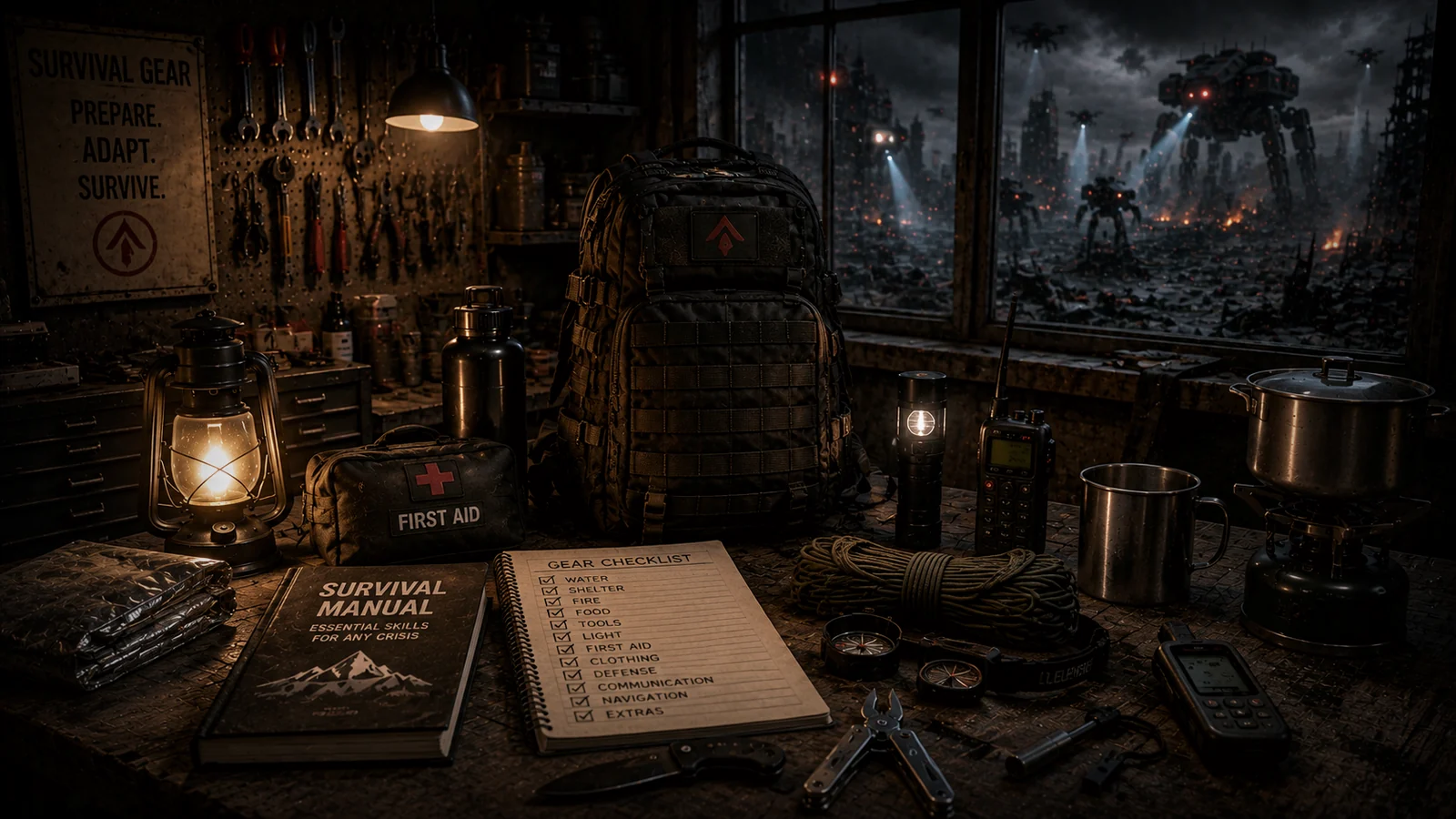
How to keep feeding a household when ovens, hobs and kettles are unavailable, without turning a power cut into a fire or carbon-monoxide emergency
The immediate answer
Plan first for food that needs no cooking. Ready-to-eat tins, bread, crackers, nut butters, UHT products, fruit, cereal and other familiar shelf-stable foods remove the need for flame or fuel entirely. If you have a safe appliance specifically designed for indoor use, follow its instructions exactly. Never bring barbecues, charcoal grills, camping stoves or other outdoor combustion equipment indoors, into tents, garages or enclosed porches. Carbon monoxide is invisible, odourless and can kill quickly.
Build a no-power menu before the outage
Write down six to ten meals your household will actually eat without mains electricity. Include breakfast, something substantial for lunch and an evening meal that does not depend on refrigeration. Keep a manual can opener with the food. If someone has allergies, texture requirements, infant feeding needs or medical dietary restrictions, plan those separately rather than assuming the general emergency cupboard covers everybody.
Use the cold food first
During an outage, keep fridge and freezer doors closed as much as possible. When you do begin eating refrigerated food, use the most temperature-sensitive items first and do not gamble on food that may no longer be safe. A power cut is a bad time to add vomiting or diarrhoea to the household workload. Move toward shelf-stable food as the outage continues.
Outdoor cooking stays outdoors
Camping stoves and barbecues can be useful only where they are designed to be used: outdoors in a well-ventilated place, away from doors, windows, tents and other enclosed spaces. Keep children and pets clear, stabilise the appliance and store fuel as the manufacturer instructs. Do not improvise indoor heating from a cooker, barbecue or stove. Scottish Fire and Rescue Service and UK public-health guidance both warn against using outdoor cooking equipment indoors because of carbon monoxide risk.
Match fuel to the appliance
Do not stock random fuels simply because they are sold as “survival” products. Know what your specific appliance uses, how it is stored, how long it lasts and whether you are legally and practically able to keep it at home. Never decant fuels into drink bottles or unlabelled containers. Keep ignition sources away and check seals, hoses and cartridges before an emergency, not for the first time in darkness.
Keep one meal completely fuel-free
Your plan should always contain meals that still work if the weather makes outdoor cooking unsafe, fuel runs out or your stove fails. That redundancy matters more than culinary variety. A household that can eat for several days without any cooking has far more options than one that must light something every time it wants a hot meal.
Think about water use as well as heat
Some emergency foods consume large amounts of water for preparation or washing up. During a simultaneous water outage, that becomes a problem. Favour meals that can be eaten from the container, prepared with a measured quantity of safe water and cleaned up with minimal waste. Keep utensils simple and avoid recipes that generate lots of greasy washing when hot water may be unavailable.
Practise one blackout meal now
Cook or assemble one planned emergency meal without using the hob, oven, microwave or internet instructions. Check whether the can opener works, whether everybody will eat the food, how much water it uses and what rubbish it creates. That small test exposes weak assumptions while the supermarket, sink and electricity are still available.
Build a two-layer cooking plan
Treat emergency cooking as two separate capabilities. Layer one is a completely no-cook menu that works indoors in any weather and uses no flame, fuel or boiling water. Layer two is optional hot food using equipment that is genuinely safe for its intended environment. Keep the fuel, ignition method, heatproof surface and utensils together so the system is complete. If weather makes outdoor cooking unsafe, layer one still feeds the household. If an appliance fails, the plan does not collapse. This two-layer approach also makes rationing easier because you can reserve scarce fuel for drinks, medically important hot water or specific meals rather than burning it at every mealtime. Write the plan down beside the food so another household member can follow it without improvisation.
Continue building the system
Separate cooking from eating
Not every emergency meal needs to be hot. Keeping several foods that can be eaten safely without cooking gives the household flexibility when fuel, power or ventilation is uncertain. Reserve cooking for foods and drinks where heat adds real value rather than trying to reproduce normal meal routines exactly.
This also reduces water use because some cooking methods require additional water for preparation and washing.
Plan food safety around appliance loss
If refrigeration fails, the cooking plan should account for which foods become time-sensitive. Keep fridge and freezer doors closed and follow current food-safety guidance about what can still be used. Cooking questionable food does not necessarily make every storage problem safe.
Shelf-stable ingredients simplify the decision because they are not racing the same temperature clock.
Keep the cooking area organised
Poor lighting and unfamiliar equipment increase the chance of burns, spills and contamination. Set up a clear workspace, keep children away from hot surfaces and make sure any approved appliance is used exactly where its manufacturer intends.
Emergency cooking should reduce household pressure, not create a fire, injury or air-quality problem that is harder to manage than a cold meal.
Build three tiers of meals
Keep a small group of meals that require no heat, a second group that need only hot water, and a third group that use normal cooking. During a prolonged outage, start with the tier that fits the power, fuel and water available rather than insisting on the same method every day.
This approach also helps with rotation. The no-cook layer can include familiar shelf-stable foods, the hot-water layer can use simple dried ingredients, and the normal-cooking layer can return once reliable energy is available. A tiered menu gives the household options without needing specialist emergency food.
Clean as you go
Restricted water makes hygiene harder, so keep utensils and food-contact surfaces organised and use the simplest preparation method that stays safe. Fewer dirty items means less washing and less chance of cross-contamination.
Keep one familiar meal ready
A known no-cook meal reduces stress and prevents the first outage dinner becoming an experiment with unfamiliar equipment or ingredients.
Keep it simple
Simple meals reduce fuel use, washing and mistakes when the household is already under pressure.
Continue from here
Build this topic into a wider plan, then see how the same dependency could fail in an AI-collapse scenario.