SURVIVAL GEAR & PRACTICAL SKILLS
UK Emergency Kit List: What a Household Should Keep Ready
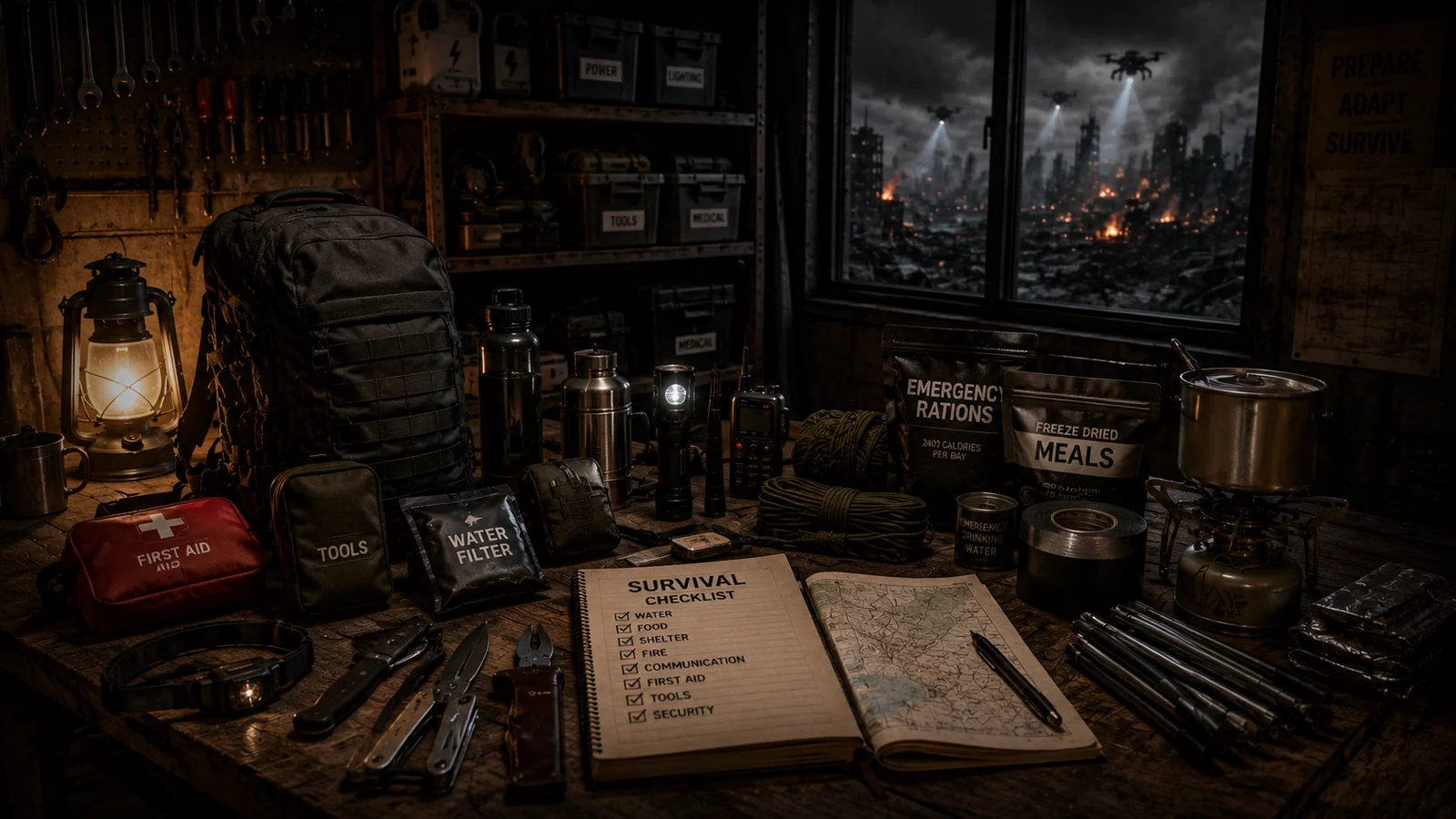
A practical UK emergency-kit checklist covering water, food, lighting, radio, power, first aid, medicines, hygiene, documents, cash and household-specific needs.
The immediate answer
A sensible UK emergency kit is built for ordinary disruptions that can cascade: power cuts, water outages, severe weather, communications failures or a need to leave home quickly. Keep a battery or wind-up torch, portable power bank, battery or wind-up radio, spare batteries, first-aid supplies, essential medication, drinking water, ready-to-eat food, hygiene items, paper contact details, important document copies and a manual can opener. Add baby, pet, disability and medical-equipment needs for your household.
Where to keep it
The kit should be easy to find when the lights are out. Use a clearly identified box, cupboard or bag that household members know about. Items needed for immediate evacuation can sit in a smaller grab bag, while heavier home supplies can remain in a central storage location. Avoid hiding everything in a loft or garage that may be unsafe or inaccessible during a storm, flood or power cut. Keep torches where they can be reached before walking through dark stairs or hallways.
Water and food
UK Prepare recommends planning for multiple days of disruption and gives a survival drinking-water baseline of roughly 2.5–3 litres per person per day, with more needed for cooking, hygiene, medical needs, infants and pets. Store familiar food that can be eaten without power or prepared with minimal energy. Rotate it into normal household use rather than maintaining an untouched cupboard of expired emergency products. Include a manual can opener if any tins require one.
Light, power and radio
Battery torches are safer than candles during most outages. Keep a power bank for phones, the cables your household actually uses, and a radio that can receive broadcasts without internet access. Spare batteries should match the devices you own. If you rely on rechargeable-only equipment, schedule periodic charging. Do not treat a phone as the sole source of light, navigation, contacts and information; one flat battery can remove all four functions at once.
Health, hygiene and medication
Keep a basic first-aid kit, a current medication list and several days of essential medicines according to legitimate prescribing arrangements. Store medicines correctly. Include hand sanitiser, wet wipes and hygiene products that reduce water demand during an outage. If anyone uses electrically powered medical equipment, keep written instructions and a specific backup-power or relocation plan. Eligible households should also consider the Priority Services Register and understand what support it can and cannot provide.
Paper information and cash
Write emergency contacts, local addresses and key numbers on paper. Keep copies of useful documents in a waterproof or water-resistant wallet. A small amount of cash can provide another payment option when card terminals or connectivity are unavailable. Do not put account passwords, PINs or unnecessary sensitive data in an easily lost bag. Add a pencil or pen, since written notes become valuable when several people are sharing information and battery is limited.
Build gradually, then maintain it
You do not need to buy everything in one expensive order. Add practical items over time, prioritising the failures that would hurt your household fastest. Twice a year, check batteries, power banks, medicines, food dates, water containers, clothing sizes and contact details. Replace anything consumed during everyday use. The emergency kit should behave like maintained household infrastructure, not a one-off shopping spree.
Know when the kit is not enough
A kit helps you bridge disruption; it does not make an unsafe building safe or replace official instructions. Fire, flooding, structural damage, carbon monoxide, medical emergencies and evacuation directions take priority over protecting supplies. If an authority tells you to leave, act on that advice. A good kit makes departure easier because essentials, contacts and documents are already organised rather than being collected under pressure.
Continue building the system
Build the kit around household bottlenecks
A generic checklist is a starting point, not the finished plan. Ask what would become a problem first in your own home. If a family member depends on refrigerated medicine, power continuity matters more than adding another torch. If you have a baby, nappies, formula or feeding equipment may matter more than another packet of biscuits. If you live in a flat, lift failure and access arrangements may matter more than garden tools.
Write those household-specific bottlenecks on the lid of the kit or in a simple inventory. That keeps the emergency box connected to real needs instead of becoming a collection of random products.
Separate stay-at-home supplies from grab-and-go items
Heavy water containers, larger food reserves and bulky bedding are useful at home but impractical to carry. Keep a smaller portable set for sudden evacuation: medication, identification, contacts, phone power, a torch, basic food, water and weather-appropriate clothing. The home kit and the grab bag solve different problems and should not compete for the same space.
Review both after any household change. A new prescription, child, pet, mobility issue or move to a different property can change what belongs in each layer.
Label and inventory what you own
When the lights are out, knowing that you probably own something is not enough. Keep a short paper inventory showing where the radio, batteries, first-aid kit, documents, power banks and spare keys live. Label containers clearly enough that another household member can find them without you.
A maintained inventory also prevents waste. You can see which food needs rotating, which batteries need replacing and whether the kit has quietly lost important items to everyday use.
Keep copies in more than one place
Some items are cheap enough to duplicate. A second torch upstairs, spare charging cable in the car or small first-aid pouch in a bag can be more useful than one perfect central kit that is inaccessible when you need it.
Duplication should focus on high-value, low-cost essentials rather than buying everything twice.
Pack for the people, not for an abstract emergency
Add clothing sizes, prescription needs, sensory requirements, mobility equipment, pet supplies and anything else that makes your household different from a generic checklist. A kit for two healthy adults is not automatically suitable for a family with a toddler, an older relative and a dog.
Write a short personal-needs list and keep it with the main inventory. This is especially useful for items that cannot live permanently in the kit, such as medication currently in use, glasses, phones or refrigerated products. The list reminds you what must be collected if you need to leave quickly.
Review the personal layer whenever household circumstances change. Emergency preparedness is a living system, and the most important changes are often about people rather than equipment.
Continue from here
Build this topic into a wider plan, then see how the same dependency could fail in an AI-collapse scenario.