SURVIVAL GEAR & PRACTICAL SKILLS
Emergency Skills to Learn Before Systems Fail
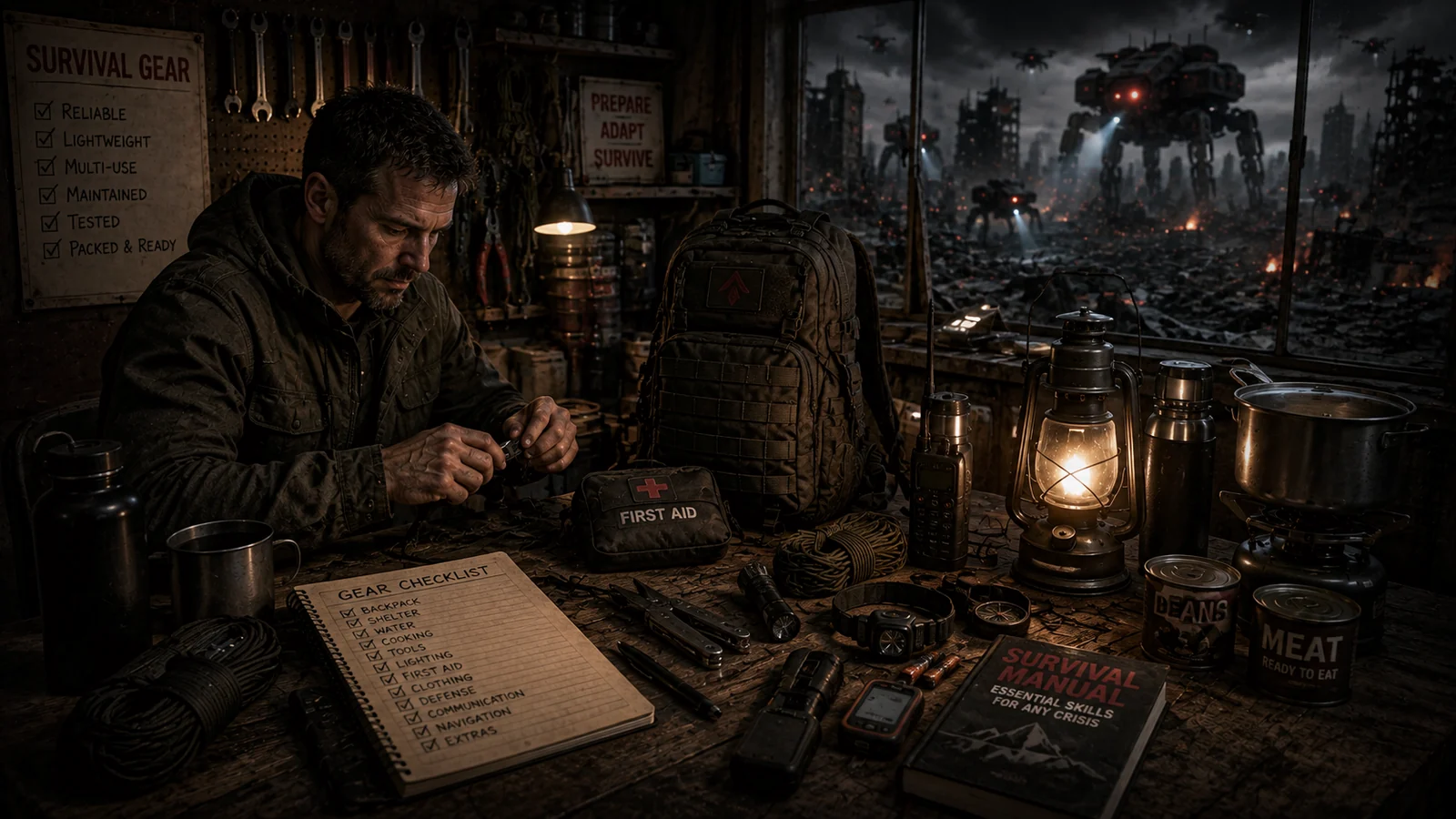
The practical skills that make emergency gear useful: first aid, navigation, communication, food safety, household shutdowns, basic repairs and decision-making
The immediate answer
The highest-value emergency skills are ordinary: first aid, reading a paper map, using a radio, shutting off household utilities safely when instructed, preparing food without mains power, managing water and sanitation, recognising carbon-monoxide danger, changing a tyre, using a fire extinguisher correctly and communicating a family plan. Skills reduce dependence on buying another gadget.
Start with first aid
A properly taught first-aid course gives you more value than an overstuffed medical kit you do not know how to use. Learn CPR, bleeding control, recovery position and when to call emergency services from a recognised training provider. Refresh training because skills fade. Do not treat internet survival medicine as a substitute for professional instruction.
Learn your home
Know where the consumer unit, water stopcock and gas controls are, but only operate them when it is safe and appropriate to do so. Label them clearly. Learn how smoke and carbon-monoxide alarms are tested. Know two escape routes where possible and a meeting point outside. Household familiarity is a survival skill because emergencies often begin at home.
Practise offline navigation
Walk a familiar route using only a paper map. Learn basic compass use and how long your household can realistically walk. In rural areas, understand weather, terrain and daylight constraints. The objective is not wilderness heroics; it is being able to reach a meeting point when a navigation app is unavailable.
Use your communications equipment
Tune the emergency radio, write down useful station frequencies, test batteries and practise concise family messages. Make sure every adult knows the out-of-area contact and meeting points. During disruption, clear communication prevents duplicate travel, panic searches and contradictory decisions.
Learn food and water safety basics
Understand which foods become unsafe after loss of refrigeration, how official boil-water and do-not-use notices differ, and why boiling cannot remove every chemical contaminant. Learn the safe use limitations of any water treatment product you own. Practise one no-power meal without improvising indoor combustion.
Develop practical repair competence
Basic abilities such as changing a tyre, replacing torch batteries, using hand tools, making a temporary weatherproof repair and identifying a tripped breaker can prevent small failures escalating. Stay within competence. Electrical, gas, structural and medical work can become more dangerous when improvised under stress.
Run drills instead of collecting certificates
Every few months, choose one scenario: four hours without mains power, a family meeting-point drill, a no-internet navigation exercise or an evening using only stored lighting. Record what failed and fix it. The goal is not to perform survivalism; it is to make useful actions familiar enough that stress does not erase them.
Prioritise skills by consequence and frequency
You do not need to learn every “survival” skill at once. Start with tasks that are both likely and consequential: first aid, household fire response, power-cut safety, communication plans, navigation, food safety and safe use of the equipment you already own. Then add lower-frequency skills such as basic vehicle recovery or more advanced navigation if they fit your household. Keep a simple skills matrix with household members down one side and critical tasks across the top. If only one person knows how to operate the radio, locate the water stopcock or manage medication, teach a second person. Reducing single-person dependency is one of the cheapest resilience upgrades available.
Teach through repetition, not lectures
Household resilience improves when several people can perform simple tasks under pressure. Let family members actually tune the radio, find the torch, read the paper route card, locate the stopcock and assemble a no-power meal. Demonstration is better than a verbal briefing because it exposes confusion and accessibility problems immediately. Repeat small drills often enough that the actions become familiar. The objective is not military discipline; it is avoiding a situation where one absent person is the only person who knows how the household plan works.
Continue building the system
Build competence around the jobs your household actually has
Emergency skills are most useful when they map to real household responsibilities. Someone should know how to shut off utilities where appropriate, someone should understand the medication routine, someone should know where documents and contacts are kept, and everyone old enough should know the basic meeting plan. That does not mean one person must specialise permanently. Rotating roles prevents the whole household depending on a single person being present.
Write the critical steps down. Skills fade when they are used rarely, and a short checklist can turn half-remembered knowledge into something another person can follow safely.
Refresh skills before they become rusty
First aid, radio use, map reading and equipment setup all decay without practice. Put a few simple drills into the year: navigate one local journey without live maps, run the emergency radio, find the water shutoff, test a torch in darkness and review first-aid supplies. The aim is familiarity, not performance theatre.
A five-minute practical refresh is often more valuable than another hour reading about emergencies because it reveals missing batteries, forgotten locations and assumptions that no longer match the household.
Know the limits of your training
Preparedness should make people safer, not overconfident. Basic first aid does not make someone a clinician, and knowing where a fuse box is does not qualify someone for electrical repair. Use skills within their safe scope and escalate to professionals when a task exceeds it.
Good resilience includes knowing when not to improvise. The most useful skill can be recognising that a problem needs specialist help.
Pair every piece of gear with a skill
If the household owns a radio, somebody should know how to tune it. If it stores water, somebody should understand the labels and rotation plan. If it has a first-aid kit, people should know the basics of first aid. Equipment and skill should grow together.
This approach also exposes unnecessary purchases. A tool nobody understands may be less useful than a simpler item the household has practised with repeatedly.
Keep practice short and regular. One small task every few months is enough to maintain familiarity: read a paper map, use the backup torch, find the stopcock, review emergency contacts or run the radio from batteries. Preparedness becomes far less intimidating when it is treated as ordinary household competence rather than a separate hobby.
Record who knows what
A simple skills list can show which household member knows first aid, equipment setup, local routes or important care routines. The list also reveals where only one person holds critical knowledge and where cross-training would add resilience.
Continue from here
Build this topic into a wider plan, then see how the same dependency could fail in an AI-collapse scenario.