SURVIVAL GEAR & PRACTICAL SKILLS
First Aid Kit Guide: Build a Practical Emergency Kit You Know How to Use
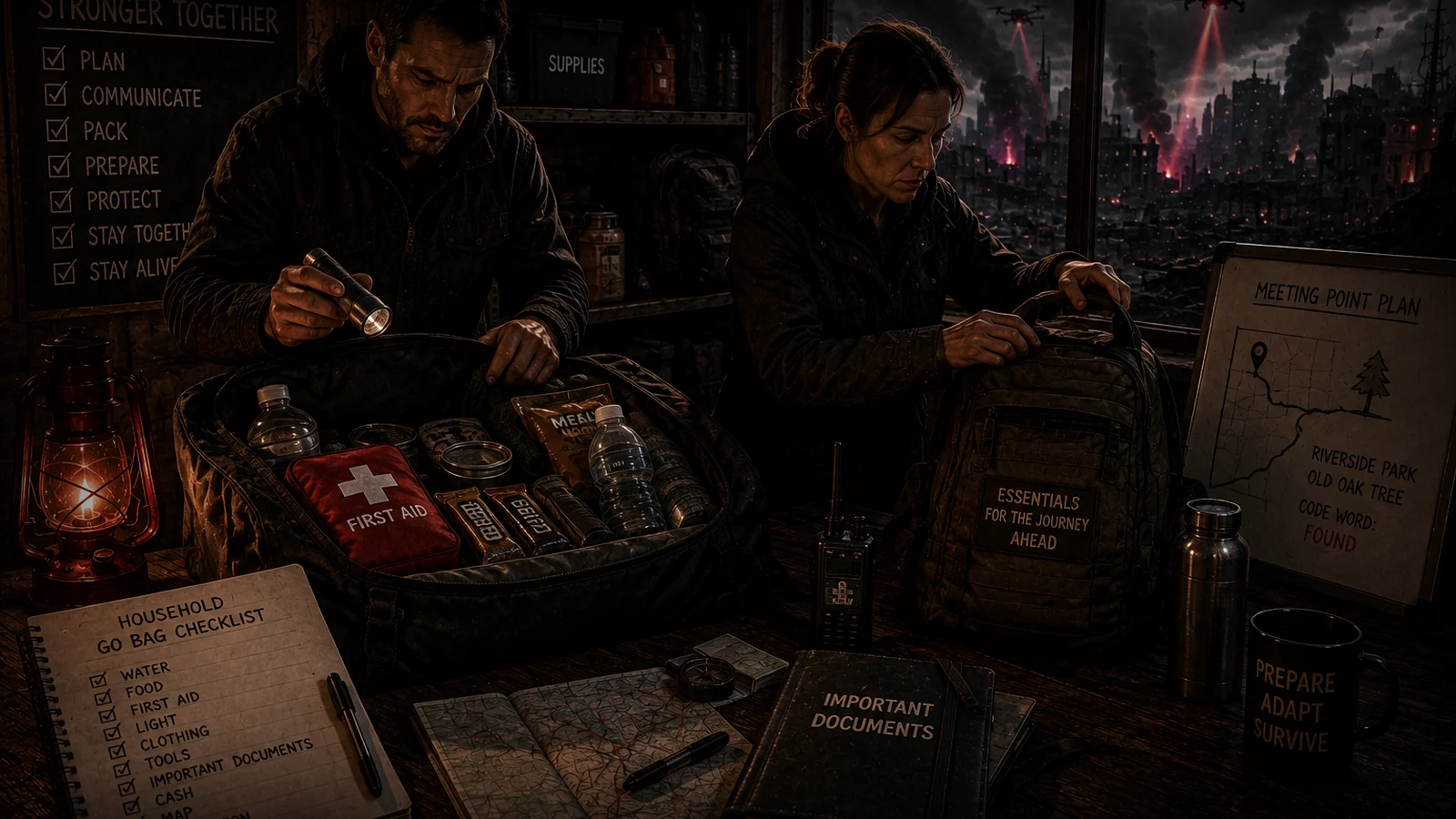
Build a household first-aid kit around common emergencies, safe storage, clear organisation, expiry checks and real first-aid skills rather than gadget overload.
The immediate answer
A practical first-aid kit should contain basic wound-care and protective supplies you understand how to use: plasters, sterile dressings, bandages, medical tape, gloves, antiseptic or cleansing supplies, tweezers, a thermometer and other items appropriate to your household. UK Prepare lists similar basics. Keep regular prescription medicines separate under their normal storage rules. The most valuable upgrade is training: equipment cannot replace knowing when to call 999, control bleeding or recognise a serious emergency.
Organise by task
Instead of a chaotic bag, group items by job: minor wounds, larger dressings, protection and hygiene, temperature checking, and household-specific needs. Use transparent pouches or clear labels. In a blackout, you should be able to find gloves or a dressing without emptying the entire kit onto the floor. Keep a small torch nearby. If more than one adult may use the kit, make the layout obvious rather than relying on one person remembering where everything is.
Do not turn it into a pharmacy
Avoid filling the first-aid kit with large quantities of medicines “just in case”. Follow normal pharmacy and prescribing guidance. Keep medicines in labelled packaging, check contraindications and store them according to instructions. If someone has allergies, regular medicines or specific emergency medication, include that information in the household medical plan. Never share prescription medicines or change doses because professional access is temporarily difficult.
Wound care and infection prevention
Clean hands and appropriate gloves reduce contamination. Minor cuts and grazes may need cleaning and covering, while heavy bleeding, deep wounds, embedded objects or serious burns require more urgent assessment. Do not use improvised aggressive chemicals on wounds. During a water outage, hygiene becomes harder, which makes clean stored supplies more valuable. Replace opened or contaminated dressings rather than returning them to the kit.
Burns, fractures and serious symptoms
A first-aid kit does not make a household capable of treating major trauma. For serious burns, suspected fractures, severe breathing difficulty, chest pain, stroke symptoms, unconsciousness, severe allergic reactions or uncontrolled bleeding, seek emergency medical help. Follow current first-aid guidance. Keep a paper note of key medical conditions and allergies where responders can find it, but avoid displaying unnecessary personal medical information publicly.
Expiry dates and damaged packaging
Check the kit at least twice a year. Replace expired medicines and sterile items according to their instructions, damaged packages, used dressings and depleted gloves. Batteries in thermometers or torches also need attention. After any real incident, restock immediately rather than assuming someone else did. A first-aid kit often fails because one small critical item was used months ago and never replaced.
Training is part of the kit
Book or complete recognised first-aid training if you can. Practise locating items and understanding the purpose of dressings, bandages and gloves. Learn CPR and how to respond to choking and major bleeding from reputable providers. During infrastructure disruption, professional response may be slower, which increases the value of calm competent first aid — but it does not expand the safe scope of what an untrained person should attempt.
Where to store it
Keep the main kit somewhere dry, accessible and known to the household but out of reach of young children where necessary. A smaller car or grab-bag kit can cover travel. Do not leave heat-sensitive medicines in a vehicle simply because the first-aid pouch lives there. Add a clear inventory sheet and emergency numbers. The objective is speed, cleanliness and competent basic care, not owning the largest bag.
Keep a one-page inventory
Add a simple inventory sheet listing what the kit contains, quantities that matter and the last inspection date. This makes restocking much faster after a real injury and highlights items that are frequently borrowed for everyday use. Note where household-specific emergency medication is stored rather than mixing it into general supplies. If a product requires instructions, keep those instructions with it. The inventory is not a medical protocol; it is a maintenance tool that makes sure the physical kit matches what household members think is inside it.
Continue building the system
Build the kit around likely household injuries
A family with children, an older adult or someone doing regular manual work may need different emphasis from a single office worker. Think about minor cuts, sprains, blisters, burns and the ordinary problems that become inconvenient when access to shops or healthcare is delayed.
The kit should support basic first aid within your training, not encourage treatment beyond it. Serious symptoms, major bleeding, breathing problems and other emergencies still require professional help.
Accessibility matters in first aid too
Store supplies where the people most likely to use them can reach them. Packaging that is difficult to open, tiny labels or an overstuffed box can slow care under stress. Group similar items and keep clear instructions with unfamiliar products.
If several household members may provide first aid, make sure everyone knows where the kit is and which items require specific training.
Restock immediately after ordinary use
First-aid kits often become incomplete because plasters, dressings or gloves are borrowed for everyday problems and never replaced. Treat each use as a trigger to restock. A simple inventory on the lid can show what is missing without emptying the whole box.
This turns the kit into maintained household equipment rather than a sealed product that is assumed to be complete years later.
Keep first-aid information with the supplies
A kit is more useful when the household can remember how to use basic items correctly. Keep reputable first-aid instructions or a recognised first-aid manual with the box, ideally in a format that works without internet access. Training remains better than reading during an emergency, but clear instructions can support memory under stress.
Make sure household medical information is kept separately from general first-aid supplies if it contains sensitive details, while still being accessible to the people who may need it. A simple medication and allergy list can save time when speaking to clinicians.
During reviews, remove products you no longer recognise or would not know how to use. A smaller organised kit with familiar supplies is safer than a large collection of specialist items that encourage guesswork.
Keep personal protective items available
Disposable gloves and basic hygiene supplies can reduce contamination during first aid. Store them where they remain clean and replace damaged or expired items. Good wound care starts with clean hands and organised equipment.
Review after household changes
A new baby, new medication, mobility issue or change in regular activities can alter what the household is likely to need. Update the kit when people change, not only when products expire.
Continue from here
Build this topic into a wider plan, then see how the same dependency could fail in an AI-collapse scenario.