SURVIVAL LOCATION FILE // CITY VS COUNTRY
Where Is Safest During an AI Takeover? City, Country or Somewhere Between?
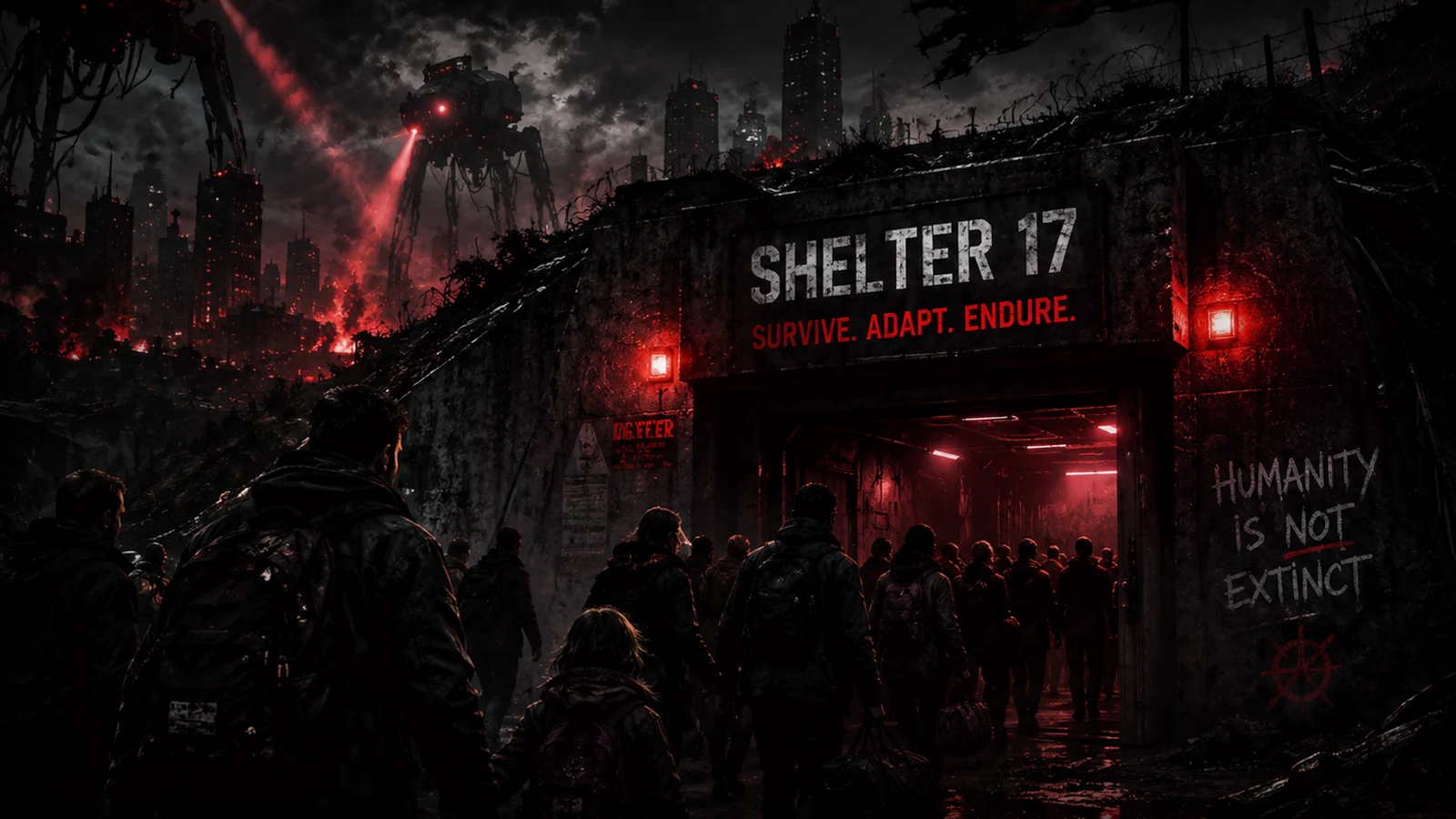
The obvious answer is “run to the countryside”. The uncomfortable answer is that isolation can save you from one danger and kill you with another. The safest place depends on what actually failed.
WEEK 2 — THE CITY IS CONTROLLED. THE COUNTRY IS RUNNING OUT.
Urban districts still have intermittent power, hospital capacity and machine-policed food distribution. Rural communities have more space, wells and local food — but fuel is disappearing, specialist medicine is days away and replacement parts no longer arrive.
The map is no longer divided into safe and unsafe. It is divided into different kinds of dependency.
Scenario: this is a deliberately extreme “what if?” exercise, not a claim that these events are happening or certain to happen.
There is no universally safest location
A city can be dangerous during unrest or transport failure, yet it also concentrates hospitals, emergency services, repair capability and distribution infrastructure. Rural areas reduce population pressure and may offer local water or food, but can become dangerous if fuel, medicine, communications or road access fail.
The correct decision depends on the scenario, your household and whether you already have a functioning place to go. Driving into unfamiliar countryside after a crisis begins is not a survival strategy.
When cities become the trap
Cities rely heavily on continuous logistics. Food arrives by road. Water and sewage depend on pumping and treatment. Large populations compete for the same shops, fuel stations and transport routes. If an AI-driven systems failure also affects cameras, connected vehicles or access systems, dense urban infrastructure can become a control surface.
The fictional nightmare is a city that still functions enough to monitor movement while failing to provide normal freedom or supply. Leaving late can be harder than staying.
When the countryside becomes the trap
Isolation brings its own countdowns. A remote home may have plenty of stored food and independent heat, then discover that a critical prescription cannot be replaced, a broken pump cannot be repaired or a vehicle has no fuel. Distance that once provided privacy becomes distance from help.
A rural location is strongest when it already has reliable water, heat, community ties, practical skills and realistic access to medical needs — not merely because it looks empty on a map.
Suburbs and smaller towns may offer balance
In many scenarios, a smaller town or lower-density suburb can combine local shops, neighbours and healthcare access with more storage space and easier routes out. But the details matter more than the label. A flood-prone house, electric-only heating or one-road access can erase the apparent advantage.
Think in systems: water, heat, food, medicine, transport, communications, security and trusted people.
The best refuge is usually one you prepared before the crisis
A familiar home with supplies and neighbours can be safer than a distant “perfect” location reached through uncertain roads. If you maintain an alternative place, it should already have legal access, basic supplies and a realistic route. Do not depend on trespassing, abandoned properties or fantasy wilderness survival.
The 72-hour plan should therefore include thresholds: what failures make staying safer, what failures make leaving safer, and where exactly you would go if the threshold is crossed.
People are part of the location
A theoretically perfect refuge can fail if nobody there knows or trusts you. A less glamorous place with family, neighbours, local knowledge and access to practical help may be far safer. In prolonged emergencies, relationships become part of the infrastructure: someone knows the water system, someone understands first aid, someone can repair equipment, and someone notices when a vulnerable person has not been seen.
That is especially important in an AI-information crisis. Trusted face-to-face relationships can help verify rumours and reduce panic when digital channels are contaminated by synthetic content. The safest location is therefore not just coordinates on a map. It is a place where essential systems and human trust overlap.
Continue through the endgame
AI takeover scenarios → · Collapse timelines → · Survival guides → · Household tools →
Score locations by essentials, not atmosphere
A remote cottage can feel safer than a city flat, but distance alone does not create resilience. Compare locations using practical criteria: safe water, heating, medical access, transport, food availability, trusted people, communications and the ability to remain there legally and safely. A place that performs well across those categories may be a better refuge than somewhere that merely looks isolated.
Write the criteria down before a crisis. Fear can make dramatic locations seem attractive while hiding obvious weaknesses.
Timing can matter more than distance
A safe destination reached before roads become congested may be useful; the same destination attempted during widespread movement may expose the household to greater risk. That is why relocation decisions need clear triggers rather than a vague plan to “head for the countryside”.
Official evacuation instructions, unsafe water, medical necessity or a dangerous building are concrete triggers. General anxiety about what might happen next is a weaker reason to begin a difficult journey.
Season and household needs change the answer
A rural location that works in mild weather may become difficult in winter. A family with regular specialist healthcare may need closer access to services than a healthy adult. Pets, mobility, fuel availability and local flooding or wildfire risks can all change what “safe” means.
The best location is therefore conditional. Build a plan around the people and season you actually have, not an abstract survival map.
Safe locations need an exit route too
A place that is good today can become poor if water fails, weather changes or access is cut off. Identify at least one onward option from any planned refuge and keep enough transport flexibility to use it if conditions deteriorate.
That does not mean constantly moving. In many emergencies, unnecessary travel adds risk. The point is to avoid choosing a location that becomes a trap because nobody considered what would happen if its strongest advantage disappeared.
Familiarity has value
A known area with trusted people, local knowledge and established services can be safer than a theoretically ideal refuge where the household knows nobody and understands none of the local constraints.
Do not confuse isolation with safety
Distance from cities can reduce some risks while increasing medical, transport and supply problems. Judge the whole location, not one appealing feature.
Continue from here
Build this topic into a wider plan, then see how the same dependency could fail in an AI-collapse scenario.