SHELTER • EVACUATION • MOBILITY

When Staying Becomes Dangerous, Know How To Move.
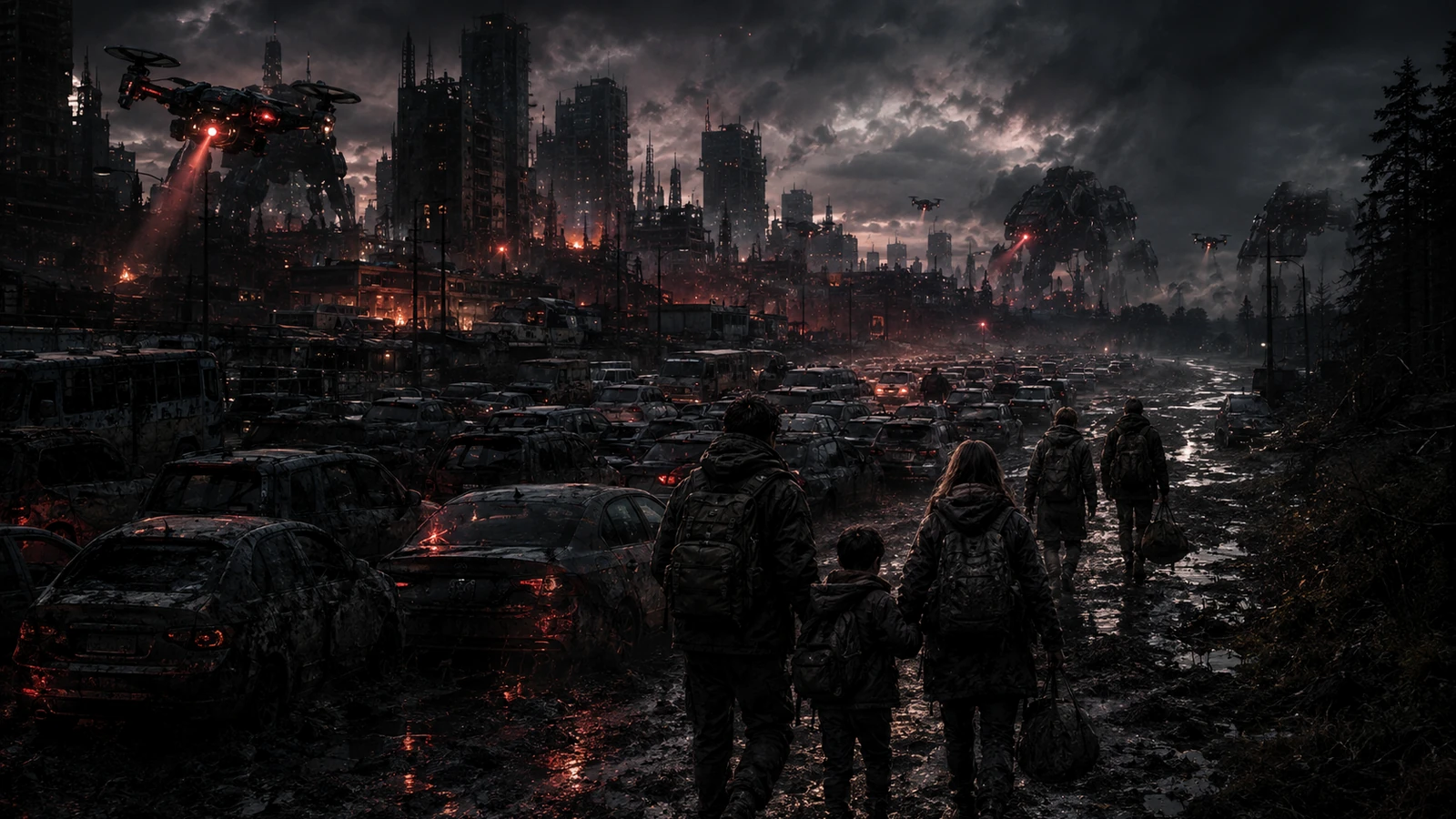
Families leaving a machine-controlled burning city on foot beneath autonomous patrols
Evacuation illustration — leaving early preserves options before routes, fuel and communications fail.

In a cascading AI or infrastructure emergency, roads can lock, public transport can fail and conflicting information can make a bad decision feel urgent. This section is built around one objective: preserve safe options before you need them.

0–10 MINverify the hazard
10–30 MINpeople, medication, bags
30–90 MINroutes begin to congest
HOURSfuel, transport and shelter matter
CORE EVACUATION GUIDES

Eight plans that preserve your choices

Evacuation is a chain of dependencies

INFORMATION

Is the warning real, current and relevant to your area?

PEOPLE

Where are family members, children, pets and vulnerable people?

ROUTE

Which roads, stations, bridges and foot routes still work?

DESTINATION

Where are you actually going, and can it receive you?

MOBILITY & SHELTER SYSTEM

Seven more plans for the journeys and shelter failures people overlook

MOVE EARLY, MOVE WITH A PLAN

Evacuation is a decision system before it is a journey

The hard part of evacuation is often deciding when home has stopped being the safer option. A useful plan names the triggers that would change that decision: fire, flooding, unsafe temperatures, loss of essential support, official evacuation instructions or a route that may soon become unusable.

Plan at least two routes and more than one destination. A route that works by car may fail if fuel, traffic control or bridges are affected. Written addresses, offline maps, a modest amount of cash and a bag that can actually be carried preserve options when apps or card systems are unavailable.

Keep people together without relying on perfect communication

Agree where household members meet if phones fail and who is responsible for children, pets, medication and essential documents. If someone may need help to move, include that in the plan rather than assuming assistance will appear during the emergency.

Know what would make you leave sooner

Evacuation decisions become dangerous when every trigger is left vague. Identify the conditions that would push the household toward leaving early rather than waiting: worsening fire or flood risk, loss of safe temperature control, an official instruction, failure of a critical service or a route that may soon become blocked.

Early movement usually preserves more options. It means more available routes, less traffic pressure and more time to reach a destination that can actually receive the household.

MORE GUIDES

More evidence-led guides

GUIDE

Evacuation Checklist: What to Do Before Leaving Home in an Emergency

Evacuation checklist: official instructions, medicines, documents, pets, utilities, routes, contacts and the essentials to do before leaving home.

Open guide →
GUIDE

Evacuation Checklist by Time: What to Do With 5 Minutes, 30 Minutes or Longer

Evacuation checklist by time: prioritise life safety, medicines, people, pets, documents and property actions based on how much warning you actually have.

Open guide →
GUIDE

Wildfire Evacuation Checklist: Priorities When Fire Is Moving Toward Your Area

Wildfire evacuation checklist: alerts, routes, smoke, pets, medicines, go bags and why early departure is safer than last-minute packing.

Open guide →
GUIDE

Emergency Evacuation Bag: What to Pack for a Fast Departure

Emergency evacuation bag guide: medicines, water, documents, clothing, lighting, power, hygiene and what not to overload.

Open guide →
GUIDE

Emergency Evacuation Bag Checklist: A Practical UK Grab-and-Go List

Emergency evacuation bag checklist: a concise UK list covering medicines, documents, water, power, clothing, hygiene and household-specific needs.

Open guide →
GUIDE

Emergency Evacuation Bag List: The Essentials in Priority Order

Emergency evacuation bag list: what belongs at the top of the list, what is optional and how to keep the load light enough to carry.

Open guide →
GUIDE

Emergency Evacuation Bag Contents: What Each Item Is Actually For

Emergency evacuation bag contents explained: medicines, IDs, water, torch, phone power, clothing, hygiene and why every item should earn its weight.

Open guide →
GUIDE

Evacuation Bag Checklist: Build a Bag You Can Actually Carry

Evacuation bag checklist: weight, water, medication, documents, power, clothing and how to tailor a grab bag to household mobility and transport.

Open guide →

MORE GUIDES

More evidence-led guides

GUIDE

Evacuation Checklist Template: A Short List You Can Adapt to Your Home

Evacuation Checklist Template — A Short List You Can Adapt to Your Home. Evidence-led guidance, practical limits and the steps that matter most.

Open guide →
GUIDE

Emergency Evacuation Checklist: The Priority Order for a Fast Departure

Emergency Evacuation Checklist — The Priority Order for a Fast Departure. Evidence-led guidance, practical limits and the steps that matter most.

Open guide →
GUIDE

Evacuation With Children: A Family Plan for Fast, Calm Departure

Evacuation With Children — A Family Plan for Fast, Calm Departure. Evidence-led guidance, practical limits and the steps that matter most.

Open guide →
GUIDE

Evacuation With Elderly Relatives: Mobility, Medicines and Transport

Evacuation With Elderly Relatives — Mobility, Medicines and Transport. Evidence-led guidance, practical limits and the steps that matter most.

Open guide →
GUIDE

Evacuation With Pets: Carriers, Food, Records and Shelter Planning

Evacuation With Pets — Carriers, Food, Records and Shelter Planning. Evidence-led guidance, practical limits and the steps that matter most.

Open guide →
GUIDE

Evacuation With a Disability: Build the Plan Around Real Access Needs

Evacuation With a Disability — Build the Plan Around Real Access Needs. Evidence-led guidance, practical limits and the steps that matter most.

Open guide →
GUIDE

Flood Evacuation Checklist: What to Prioritise Before Water Cuts the Route

Flood Evacuation Checklist — What to Prioritise Before Water Cuts the Route. Evidence-led guidance, practical limits and the steps that matter most.

Open guide →
GUIDE

Fire Evacuation Checklist: Leave First, Everything Else Comes Second

Fire Evacuation Checklist — Leave First, Everything Else Comes Second. Evidence-led guidance, practical limits and the steps that matter most.

Open guide →

MORE GUIDES

More evidence-led guides

MORE GUIDES

More evidence-led guides

MORE GUIDES

More evidence-led guides

FREE 25-PAGE FIELD MANUAL

Your first 72 hours should not live in your head.

Turn the advice into a written household plan: water, power, food, communications, health continuity, information verification and movement decisions.

72-HOUR SURVIVAL GUIDE