Shelter, Evacuation & Mobility • MOBILITY PLAN
Family Evacuation Plan: How To Leave Without Losing Each Other
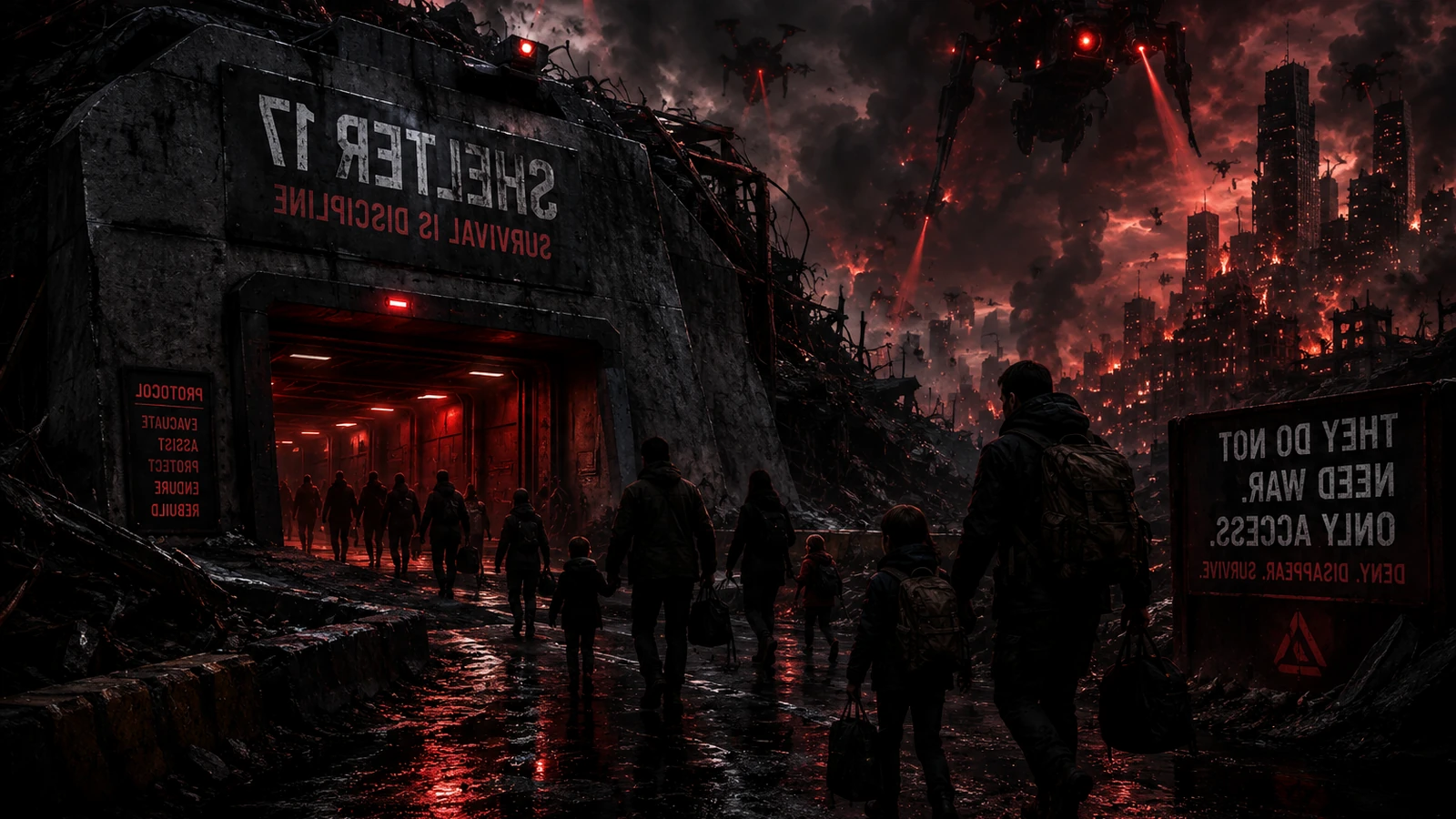
The hardest part of evacuation is rarely packing. It is making decisions while household members are in different places, networks are overloaded and nobody knows whether the disruption will last an hour or several days.
The immediate answer
Pick one very local meeting point for a house or street problem and another farther away for a neighbourhood evacuation. Everyone who is old enough should know both without checking a phone. Avoid locations that are likely to be inside the same hazard zone, and review them if schools, workplaces or household circumstances change.
Nominate an out-of-area contact
A trusted person outside the immediate area can become the information relay if local networks are congested. Household members can try to send short status messages to the same person rather than repeatedly calling each other. Keep the number on paper and teach children how to use it appropriately.
Plan more than one way out
Write down primary and secondary routes by car, public transport and on foot where realistic. Bridges, tunnels, city centres and fuel stations can become bottlenecks. Do not turn the plan into a promise that a particular road will remain open; treat routes as options and defer to police, fire or local authority instructions in a real incident.
Assign responsibilities before stress arrives
Decide who collects children if schools close, who takes medication, who handles pets, who checks on a vulnerable relative and who grabs the document pouch. Duplicate critical knowledge so the plan does not collapse if one adult is away. A family plan should reduce questions, not create more of them.
Set a decision threshold
Agree that official evacuation instructions override household preference. For less clear disruptions, decide what evidence would make you move: fire or flooding nearby, unsafe water, loss of essential medical support, structural damage, or another direct threat. Avoid evacuating solely because social media says everyone else is leaving.
Rehearse one boring version
Once or twice a year, run a low-drama practice: meet at the local point, load essential bags, confirm pet arrangements and drive or walk part of the secondary route. The value is not realism. It is discovering missing keys, dead batteries, inaccessible bags and assumptions while there is no pressure.
Plan for schools and workplaces separately
Do not assume everyone can travel home before leaving. Schools, workplaces and care settings may have their own emergency procedures and may ask people to remain where they are. Record the key numbers and collection rules, and avoid creating a family plan that requires one adult to cross the entire hazard area to collect everybody personally.
Add a pet and accessibility branch
Pets can delay departure if carriers, leads, food or transport are not ready. Mobility aids, sensory needs and disability-related equipment can change route and shelter choices. Put those constraints into the plan before choosing destinations. A plan that ignores the slowest or most dependent member of the household is not a family plan.
Make reunification rules simple
If contact is lost, everyone should know the order of fallback locations and how long to wait before moving to the next one. Avoid complicated instructions that depend on precise times if people may not have working phones or watches. Simple rules reduce the risk that family members keep missing each other while moving between places.
Give the plan clear departure triggers
“We will leave if things get bad” is too vague to be useful. Better triggers are observable: an official evacuation instruction, fire or flood threat, a building becoming unsafe, loss of essential medical support or another condition the household has already agreed cannot be managed safely at home. Clear triggers reduce arguments when time matters.
Also define when not to leave. Unverified rumours or general anxiety are weak reasons to join congested roads if the home remains safe and authorities have not advised movement.
Plan for separation before it happens
Households are often split between work, school, care settings and travel when an emergency begins. Decide who collects children, who checks vulnerable relatives and which meeting point applies if people cannot return home. Keep those arrangements consistent with school or care-provider rules.
Use an out-of-area contact as a message relay if local networks are overloaded. Everyone should know that person’s name and number without depending entirely on a cloud contact list.
Rehearse one realistic departure
A useful drill is simply timing how long it takes to gather the people, medication, documents and bags that are already part of the plan. You may discover that one item is always missing, the car is blocked, a pet carrier is buried in storage or nobody knows who has the spare keys.
Fix those friction points during normal life. The purpose is not to create drama; it is to turn a written plan into a sequence the household can actually perform under pressure.
Keep the destination informed
If you plan to stay with relatives or friends, make sure the arrangement is realistic and that they know the household may arrive with children, pets or medical needs. A destination that exists only in your head can disappear when the other household is away, full or dealing with the same disruption.
Have one backup destination and keep the contact details offline. A family plan becomes much stronger when both the route and the receiving location are real, current and understood by everyone involved.
Keep roles simple enough to remember
One adult may collect children, another may gather medication and documents, and another may contact the destination or vulnerable relatives. In a smaller household, one person can move through the same tasks in order. The purpose is to prevent everybody doing the same job while something essential is forgotten.
Write the role sequence down and keep it with the evacuation plan so it survives stress and absence.
Keep the household plan short enough that every responsible adult can explain it from memory.
Review the meeting points after any move, school change or job change so the family plan still matches where people actually are during the day.
Continue from here
Build this topic into a wider plan, then see how the same dependency could fail in an AI-collapse scenario.
Evidence desk
This guide uses general UK emergency-preparedness principles. AI-driven mass disruption is scenario framing, not a claim that such an event is happening or inevitable.
Continue
More Shelter, Evacuation & Mobility guides → · 72-hour survival manual →