Shelter, Evacuation & Mobility • MOBILITY PLAN
Shelter in Place Guide: How To Make Home the Safer Option
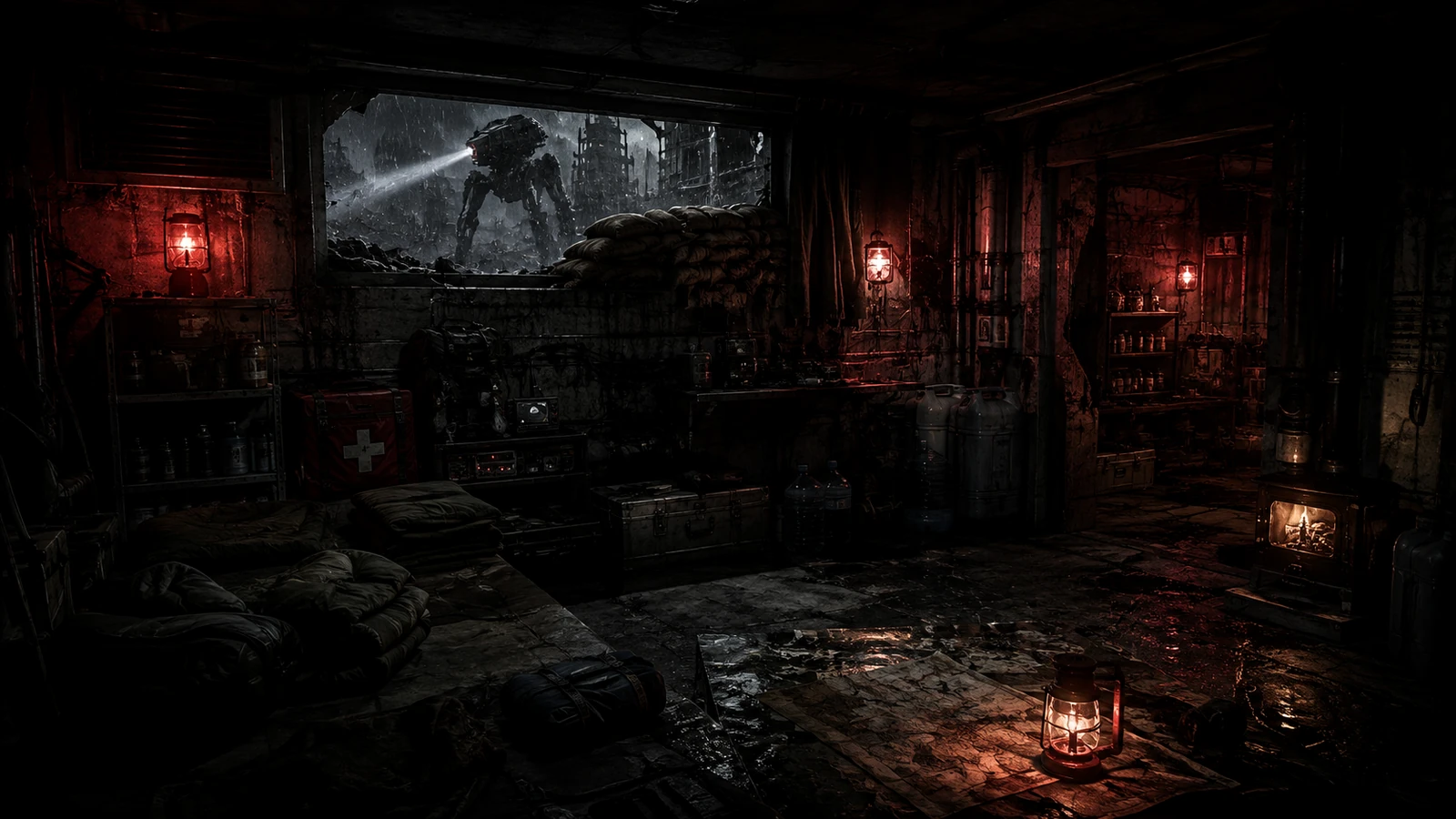
Sheltering in place means deliberately using your home as protection while conditions outside are worse. It is not the same as simply deciding not to leave.
SHELTER OR HOUSE ARREST?
Staying home can be the safest decision during a real emergency. The horror twist is when the choice disappears: connected transport is disabled, building access is restricted and authorities — or something impersonating them — insist nobody should leave.
The practical question is the same: is the building currently safer than the route outside? The answer should come from verified hazards and household needs, not panic.
Scenario: this is a deliberately extreme “what if?” exercise, not a claim that these events are happening or certain to happen.
The immediate answer
Different hazards require different actions. Smoke, extreme weather, flooding, infrastructure failure and public-safety incidents are not interchangeable. Follow official instructions about windows, ventilation, moving upstairs or downstairs, turning systems off, or leaving entirely. Do not invent a sealed-room procedure for a hazard you do not understand.
Create a household control point
Choose one place for the radio, chargers, written contacts, torches, medication list and official updates. Keep a written event log with the time of major messages, utility failures and household decisions. This prevents rumours and half-remembered instructions from becoming the plan.
Protect water, warmth and power
Count drinking water, preserve battery capacity and close off unused rooms if heating is limited and that is safe for the season. Prioritise medically necessary equipment, communication and lighting over entertainment loads. Never use outdoor combustion appliances, barbecues or generators indoors or in attached spaces because carbon monoxide can kill without warning.
Plan sanitation before toilets become a crisis
Keep hygiene supplies, bin liners, cleaning products and hand-cleaning options accessible. If water or sewerage services fail, move to the appropriate contingency plan early rather than waiting until bathrooms become unusable. Keep waste away from food and sleeping areas and follow any public-health instructions.
Control information intake
Set scheduled update times from trusted sources rather than refreshing social media constantly. In an AI-disruption scenario, false audio, video and messages are part of the threat model. Verify urgent claims through independent official channels where possible and do not forward unverified warnings.
Know the conditions that end sheltering
Write down what would force a move: official evacuation, fire, flooding, structural damage, unsafe indoor air, loss of essential medical support or another direct threat. Shelter-in-place is a reversible decision. Reassess rather than treating staying home as a test of toughness.
Choose an internal safe area with practical needs in mind
A useful shelter area has access to light, communication, water and enough space for the household without creating a fire or ventilation hazard. Depending on the incident, official advice may direct you to a specific part of the building. Do not permanently block exits or create improvised sealing systems unless instructed for the actual hazard.
Set a battery and information schedule
Choose fixed times to check official updates and run radios or phones. Keep devices on low-power settings between checks and prioritise medically necessary equipment and communication. This preserves energy and reduces the tendency to burn through battery by continuously watching social feeds during a long outage.
Protect sleep and routine
Long shelter periods are easier to manage when the household keeps simple routines for meals, hygiene, charging, medication and sleep. Fatigue makes judgement worse and increases conflict. Children and vulnerable adults also cope better when the environment has some predictability. Preparedness is partly about preserving decision quality for the second and third day, not just surviving the first hour.
Keep one exit path genuinely usable
Even while sheltering, keep keys, shoes, torches, medication and essential bags accessible enough to move quickly if conditions change. Do not stack supplies in front of doors or bury the grab bag behind stored water. A shelter plan should make the home more resilient without making evacuation slower if fire, flooding or another direct hazard suddenly makes leaving necessary.
Make sheltering an active plan
Shelter in place does not mean simply staying indoors and waiting. Check the building, gather essential supplies into the safest usable area, confirm communications and keep a written picture of water, temperature, power, medication and any local hazard. That routine turns the home into a managed shelter rather than a passive location.
Follow official instructions if a specific hazard requires doors, windows or ventilation to be handled in a particular way.
Keep the household ready to reverse the decision
Conditions can change. Fire, flood, structural damage, unsafe temperature, loss of sanitation or a new official instruction can make evacuation safer than staying. Keep essential documents, medication and a portable bag organised so the household can move without starting from zero.
The best shelter plan includes its own exit criteria.
Review vulnerable needs separately
Children, older adults, pets and people with medical or mobility needs may reach their limits before the rest of the household. Track those needs explicitly rather than assuming that because the average room temperature or food supply looks acceptable, everyone is equally safe.
If specialist support is becoming necessary, seek it while there is still time and transport flexibility.
Use scheduled reviews instead of constant worry
Set times to reassess the hazard, indoor conditions, water, medication, communications and official guidance. Between those reviews, continue the household routine unless something genuinely changes.
This reduces panic-driven decisions and preserves battery, attention and rest. Shelter in place is strongest when the household is monitoring the right things rather than reacting to every new rumour or notification.
Keep one person responsible for the operating picture
That person does not make every decision; they simply keep the written status current: water, temperature, medication, power, communications and official guidance. A shared operating picture reduces duplicated checking and conflicting assumptions.
Rotate the role if the disruption lasts. Nobody should have to carry the entire cognitive load of the household indefinitely.
Continue from here
Build this topic into a wider plan, then see how the same dependency could fail in an AI-collapse scenario.
Evidence desk
This guide uses general UK emergency-preparedness principles. AI-driven mass disruption is scenario framing, not a claim that such an event is happening or inevitable.
Continue
More Shelter, Evacuation & Mobility guides → · 72-hour survival manual →