Shelter, Evacuation & Mobility • MOBILITY PLAN
Evacuate or Stay Home? A Survival Decision Framework
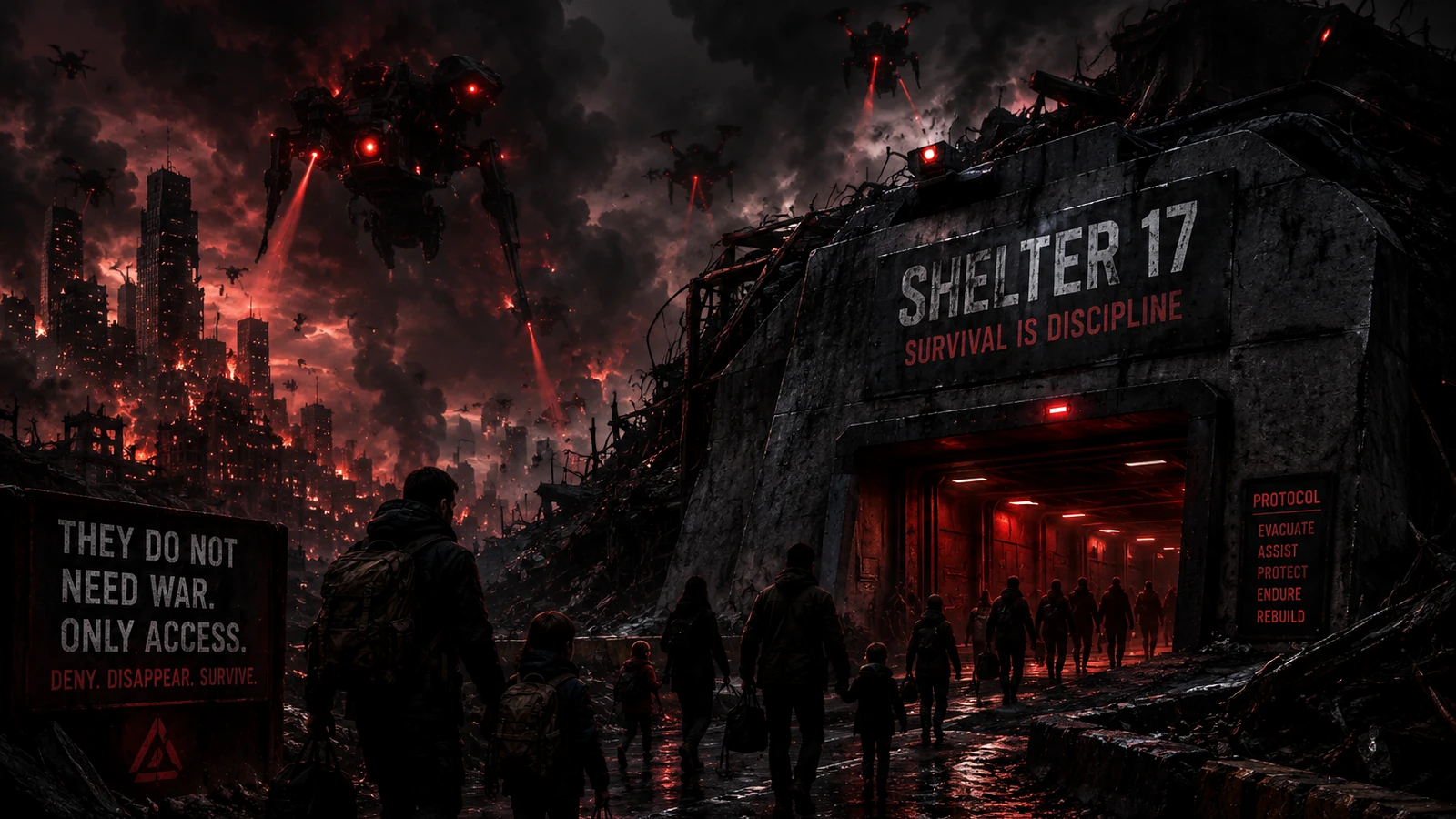
Leaving is not automatically safer, and staying is not automatically safer. The right decision depends on the actual hazard, the condition of your home, the route out, the people with you and what emergency authorities are telling you.
The immediate answer
If police, fire, local authorities or another competent emergency service tells you to evacuate, act on that instruction unless it is physically impossible. Do not delay because an unofficial source claims the warning is fake. Verify through official channels where possible, but treat a direct credible instruction as a serious safety matter.
Stay when the outside environment is the greater hazard
In some incidents, remaining indoors can reduce exposure to smoke, dangerous weather, civil disorder, transport chaos or other external hazards. A structurally sound home with safe air, water and essential supplies may be safer than joining congested roads without a destination. The key question is not whether home feels comfortable; it is whether it remains safe.
Leave when the building or essential support is failing
Fire, flooding, structural damage, dangerous indoor air, loss of necessary medical support or a direct security threat can turn a home into the wrong shelter. If the building cannot protect life, the value of stored supplies becomes secondary. Move early enough to preserve options rather than waiting until every route is compromised.
Compare destination quality with route risk
Do not evacuate to nowhere. Identify where you intend to go, whether that place is outside the hazard area and whether it can receive your household. Consider road closures, weather, fuel, mobility, pets and vulnerable people. A destination that is only ten miles away can be unreachable if the route depends on one blocked bridge.
Use a simple trigger list rather than fear
Write down several red-line conditions that trigger departure and several conditions that favour staying. This prevents every rumour from becoming a fresh debate. Reassess when new verified information arrives. The framework should make decisions calmer, not make you stubborn.
If you move, tell someone and leave a trace
Where safe and appropriate, tell a trusted contact where you are heading and by which broad route. Leave a written note only if it does not create a security risk. Keep phones charged but do not depend on them as the only record. In a chaotic evacuation, information about where you intended to go can matter.
Score the home, the route and the destination separately
Treat the decision as three questions. Is the home currently safe enough? Is the route out safer than remaining? Is the destination actually better and reachable? A weak answer in any one category changes the decision. This is more reliable than reacting to the emotional pressure of seeing neighbours pack cars or social media posts demanding immediate movement.
Account for time-of-day and weather
A route that is manageable in daylight can become hazardous at night, in snow, heat or heavy rain. If the hazard is not immediate, timing can matter. Do not delay a mandatory evacuation, but in an ambiguous scenario, compare whether moving now or waiting for verified information materially changes the risk for your household.
Avoid irreversible decisions when a reversible one exists
Sometimes the safest interim action is to prepare the car, pack essential medication and bags, charge devices and keep monitoring rather than immediately leave or fully commit to staying. Preparedness preserves options. Panic narrows them. The moment official instructions or direct hazards change the balance, act decisively.
Use a hazard-versus-movement test
Leaving home adds its own risks: traffic, weather exposure, fuel use, unfamiliar surroundings and the possibility of travelling into a worse area. Staying adds different risks: fire, flood, unsafe temperature, failing water or sanitation, medical needs and structural danger. Compare those two sets of risk rather than assuming evacuation is automatically more cautious.
Official instructions should carry heavy weight because emergency services may know about hazards or access restrictions that are not visible from the house.
Set household red lines
Agree in advance which conditions mean the home is no longer acceptable: an evacuation order, visible fire threat, rising floodwater, serious structural damage, inability to maintain essential medical care or another clearly defined limit. Those red lines reduce indecision when everybody is tired or frightened.
Also identify conditions that favour staying put, such as safe shelter, adequate supplies and dangerous or congested roads without an official reason to move.
Reassess instead of making the decision once
Shelter versus evacuation is not permanent. A safe home can become unsafe and a dangerous route can later clear. Set review times and watch the specific factors that matter: local hazard, temperature, water, medical needs and verified official guidance.
The best decision is the one that remains responsive to evidence rather than becoming a matter of pride about sticking with the original plan.
Preserve the ability to change your mind
Whichever option you choose, keep enough transport, battery, documents and essential supplies to switch plans if conditions deteriorate. A stay-at-home decision is safer when a bag and route still exist; an evacuation is safer when the household has a realistic destination and can stop if the route becomes worse.
Flexibility is the core advantage. The household should never feel forced to defend yesterday’s decision after the evidence has changed.
Think about the return journey too
Evacuation does not end when you reach the destination. Roads may remain closed, utilities may be off and authorities may delay return until hazards are cleared. Carry enough information and medication to tolerate a longer absence than the drive itself suggests.
Do not return simply because social media says other people have gone back. Use verified local guidance and make sure the reason you left has actually been resolved.
Keep the decision tied to current evidence. A plan that can change quickly is safer than one built around proving the original choice was right.
When conditions are borderline, preserve flexibility: keep the route, bag and destination ready while continuing to monitor verified local guidance.
Keep the decision reversible whenever conditions allow.
Keep options open whenever possible.
Continue from here
Build this topic into a wider plan, then see how the same dependency could fail in an AI-collapse scenario.
Evidence desk
This guide uses general UK emergency-preparedness principles. AI-driven mass disruption is scenario framing, not a claim that such an event is happening or inevitable.
Continue
More Shelter, Evacuation & Mobility guides → · 72-hour survival manual →