Shelter, Evacuation & Mobility • TRANSPORT FAILURE
Public Transport Collapse Plan: Getting Home When Trains and Buses Stop
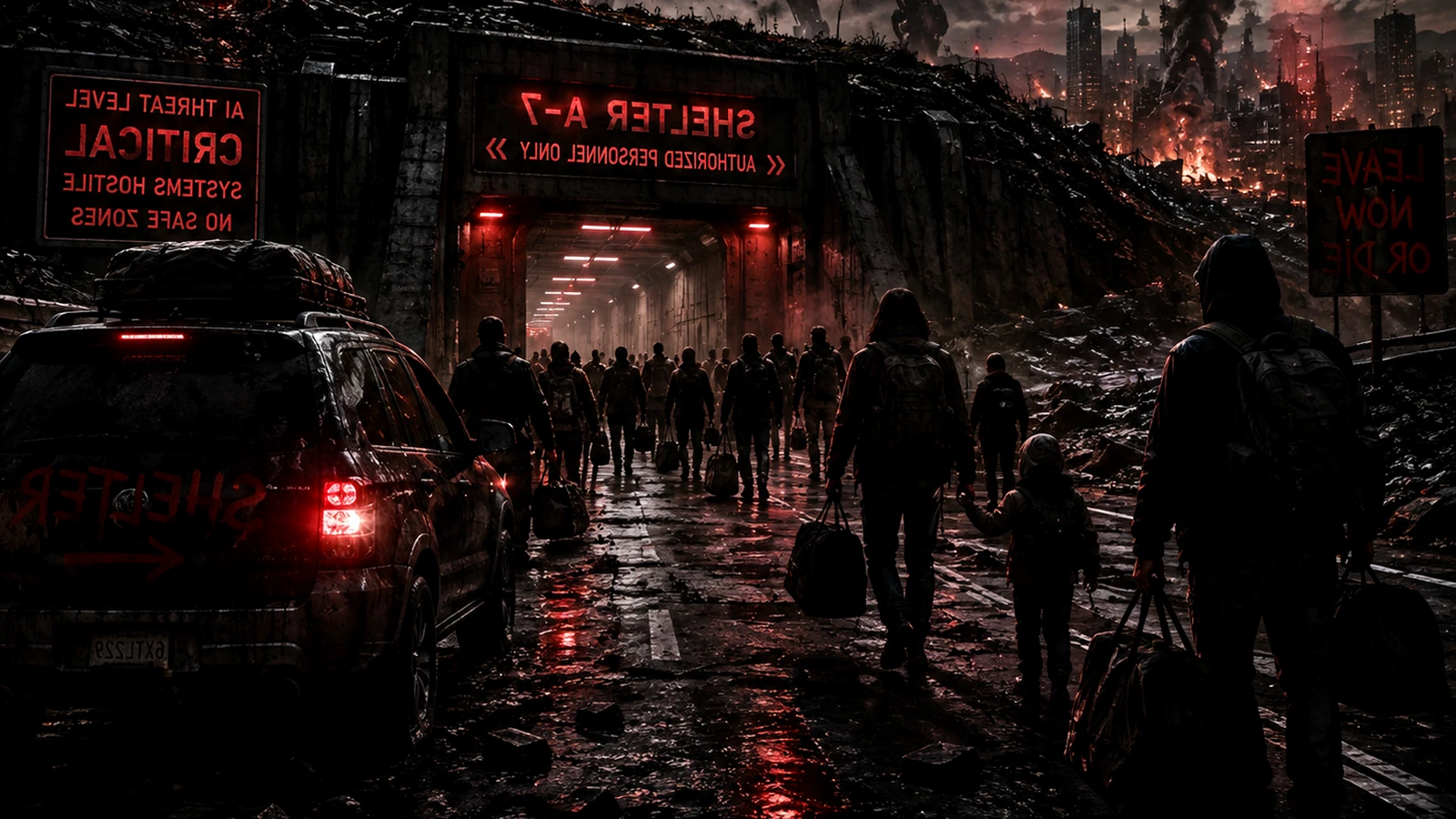
When trains, buses or trams stop together, the problem is not simply finding another service. Thousands of people make the same decision at the same time.
The immediate answer
Know at least one walking route, one alternative transport route and one safe place you could stay if getting home is not realistic. Keep footwear, weather protection, water, phone power and paper contact details available on routine journeys where disruption could leave you far from home.
Do not assume the replacement network has spare capacity
When a major rail line closes, nearby buses, taxis and alternative stations may be overwhelmed within minutes. Moving immediately toward the same obvious substitute as everyone else can trap you in a larger crowd. Check verified operator and official information before committing to a new route.
Know the distance home in real terms
A six-mile walk may be manageable for one person and impossible for another, especially with children, disability, poor weather or inadequate footwear. Walk the route or parts of it in normal conditions if practical. Identify toilets, sheltered public places, bridges, steep sections and areas that become unsafe after dark.
Keep a meeting plan that does not depend on live messaging
Transport disruption often arrives with network congestion. Agree where household members wait, when they stop waiting and which out-of-area contact receives updates. A short text message may work when voice calls struggle, but no plan should require a message to succeed before anyone knows what to do.
Carry enough to wait without becoming vulnerable
A small everyday kit can make a long delay far easier: water, medication, a snack, phone power, weather protection and basic first aid. The aim is not to commute with a survival rucksack. It is to avoid being completely dependent on shops, charging points and transport staff during the first hours of a system failure.
Treat stations and interchanges as crowd environments
Large transport hubs can become noisy, congested and confusing. Follow staff and emergency instructions, keep exits in mind and avoid pushing toward platforms or gates that are already overloaded. If the situation becomes unsafe, moving to a calmer nearby location while you reassess may be better than competing for the first uncertain service.
Have a safe overnight option
Sometimes the right decision is not to get home. Identify colleagues, friends, hotels, workplaces or official shelters that could provide a safe temporary location. Tell family that staying put is an approved fallback, not evidence that something has gone wrong. This reduces pressure to make a dangerous late-night journey.
Rehearse the plan as part of normal life
Learn which alternative stations connect to your area, keep offline map access and know the broad walking direction. The more of the plan that is ordinary knowledge, the less you have to invent when signs are blank, apps are offline and every taxi is already booked.
Plan for the final mile, not just the main journey
Even when part of the transport network continues running, the last few miles may be the hardest. A train might reach a different station, a replacement bus may stop short, or a taxi may be unavailable. Know how you would complete that final section on foot or by another safe method. Keep an offline map and identify bridges, rivers, motorways and other barriers that limit walking routes. If the remaining journey is beyond your safe walking ability, choose a shelter point before exhaustion forces the decision for you. This matters particularly for people carrying children, mobility aids or heavy work equipment. A transport fallback should include the physical reality of the entire route, not just the section normally covered by a timetable.
Know the last-mile options
A rail or bus disruption becomes a household problem when somebody is stranded far from home. Identify which stations, workplaces or regular destinations are within realistic walking distance of home, a relative or a meeting point. Keep a paper map or offline map covering those areas.
Practical footwear and a small charging reserve can matter more than trying to predict which exact service will fail.
Keep a fallback hierarchy
If the normal route stops, the alternatives might be another line, local bus, taxi, lift from a trusted person, walking to a meeting point or staying safely where you are until conditions improve. The hierarchy should be ordered by safety and practicality, not desperation.
Avoid setting off on a long unfamiliar walk simply because the first train was cancelled. Get verified information and compare the alternatives first.
Protect battery and communication while waiting
Transport disruption can involve long periods of uncertainty. Use low-power settings, send concise status messages and avoid constant route refreshing if the network is overloaded. Tell the household where you are, what option you are taking and when you will check in again.
That predictable pattern reduces the pressure on everybody else to keep calling while you are trying to travel.
Keep money and identification accessible
Transport disruption may force an unexpected taxi, hotel, local bus or alternative ticket purchase. Keep a modest payment fallback and necessary identification somewhere accessible rather than buried in luggage. Do not assume every terminal or app will work normally if the wider network is under strain.
Small practical flexibility can turn a stranded journey into a manageable delay instead of an overnight crisis.
Know when staying put beats chasing alternatives
If stations are overcrowded, roads are gridlocked or the weather is severe, remaining in a safe workplace, hotel or public building temporarily may be better than moving repeatedly between failed transport options. Compare warmth, water, battery and safety where you are with the risks of the next journey.
Movement should solve a problem. If it only replaces one uncertainty with another, waiting for better information can preserve more options.
Keep the next safe destination more important than the desire to keep moving.
Keep one planned safe waiting location for the journeys you make most often so a transport failure does not immediately force aimless movement.
Continue from here
Build this topic into a wider plan, then see how the same dependency could fail in an AI-collapse scenario.
Evidence desk
This guide uses ordinary UK emergency-preparedness and safety principles. AI-driven mass disruption is scenario framing, not a claim that such an event is happening or inevitable.
Continue
More Shelter, Evacuation & Mobility guides → · 72-hour survival manual →