Shelter, Evacuation & Mobility • HOME RESILIENCE
Home Shelter Resilience: Make Your House Work Through a Multi-Day Emergency
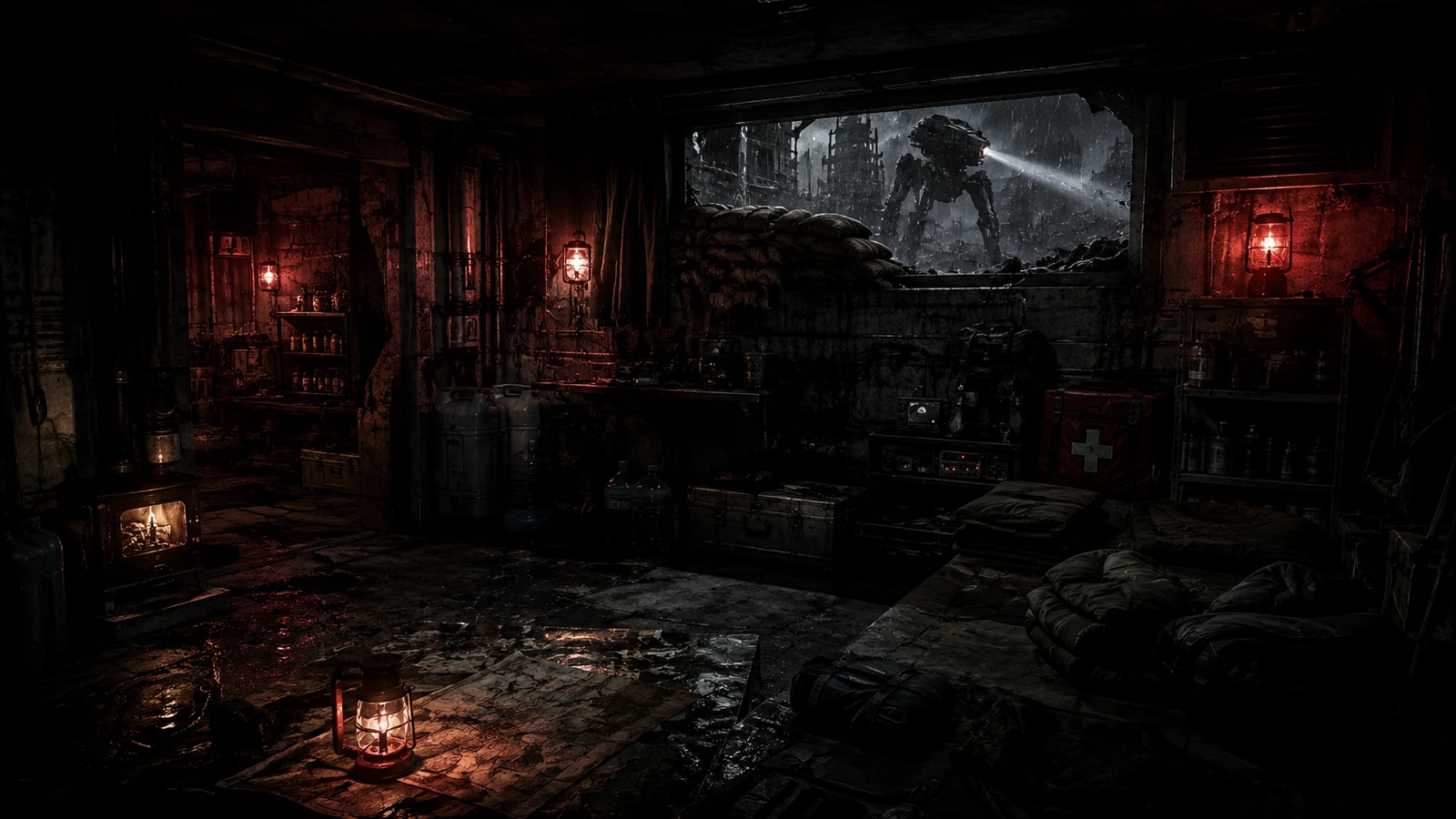
If evacuation is not required, home is often the strongest shelter you already own — but only while water, temperature, sanitation, information and medical needs remain manageable.
The immediate answer
Build the home plan around seven essentials: safe temperature, drinking water, sanitation, lighting, communication, medication and a clear reason to leave if conditions deteriorate. Stocking supplies matters, but the decision rules that tell you when home is no longer safe matter just as much.
Choose a core living zone
During a heating failure or severe weather, using one or two rooms can be easier than trying to maintain the whole property. Choose a space with safe ventilation, useful daylight, access to essentials and room for household members. Close unused internal doors where appropriate and use normal insulation measures rather than unsafe improvised heating.
Keep light safe and boring
Torches, lanterns and head torches reduce fire risk compared with relying on candles. Keep spare batteries where everyone can find them. Use low-level lighting to preserve power overnight and keep routes to toilets, stairs and exits visible.
Treat water and sanitation as separate systems
Stored drinking water is only part of the plan. You also need a way to wash hands, manage toilets and clean essential items if mains water stops. Follow water-company and public-health instructions during supply incidents. Do not assume boiling makes chemically contaminated water safe.
Protect indoor air
Smoke, combustion fumes and carbon monoxide can make an apparently intact home dangerous. Never run generators, barbecues or fuel-burning appliances indoors or in attached garages. Keep working carbon monoxide alarms where required and leave the property if official advice or symptoms indicate unsafe air.
Build an information corner
Keep the radio, paper contacts, printed local information, power banks and notebooks together. Record important messages rather than relying on memory. During misinformation-heavy disruption, separate verified official instructions from rumours and dramatic social-media claims.
Make medication and vulnerability visible
List prescription needs, medical equipment power requirements and household members who may need extra heat, cooling, mobility support or outside assistance. If someone depends on powered medical equipment, the plan needs a backup arrangement and an escalation point — not merely a larger battery.
Know when home has failed as a shelter
Leave or seek help when the building is structurally unsafe, fire or flood threatens it, indoor temperature becomes dangerous, water or sanitation cannot be maintained, critical medical needs cannot be met, or authorities instruct evacuation. Shelter-in-place is a strategy, not an ideology. A resilient household changes plan when evidence changes.
Run the house as a small system during disruption
Once a disruption lasts beyond a few hours, assign simple routines rather than reacting continuously. Set times for information checks, device charging, meals, water counts, medication, sanitation and sleep. Record the remaining water, battery capacity, food that needs using first and any change in the building or local hazard. This prevents multiple people from opening the fridge, charging non-essential devices or consuming supplies without knowing what remains. Give children age-appropriate jobs and keep vulnerable household members involved in decisions where possible. A written routine also makes handover easier if one adult needs to rest or leave temporarily. Resilience improves when the household becomes predictable: fewer unnecessary decisions, fewer duplicated tasks and a clear point at which supplies or conditions require outside help.
Choose the safest usable room
Different hazards favour different parts of a home. For an ordinary power cut, a smaller interior room may be easier to keep warm. For severe heat, a shaded lower room may be cooler. Flooding, fire or official shelter guidance can change the answer entirely. The household should understand which rooms are practical for warmth, sleep and communication without pretending there is one universally safest room.
Keep torches, water, medication and essential charging within reach so people are not repeatedly crossing dark or unsafe parts of the property.
Track the house as a set of critical services
Rather than asking whether the home “still works”, track water, sanitation, indoor temperature, power, communications and medical needs separately. One system can become critical while the others remain comfortable. A simple written status board makes that visible and helps the household decide when conditions are genuinely deteriorating.
This also prevents minor inconvenience from being mistaken for a reason to evacuate prematurely while still catching the serious problems early.
Keep an exit layer ready even when sheltering
Sheltering at home should not mean unpacking every evacuation item and scattering it around the house. Keep documents, medication, essential contacts and a small portable bag organised in case the decision changes. Fire, structural damage, unsafe temperature or official instructions can turn a shelter-in-place plan into an evacuation plan quickly.
Resilience comes from being able to change strategy without losing the basics you already prepared.
Protect rest as a resource
A household that stays awake checking every noise and update will make worse decisions the next day. Set information-check times, keep one alert-capable device accessible and let people sleep unless a real hazard requires attention.
Rest also makes resource management easier. Tired people forget medication, waste battery and argue over minor decisions. A resilient shelter plan includes enough routine and confidence that not every person has to stay on watch all night.
Protect the house from small preventable failures
Keep walkways clear, use safe lighting, manage food safely and avoid improvised heating or electrical setups that introduce new hazards. During a long disruption, ordinary accidents can become more serious because emergency and repair services may be slower.
Good shelter resilience is therefore partly about reducing the number of problems the household creates for itself while external systems are already under strain.
Review the shelter plan after major household changes so medical, mobility and communication needs remain current.
Keep one small reserve of water, battery and easy food untouched for unexpected delays. A little unused capacity gives the household room to absorb a change in conditions.
Keep the operating picture current and simple.
Keep one reserve margin available.
Continue from here
Build this topic into a wider plan, then see how the same dependency could fail in an AI-collapse scenario.
Evidence desk
This guide uses ordinary UK emergency-preparedness and safety principles. AI-driven mass disruption is scenario framing, not a claim that such an event is happening or inevitable.
Continue
More Shelter, Evacuation & Mobility guides → · 72-hour survival manual →