Water & Sanitation • SYSTEM COLLAPSE SCENARIO
When Mains Water Fails: The Catastrophic Water-System Scenario
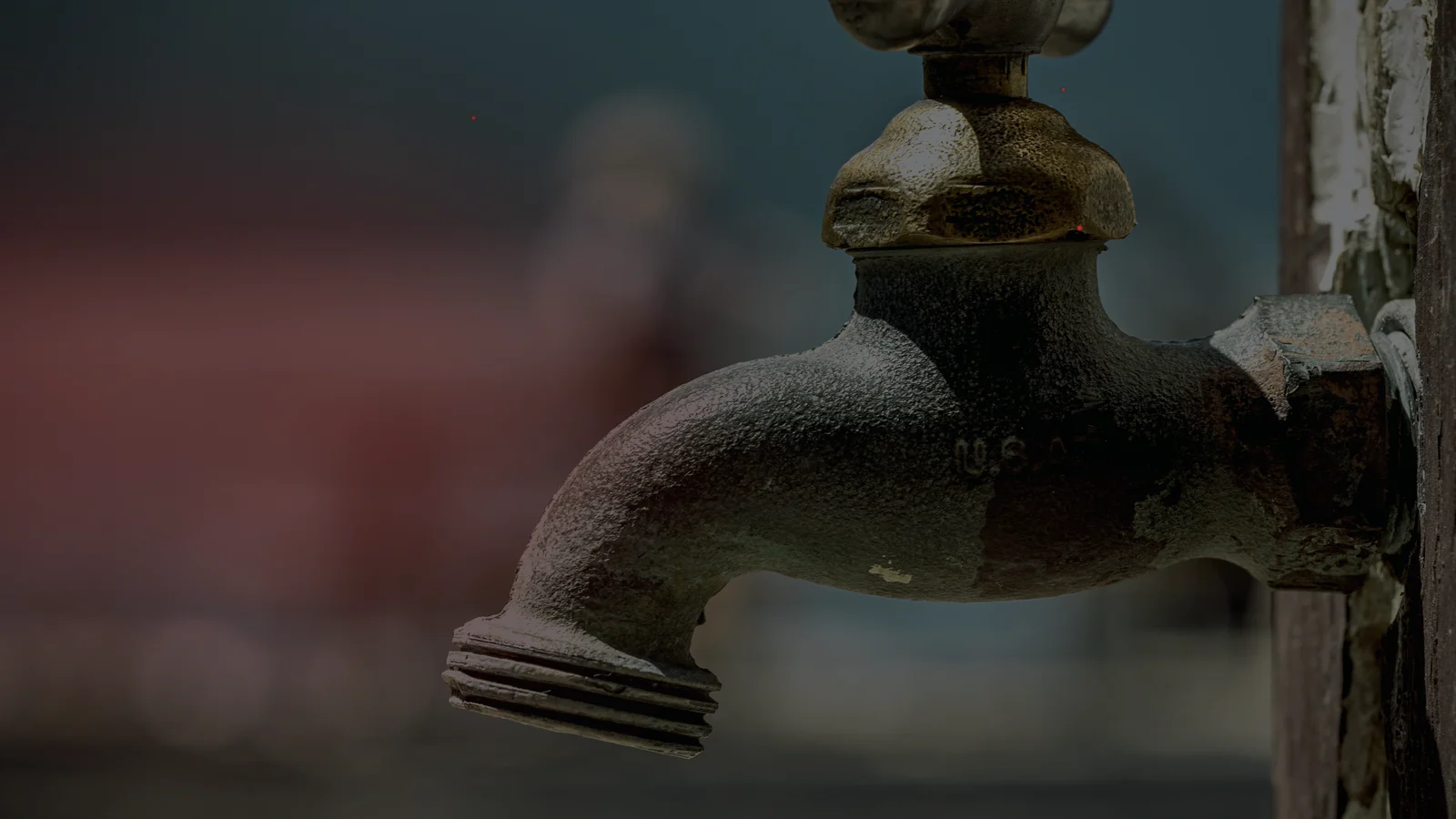
A nationwide loss of mains water is an extreme scenario, but the dependencies behind it are real: treatment, pumping, electricity, chemicals, telemetry, communications, staffing and wastewater systems all have to keep working. This page stress-tests what happens when several of those layers fail together.
The first sign may be pressure loss, not an empty tap
A large system does not necessarily switch from normal to zero in one moment. Pressure may fall, upper floors may lose supply first, reservoirs may buffer some areas and water companies may isolate parts of the network. Households that interpret every change as contamination can create panic; households that ignore official notices can create health risk. The first move is information: confirm the incident, record notices and protect the safe supply already in the home.
Power failure can become water failure
Water treatment and distribution depend on electrical systems, pumping and control equipment. UK emergency planning explicitly recognises that a severe national power outage could disrupt water and sewerage. Backup generation and resilience measures exist, so this is not a claim that the network fails instantly when electricity is lost. The scenario becomes dangerous when outage duration, fuel logistics, equipment faults and communications problems begin to overlap.
Wastewater may become the hidden constraint
If sewerage pumping or treatment is impaired, households can create a second crisis by continuing to send large volumes into a system that cannot move them. That is why official national-power-outage contingency advice may tell people not to flush. The practical lesson is that drinking water and sanitation cannot be planned separately: conserving potable water while overloading failed sewage infrastructure is not resilience.
Alternative supply becomes a logistics operation
Water companies can deploy bottled supplies, tankers or bowsers, but a widespread incident creates transport, staffing and queueing challenges. A family needing dozens of litres cannot casually carry them home over a long distance. Roads, fuel availability and communications may also be degraded in the wider AI-collapse scenario. Households with a maintained three-day drinking reserve buy time for official logistics to organise rather than joining the first rush.
Information attacks could make a real outage worse
A hostile or uncontrolled AI system does not need to physically poison water to create harm. False messages about contamination, fake distribution points, fabricated evacuation orders or manipulated videos could send people away from safe supplies and toward unsafe ones. Treat urgent water instructions as high-value information: verify them through the water company, local authority, emergency broadcasts or other trusted channels rather than forwarding screenshots.
The household transitions from comfort to ration discipline
Once restoration becomes uncertain, allocate potable water, reduce water-intensive meals, postpone non-essential washing and assign utility water to tasks that do not require drinking quality. Track litres rather than guessing. Protect vulnerable household members first and contact priority services early. This is not a bunker fantasy; it is ordinary resource management under a severe constraint.
Recovery is not the moment the tap first runs
After a significant failure, authorities may issue flushing instructions, boil-water notices or other restrictions while the system is stabilised and tested. Do not drink immediately just because pressure returns. Follow the current notice until it is formally lifted. Clean storage containers, replenish reserves and record what failed in the household plan. A system-level disaster becomes survivable through boring layers of preparation: safe water, clear information, sanitation discipline and time.
Confirm whether the problem is pressure, supply or quality
A dry tap can mean a local plumbing issue, a burst main, low pressure or a wider outage. Discoloured or unusual water can indicate a different problem entirely. Check the supplier’s official information before assuming the cause or deciding how the water can be used.
If the supplier issues a restriction or safety notice, follow it even if water begins flowing again.
Protect the clean reserve from household demand
Once mains water stops, normal habits can empty stored drinking water surprisingly quickly. Pause high-use tasks such as laundry and unnecessary cleaning, and use separate non-drinking water for toilets or suitable cleaning tasks where official guidance allows.
Keep one container or group of bottles physically marked for drinking so it cannot be consumed accidentally for lower-priority uses.
Use restoration carefully
When water returns, do not assume the first flow means the system is fully normal. Follow any flushing, pressure or boil-water instructions from the supplier and check whether the outage affected your area’s water quality.
Once normal service is confirmed, refill and review the emergency reserve before returning to ordinary routines.
Keep one low-water meal plan
During a supply failure, food preparation can consume more water than expected. Keep several meals that need little or no cooking water and create minimal washing-up. That preserves the drinking reserve while still allowing the household to eat normally enough.
Use disposable or low-wash options only where sensible and avoid creating unnecessary waste if normal washing facilities are likely to return soon.
Check vulnerable needs early
Medication, infant feeding, some medical equipment and care routines may depend on reliable clean water. Identify those needs before the household starts rationing casually.
If the outage threatens a medically important requirement, seek advice or support early while transport and alternative supplies are still easier to arrange.
Keep one paper note of the supplier contact details and the household’s clean-water locations. If phones are flat or cloud contacts are unavailable, the family can still find the right number and avoid wasting safe water simply because nobody remembers where the reserve was stored.
Keep the household response tied to the supplier’s current advice and preserve the cleanest water for the highest-priority uses.
Keep clean drinking water protected until the supplier confirms what has happened and what uses remain safe.
Continue from here
Build this topic into a wider plan, then see how the same dependency could fail in an AI-collapse scenario.
Evidence desk
Practical water and sanitation actions on this page use current UK emergency and drinking-water guidance. Catastrophic AI-triggered network failure is scenario analysis, not a claim that such an event is happening or inevitable.
Practical guidance reviewed: August 2026 · In a real emergency, follow official local instructions and emergency services.