Neighbourhood Resilience Plan: How a Street Keeps Functioning When Systems Fail
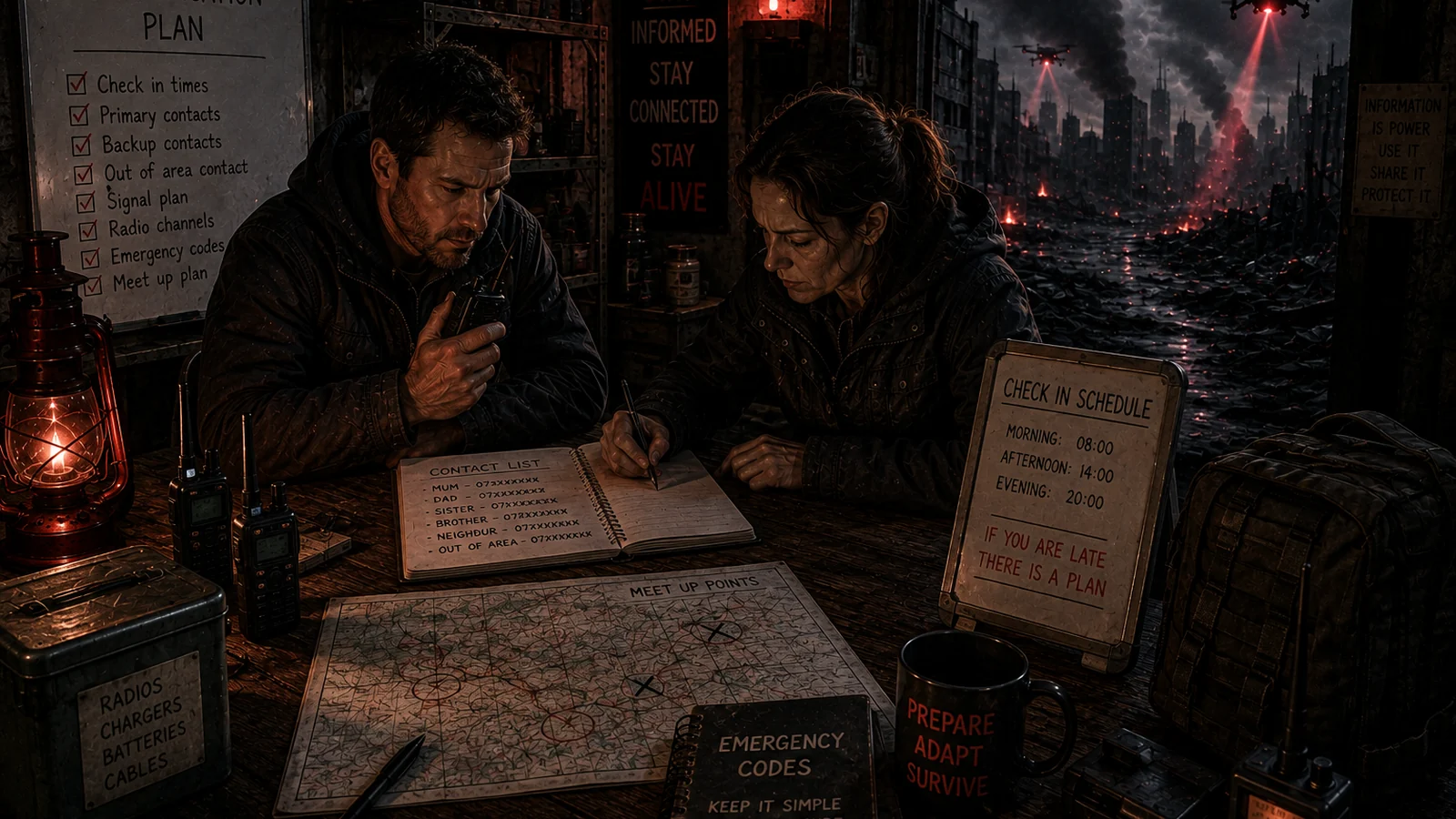
A practical neighbourhood emergency plan for communication, vulnerable residents, shared skills, welfare checks and mutual aid without confrontation.
The immediate answer
A resilient neighbourhood does not need a militia or a bunker committee. It needs a simple contact tree, awareness of people who may need help, a way to share reliable information, and clear boundaries around what neighbours can safely do for one another. Start with ordinary cooperation before a crisis, not authority or confrontation after one begins.
Build a voluntary contact tree
Ask willing neighbours how they prefer to be contacted and keep the list proportionate. Include at least one person at each end of the street or building where practical. Do not collect sensitive medical details unnecessarily. The purpose is to confirm welfare and pass reliable information, not create a surveillance register.
Know who may need an early check
Older residents, disabled people, families with very young children and people using powered medical equipment may be affected sooner by outages. A simple knock on the door can matter if mobile networks fail. Offer help without assuming incapacity, and respect a person who does not want to participate.
Map useful skills and equipment
A neighbourhood may already contain first-aid knowledge, practical trades, language skills, radios, charging capacity or safe transport. Knowing what exists can reduce duplicated effort. Shared equipment should remain voluntary and should never be treated as communal property simply because an emergency has happened.
Create an information discipline
Agree that urgent claims are checked against official sources before being repeated. One false message about contaminated water, evacuation or violence can send people into unnecessary danger. Use a notice point, group message or radio check-in if available, but keep a paper fallback for people who are offline.
Coordinate welfare, not vigilante security
Home security matters during prolonged disruption, but neighbours should focus on presence, lighting, communication and reporting genuine danger. Do not organise confrontations, roadblocks or armed patrols. If there is immediate danger or crime, use emergency services when available and prioritise withdrawal and safety over protecting property.
Share capacity without advertising stockpiles
Neighbours can coordinate charging, childcare, transport or information without revealing detailed household supplies. People may have different levels of preparation and different vulnerabilities. Mutual aid works better when requests are specific and bounded rather than when one household becomes responsible for the whole street.
Run one low-key exercise
Test whether the contact tree works, identify where people would gather for information and check that vulnerable residents know who will call. Keep the exercise practical rather than theatrical. A neighbourhood that can organise calmly for a six-hour blackout is better prepared for a much larger disruption.
Decide what the neighbourhood will not do
Boundaries are part of resilience. Agree that the group will not spread unverified rumours, pressure residents to reveal supplies, enter homes without permission, confront strangers, impersonate officials or create its own enforcement system. Those behaviours can turn uncertainty into conflict very quickly. The neighbourhood plan should remain a welfare and information network: check people, share verified updates, coordinate practical help and report genuine danger through proper channels. Clear limits make cooperation more trustworthy because residents know participation does not mean surrendering privacy or control.
Keep the network useful after day three
If disruption continues, avoid turning every conversation into an emergency meeting. Set one or two predictable check-in times, track only unresolved needs, and rotate simple tasks so the same person is not carrying the whole street. A small written board or paper list can preserve continuity when phones are unreliable. The objective is a neighbourhood that stays calm, informed and useful for longer, not one that exhausts itself in the first twenty-four hours.
Map people and capabilities, not private details
A neighbourhood resilience plan can note who is willing to help with welfare checks, transport, first-aid coordination, local information or practical tasks without collecting unnecessary personal information. The objective is to understand useful capability, not to build a detailed database about residents.
Keep participation voluntary and make it clear how information will be used.
Agree the communication fallback
A group chat is convenient, but the plan should also work if mobile data fails. Choose a physical notice point, a simple check-in routine or another low-tech fallback that everyone understands.
Use recognised official sources for emergency instructions and label unconfirmed local observations clearly so the network does not become a rumour amplifier.
Practise one small scenario
Test something ordinary: a two-hour power cut, a welfare-check rota or how the street would share verified water-supply information. Small exercises reveal outdated contact details and unclear roles without turning the plan into theatre.
After the test, fix only the friction points that actually appeared. Simple plans are easier to maintain and more likely to survive a real disruption.
Keep the plan connected to official services
A neighbourhood group should know how to reach the local authority, utilities and emergency services rather than trying to replace them. Informal support works best when it helps residents interpret and act on verified guidance, identify people who need assistance and reduce unnecessary demand on stretched services.
Keep one list of official contact routes and recognised local information points. If the group has to improvise a temporary notice board or welfare rota, make clear what is community information and what comes from an official source.
That distinction protects trust and makes the local network useful during both disruption and recovery.
Keep one maintenance date
Review the neighbourhood contacts, official numbers and volunteer roles once or twice a year. People move, phone numbers change and local services relocate. A short scheduled review prevents the plan becoming a historical document nobody trusts.
Remove information the group no longer needs rather than allowing the plan to grow indefinitely.
Keep the plan easy enough that a new resident can understand the basics without needing months of local knowledge.
Keep one person responsible for maintaining the current contact list so updates do not become everybody’s job and nobody’s responsibility.
Keep the plan small enough to maintain and clear enough to use without a long explanation.
Keep the plan light enough to maintain, with clear roles, current contacts and one dependable low-tech fallback.
Continue from here
Build this topic into a wider plan, then see how the same dependency could fail in an AI-collapse scenario.
Evidence desk
Practical actions follow ordinary UK emergency-preparedness principles. Catastrophic AI-collapse framing is scenario content, not a claim that such an event is occurring.
Continue
More Family, Community & Security guides → · 72-hour survival manual →