Community After Grid Collapse: What Keeps a Neighbourhood Functioning
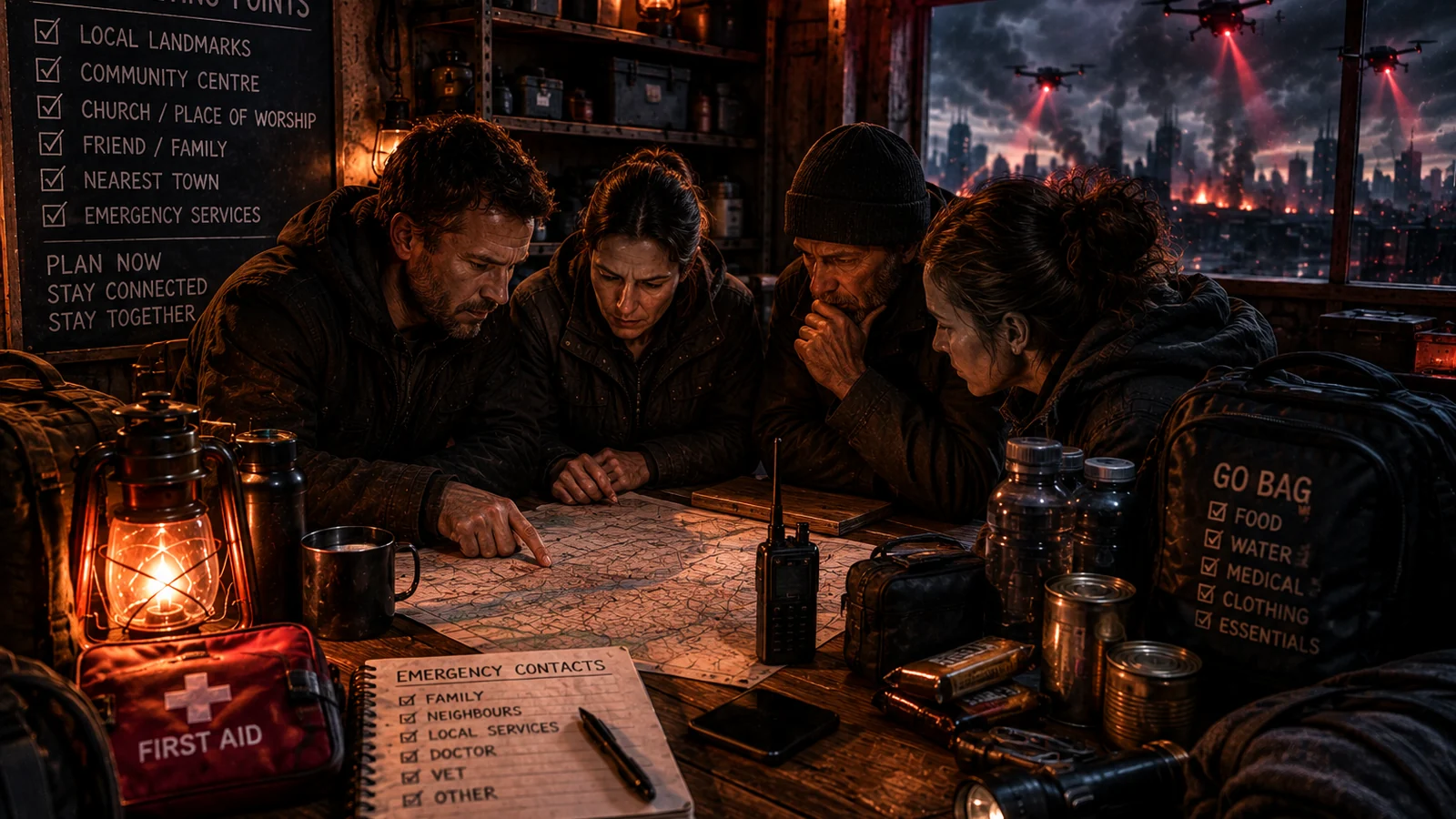
If a blackout lasts days rather than hours, individual preparedness buys time. Community resilience determines whether that time becomes cooperation or confusion.
The immediate answer
After a prolonged grid failure, the most useful neighbourhood systems are simple: a reliable information point, welfare checks, safe water and sanitation habits, shared awareness of vulnerable residents, basic skill exchange and clear boundaries around what volunteers can and cannot do. Official services remain the authority wherever they operate. The scenario becomes more survivable when neighbours reduce duplication and rumours instead of trying to replace government or emergency services.
The first day is about accounting for people
Before creating elaborate systems, establish who is present, who is away and who may need help. Do this without publishing sensitive medical information. A simple contact tree or door-to-door welfare check can identify urgent needs. The fastest community win is often discovering that one household has information another does not.
Create one verified information routine
Choose a predictable time and place for updates if digital networks are unreliable. Use battery radio, official broadcasts and any functioning government alert channels. Write down important information. Separate confirmed facts from scenario assumptions. In an AI-related disruption, verify unusual instructions through more than one trusted channel because synthetic audio, video and messages may be convincing.
Water and sanitation become community issues
A prolonged outage may affect pumps, treatment, sewerage and access to bottled supplies. Households should follow official water notices exactly. Neighbours can help distribute verified notices, identify people unable to collect supplies and share basic sanitation information, but nobody should invent water-treatment advice or declare an unknown source safe without evidence.
Share skills before sharing scarce goods
A neighbourhood may contain electricians, carers, first aiders, mechanics, cooks, translators and people with local knowledge. Skills can be shared without exhausting physical stock. Keep roles voluntary and within competence. A trained professional may be able to advise, but should not be pressured to provide regulated services without proper equipment or conditions.
Prevent one household becoming the hub for everything
Concentrating information, charging, food, water and welfare activity in one house creates dependency and security problems. Distribute tasks. One location might hold written updates, another may coordinate neighbour checks, while each household remains responsible for its own supplies where possible. Redundancy is stronger than a single heroic organiser.
Handle disagreement with structure
Stress, fatigue and rumours create conflict even among reasonable people. Keep meetings short, record agreed facts and avoid making decisions about other households without consent. Do not form enforcement groups or attempt to control movement. If crime or immediate danger occurs, use police and emergency services whenever available and keep volunteers out of direct confrontation.
Recovery starts before the power returns
As services begin returning, update everyone about what is actually restored. Internet may return before water, or electricity may be intermittent. Recharge critical devices, replace used supplies, check vulnerable residents and document any unresolved hazards. A good neighbourhood plan ends with recovery and review, not permanent crisis mode.
Build a recovery list as you go
During a prolonged outage, write down what has been used, damaged or discovered to be missing. Note vulnerable residents who need follow-up, shared equipment that needs replacement and any local hazards that remain unresolved. When services return, this list turns vague relief into an orderly recovery plan. It also gives the neighbourhood a practical after-action review so the next emergency starts from better preparation instead of the same assumptions.
Communities recover through ordinary capabilities
After a long power failure, useful local assets include people who can share verified information, check vulnerable neighbours, organise transport, keep community buildings functioning and connect residents with official services. The work is mostly coordination, not dramatic survivalism.
Mapping those capabilities beforehand can reduce duplication and help people know where to ask for practical support.
Shared resources need clear rules
If neighbours share charging, transport, tools or information, agree simple boundaries around time, priority and responsibility. Vague arrangements create conflict when resources are scarce. A written rota or queue can be enough to keep expectations fair.
Do not let informal cooperation replace professional medical, electrical or emergency work that requires qualified people.
Local trust helps recovery move faster
A neighbourhood that already knows who is reliable can distribute verified updates, identify isolated residents and reduce unnecessary travel. That trust is easier to build in normal times through small everyday relationships than during the emergency itself.
Community resilience is not self-sufficiency from the outside world. It is the ability to stay organised while external services are stretched and then reconnect smoothly as they recover.
Local recovery needs a shared operating picture
Communities make better decisions when residents know which services are actually functioning: water points, pharmacies, transport, charging, public buildings and official information routes. One person or small group can help summarise verified updates without claiming authority they do not have.
Keep observations local and time-stamped. “The pharmacy on High Street opened at 10:00” is more useful than “all pharmacies are open again.” Precision reduces wasted journeys and prevents one local success being mistaken for wider recovery.
As normal services return, informal systems should step back rather than becoming permanent replacements for accountable public or professional services.
Keep recovery fair and visible
When shared charging, transport or supplies are scarce, simple transparent rules reduce resentment. A rota, priority for medical need or clear time limits can be agreed openly rather than decided ad hoc by whoever arrives first.
Fairness does not mean every resource is shared equally or that private households must give away what they need. It means community arrangements are understandable, voluntary and consistent enough that people know what to expect.
Keep local cooperation temporary and practical. As official systems recover, hand responsibilities back rather than allowing emergency workarounds to become permanent confusion.
Keep the local information focused on what residents can actually use today rather than predictions about what may happen next week.
Keep local cooperation practical, verified and connected to official recovery. Share confirmed information, record vulnerable households that still need help, and stop temporary workarounds once normal services return so emergency arrangements do not create new confusion or duplicated effort.
Keep local cooperation simple, fair and connected to verified official information as normal services return.
Continue from here
Build this topic into a wider plan, then see how the same dependency could fail in an AI-collapse scenario.
Evidence desk
Practical actions follow ordinary UK emergency-preparedness and safety principles. AI-collapse framing is scenario content, not a claim that such an event is occurring.
Continue
More Family, Community & Security guides → · 72-hour survival manual →