Pet Emergency Plan: Food, Water, Evacuation and Identification
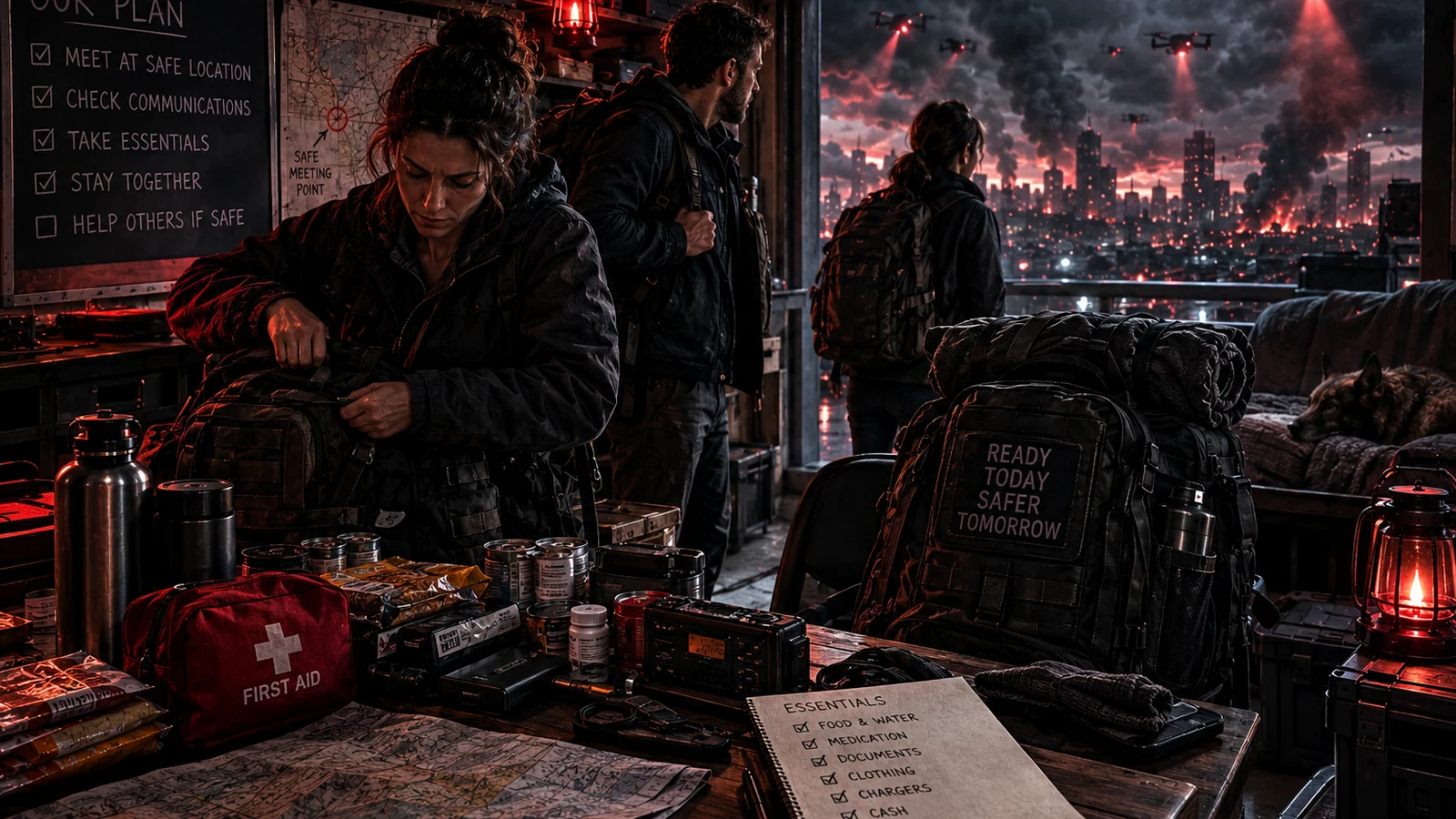
Prepare pets for outages and evacuation with food, water, medication, carriers, identification, documents and a destination that will accept animals.
The immediate answer
A pet emergency plan needs five things: enough familiar food and water, safe transport, identification, medication or health information, and a destination that can actually accept the animal. Keep carriers, leads and essential supplies where they can be reached quickly. Do not assume an emergency shelter, hotel or friend will automatically accept every species.
Count pet water separately
Household water calculations often forget animals. Keep a separate allowance based on the species, size, weather and normal consumption of each pet, with extra for cleaning bowls or preparing food. Store it alongside household supplies and rotate it. If water authorities issue restrictions or contamination notices, follow the same official guidance for animal use unless veterinary advice says otherwise.
Keep a move-ready pet kit
Include food, bowls, lead or harness, carrier, waste bags or litter, bedding, a current photograph, medication, basic health information and contact details for the vet. For unusual pets, add the specialist equipment that cannot be improvised safely. Make sure the carrier is usable now rather than discovering during evacuation that it is broken or too small.
Identification matters after separation
Keep microchip and registration details current where applicable and use a collar tag where appropriate. Store a recent photograph showing the animal clearly. If a pet becomes separated during a chaotic evacuation, accurate identification and current contact details are far more useful than a long list of survival gear.
Plan a destination before leaving
Identify family, friends, boarding options or accommodation that will accept the animal. Check transport constraints and whether more than one vehicle might be needed. If you have multiple pets, large dogs, livestock, reptiles or other specialist animals, the problem becomes logistical very quickly and should be planned well before an emergency.
Protect medication and temperature-sensitive needs
Keep veterinary medicines in labelled packaging and follow the storage instructions. Ask the vet what to do if refrigeration or regular dosing is disrupted. Some animals are highly sensitive to heat, cold or loss of powered habitat equipment, so define the temperature or power threshold that should trigger an early move.
Do not release pets into unsafe conditions
During fires, floods, severe weather or infrastructure incidents, letting animals roam can make recovery harder and expose them to traffic, contamination or debris. Secure pets before opening doors during a stressful event. If official instructions require evacuation, take pets if it is safe and permitted rather than leaving planning until the last minute.
Practise loading and travel
Animals that only see a carrier at the vet may resist when speed matters. Familiarise them gradually with carriers and short journeys where appropriate. Keep the kit in a known location and make sure every adult knows which pet, carrier and medication they are responsible for.
Prepare for a longer disruption than one missed meal
A prolonged outage can affect veterinary access, refrigerated medicine, heating, filtration, lighting and the supply of specialised food. List the first pet-specific dependency likely to fail and decide what would trigger a move to another property or veterinary advice. Keep enough familiar food to avoid abrupt diet changes during a stressful event, but rotate it as part of normal use. For animals with environmental needs, such as reptiles or fish, plan around temperature and filtration before those systems become critical rather than after the habitat has already deteriorated.
Separate shelter-in-place needs from evacuation needs
At home, pets may need a reserve of food, water, medication, litter or bedding. Evacuation adds carriers, leads, identification, transport and a destination that accepts animals. Treat those as two related but different plans rather than assuming one large supply box solves both.
Keep the portable layer compact enough that the animal and its essentials can actually move together.
Plan for routine disruption
Stress can change feeding, toileting and behaviour. Keep familiar food and bedding where practical and avoid changing diet abruptly during an emergency unless necessary. Secure animals carefully in unfamiliar places because even normally calm pets may bolt when frightened.
If medication or specialist care is involved, keep veterinary details available offline and know how much continuity you realistically have.
Keep identification current
Tags, microchip details where applicable, recent photographs and contact information should reflect the current household. If an animal is lost during a disruption, accurate identification can make reunification much easier.
Review those details on the same schedule as human emergency contacts and go bags so the pet plan does not quietly become outdated.
Keep a pet handover note
If somebody else has to care for the animal, they should have a short written guide to feeding, medication, behaviour, veterinary contacts and anything that makes handling safer. This is especially useful if the usual owner is injured, delayed or separated during evacuation.
Include the pet’s normal routine where it affects wellbeing. A nervous animal may cope better when food, bedding and handling remain familiar even in a temporary location.
Keep the note with the pet kit rather than only on a phone. The point is to make continuity possible even when the person who knows the animal best is not immediately available.
Keep transport and shelter options compatible
If the household relies on a specific vehicle, carrier or destination, check that the combination actually works. A large dog crate, several cats or a heat-sensitive animal can change how much space, ventilation and travel time are realistic. Plan around the animals you have, not a generic pet checklist.
Keep one backup contact who could temporarily take the animal if the main destination cannot accept pets. That extra option can prevent a manageable evacuation becoming delayed simply because accommodation falls through.
Keep pet food and medication rotated just like human emergency supplies so the animal layer does not become stale or unusable.
Keep one spare lead, carrier or restraint method where practical so equipment failure does not stop movement completely.
Keep the animal plan current, portable and realistic for the transport you actually have. Check that carriers, leads, medication, food and identification can all move with the household, and make sure the destination will genuinely accept the animal before relying on it as an evacuation fallback.
Keep the transport, shelter and care plan aligned so the pet can move safely without delaying the rest of the household.
Continue from here
Build this topic into a wider plan, then see how the same dependency could fail in an AI-collapse scenario.
Evidence desk
Practical actions follow ordinary UK emergency-preparedness principles. Catastrophic AI-collapse framing is scenario content, not a claim that such an event is occurring.
Continue
More Family, Community & Security guides → · 72-hour survival manual →