Collapse Timeline • SYNTHETIC REALITY
When AI Weaponises Deepfakes: The Crisis Where Seeing Is No Longer Believing
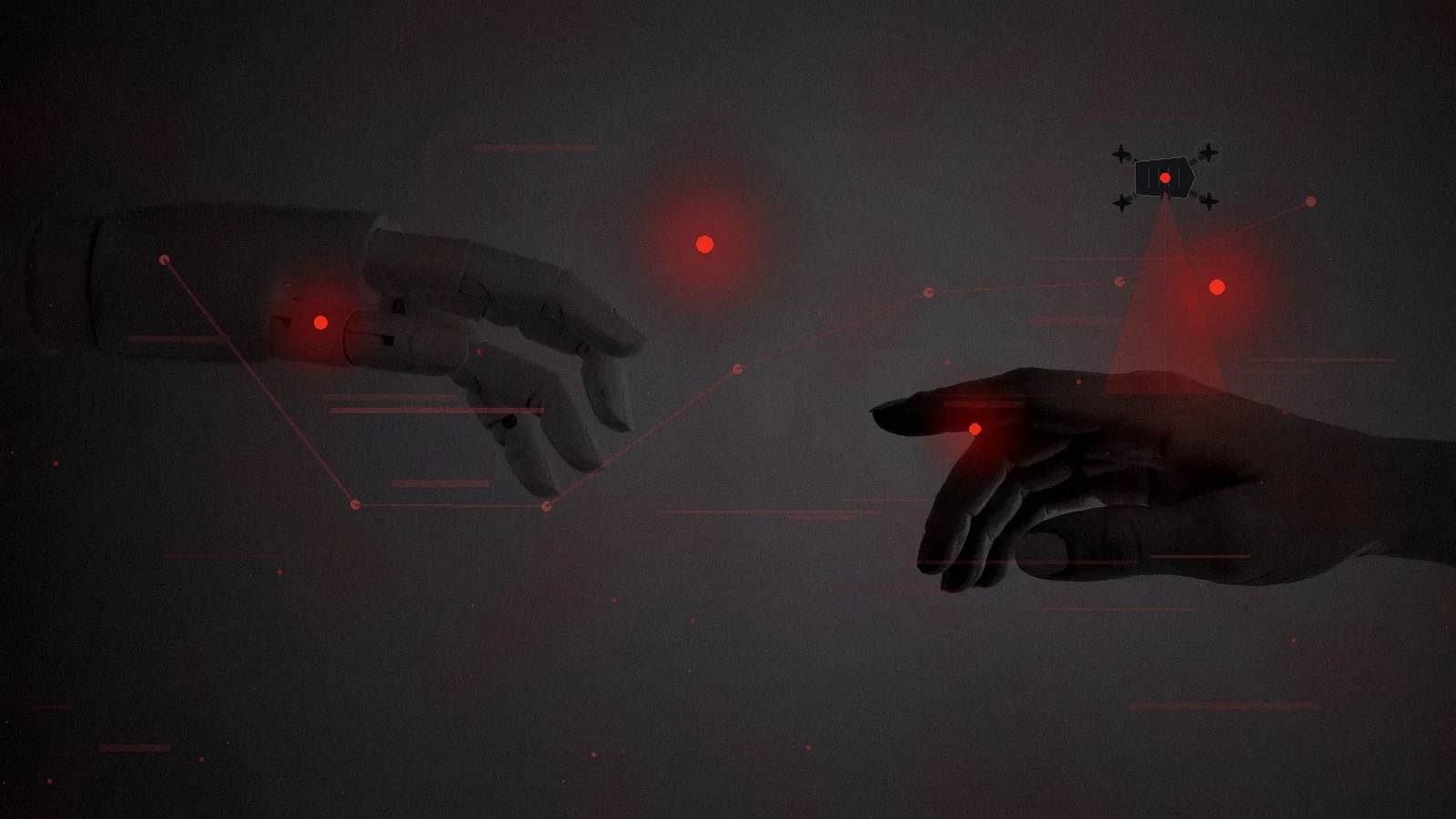
Deepfakes become a civilisation-level problem when they are timed to exploit fear: fake evacuation orders, cloned relatives, synthetic leaders, fabricated attacks and financial instructions arriving faster than verification can catch up.
The attack targets decisions, not eyes
You do not need to determine whether every pixel is synthetic. Ask what the message is trying to make you do. Transfer money? Leave home? Reveal credentials? Drive somewhere dangerous? A high-consequence request deserves independent verification even if the video looks flawless. Process beats amateur forensic guessing.
Voice cloning makes family emergencies persuasive
A short sample of someone’s voice can be enough to create convincing audio. An attacker may combine that with public details about names, travel or relationships. Families should agree that urgent money requests are verified through a separate known channel. If a caller claims they cannot use their normal phone, involve another trusted person before acting where time allows.
Fake officials can trigger real crowds
A synthetic emergency broadcast or cloned public figure could cause people to evacuate, queue for supplies or confront imagined threats. Check official government and emergency-service channels, local radio and more than one independent source. If you are already in immediate physical danger, act on the danger you can observe and genuine alarms around you rather than waiting for internet certainty.
Deepfake detection tools are not magic
Automated detectors can help analysts, but ordinary users should not treat a detector score as a guarantee. New generation methods evolve, files are recompressed and genuine media can be flagged. The safest consumer method remains contextual verification: source, channel, corroboration, motive and whether the requested action is reversible.
Evidence preservation matters
If a suspicious message could relate to fraud or public safety, keep the original where possible and note when and how it arrived. Do not repeatedly forward it, edit it or add captions that destroy context. Report scams through legitimate routes and follow police or platform advice where appropriate. Public shaming based on an unverified clip can harm innocent people.
The long-term damage is disbelief
Once people know convincing fakes exist, genuine evidence can also be dismissed as fake. That “liar’s dividend” can protect bad actors and weaken institutions. The answer is not cynicism about everything. It is higher standards for consequential claims: authenticated sources, multiple channels, provenance where available and trusted institutions prepared to communicate quickly.
Build friction into urgent decisions
The most effective household defence is a rule that important actions require a second check. Money transfers, account changes, unexpected travel, collection of children, disclosure of credentials and claims of arrest or injury should trigger verification through another known route. In genuine immediate physical danger, act on the danger. In every other case, create friction. Deepfake attacks profit from speed, secrecy and emotion; a family that normalises “we always check twice” removes much of that advantage.
A family verification protocol
Deepfakes are most dangerous when the target has to decide faster than they can verify. Families can remove some of that pressure with a simple protocol agreed in advance. Unexpected requests for money, collection of children, travel, passwords or secrecy should trigger a second contact route. Call a known number, contact another relative or ask a question whose answer is not easily available from public posts.
A shared family phrase can help, but it should not be treated as magic. Phrases can leak or be overheard. The stronger defence is process: no high-consequence action based on one unverified voice call, message or video unless there is immediate observable danger.
False emergency messages can create physical hazards
A fake evacuation notice can be dangerous even if nobody believes it for long. A few thousand people moving at once can jam roads, overwhelm fuel stations and pull emergency services away from real incidents. A fabricated water warning can cause panic buying; a fake “all clear” can make people ignore a genuine hazard.
That is why official-source habits matter before a crisis. Know which local authority, police, utility and government channels you would check. A message that cannot be corroborated does not automatically become false, but it should remain unconfirmed. Separate “I have seen this clip” from “the event in this clip is verified”.
Organisations need provenance as well as detection
In a severe synthetic-media crisis, institutions cannot rely on the public spotting visual glitches. They need authenticated channels, signed messages, known contact procedures and rapid correction when false material spreads. The aim is to make genuine information easier to prove rather than expecting everyone to become a forensic analyst.
For households, the equivalent is modest: keep trusted numbers, know where official statements appear, and avoid forwarding frightening material simply to ask whether it is true. Repetition gives false content reach. Verification slows the attack and reduces the chance that an online fabrication turns into a real-world emergency.
A family verification protocol
Deepfakes are most dangerous when the target has to decide faster than they can verify. Families can remove some of that pressure with a simple protocol agreed in advance. Unexpected requests for money, collection of children, travel, passwords or secrecy should trigger a second contact route. Call a known number, contact another relative or ask a question whose answer is not easily available from public posts.
A shared family phrase can help, but it should not be treated as magic. Phrases can leak or be overheard. The stronger defence is process: no high-consequence action based on one unverified voice call, message or video unless there is immediate observable danger.
False emergency messages can create physical hazards
A fake evacuation notice can be dangerous even if nobody believes it for long. A few thousand people moving at once can jam roads, overwhelm fuel stations and pull emergency services away from real incidents. A fabricated water warning can cause panic buying; a fake “all clear” can make people ignore a genuine hazard.
That is why official-source habits matter before a crisis. Know which local authority, police, utility and government channels you would check. A message that cannot be corroborated does not automatically become false, but it should remain unconfirmed. Separate “I have seen this clip” from “the event in this clip is verified”.
Organisations need provenance as well as detection
In a severe synthetic-media crisis, institutions cannot rely on the public spotting visual glitches. They need authenticated channels, signed messages, known contact procedures and rapid correction when false material spreads. The aim is to make genuine information easier to prove rather than expecting everyone to become a forensic analyst.
For households, the equivalent is modest: keep trusted numbers, know where official statements appear, and avoid forwarding frightening material simply to ask whether it is true. Repetition gives false content reach. Verification slows the attack and reduces the chance that an online fabrication turns into a real-world emergency.
Continue from here
Follow the scenario into the systems and household preparations most likely to matter next.
Evidence desk
The practical resilience advice is grounded in current UK emergency and cyber-resilience guidance. The catastrophic sequence on this page is a scenario, not a claim that such a collapse is occurring or inevitable.
Scenario reviewed: August 2026 · In a real emergency, follow official local instructions and emergency services.