Power & Grid Survival • PORTABLE POWER
Portable Power Station Guide for Blackouts: Capacity, Runtime and Safety
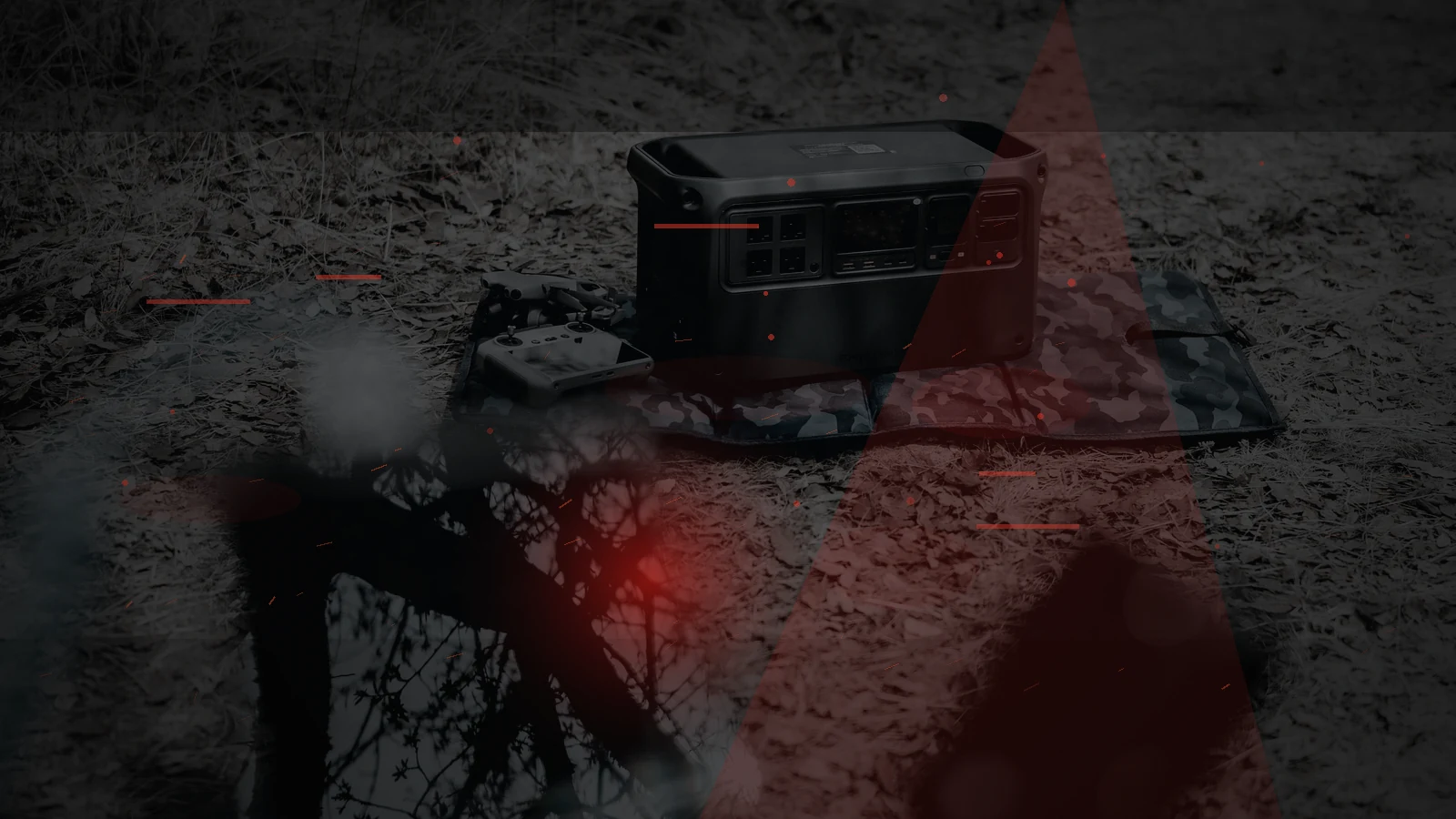
Portable power stations are one of the most useful modern blackout tools, but only when their capacity is matched to real loads. The goal is not to buy the biggest battery. It is to know exactly what you need it to keep alive.
NIGHT 4 — THE GRID IS STILL DEAD
Your phone is at 19%. The fridge has long since warmed. One power station remains in the corner, and the number on its screen suddenly feels more important than the balance in your bank account.
In the nightmare scenario, stored electricity becomes time. The question is no longer which battery looks impressive. It is which devices keep the household alive long enough for the next decision.
Scenario: this is a deliberately extreme “what if?” exercise, not a claim that these events are happening or certain to happen.
Understand watt-hours before watts
Watts describe how fast a device uses power. Watt-hours describe stored energy. A 1,000Wh battery does not necessarily deliver a full 1,000Wh to appliances because inverter and conversion losses consume some energy. A 10W radio can run for far longer than a 1,000W kettle even though both technically fit within many inverter limits. Start by listing the wattage of essential devices and the number of hours you need them. This turns battery shopping into arithmetic rather than marketing.
Check inverter output and start-up surge
Some appliances draw a brief surge when motors start. Refrigerators, pumps and certain medical devices can therefore demand more power for a moment than their normal running wattage suggests. Make sure the station’s continuous and surge ratings suit the equipment you intend to use. If the manufacturer does not provide enough information, do not guess with a medically essential appliance. Test non-critical devices in advance and stop if plugs, cables or the station become unusually hot, smell odd or behave erratically.
Runtime is a behaviour problem too
A large battery disappears quickly if used for heating, cooking or constant entertainment. Prioritise phones, lighting, radio, critical medical equipment and selective refrigeration. Charge devices in batches and switch the inverter off when AC power is not needed because inverter standby itself consumes energy. If your station displays load and remaining time, use that feedback to adjust behaviour. The ability to see energy disappearing in real time is one of the biggest advantages of a power station over vague household assumptions.
Charging options should be redundant
Keep the station charged from mains power under normal conditions. If the model supports vehicle or solar charging, test those methods too. Solar charging is weather-dependent and especially variable in UK winter, so do not assume a panel will restore a depleted battery in one day. Vehicle charging uses fuel and should be planned accordingly. Never run a vehicle in an enclosed garage for charging. The best charging plan has more than one route but does not depend on unsafe improvisation.
Battery safety matters
Buy from reputable retailers, follow the manufacturer’s storage-temperature guidance and inspect the unit for swelling, damage or overheating. Keep ventilation openings clear. Do not bury the station under blankets to keep it warm and do not expose it to rain unless the product is specifically rated for that environment. Use correct cables and do not exceed socket or adapter ratings. Lithium batteries store substantial energy; good equipment is very safe when used correctly, but damaged packs deserve respect.
Choose for the scenario you actually have
A renter who needs phones, lighting and a laptop has different requirements from a household supporting a fridge and medical equipment. Calculate the essential-load budget first, then choose capacity and output with a margin. If the cost becomes extreme, the lesson may be to reduce the loads rather than buy a larger system. Energy efficiency is resilience: LED lighting, low-power radios and disciplined phone use can add more practical runtime than another expensive accessory.
Start with the loads you cannot easily replace
A power station should be sized around the devices that matter most, not the largest appliance in the house. Phones, lighting, a router, a medical device or refrigeration may deserve priority depending on the household. List those loads, their approximate energy use and how many hours they genuinely need to run.
That turns the purchase into a capacity problem rather than a shopping comparison between headline watt figures.
Usable energy is less than the label
Battery capacity is normally quoted before inverter and conversion losses. Cold weather, age, high loads and repeated cycling can also reduce what is available. Keep a margin rather than designing a plan that requires every advertised watt-hour.
Test the station with the actual devices you expect to power. Real runtime is more useful than a theoretical calculation on paper.
Recharge strategy decides whether it lasts
A battery that cannot be replenished is a finite reserve. Know which charging routes you have: mains when power returns, vehicle charging where appropriate, or compatible solar equipment. Each route has different speed and practical limits.
During a long outage, use the battery in blocks and review remaining capacity each day. That makes it easier to reduce non-essential loads before the reserve becomes critical.
Keep the station within its safe environment
Battery systems have operating and storage temperature limits. Follow the manufacturer’s guidance and keep the unit dry, ventilated and protected from damage. Do not cover vents or hide it under bedding simply to keep it close to the appliance being powered.
Good placement protects both runtime and safety.
Label the priority outlets
If several people may use the station, make it obvious which devices deserve power first so convenience loads do not quietly consume the reserve.
Keep a little margin
Do not plan to drain the station to its final percentage every day.
Continue from here
Build this topic into a wider plan, then see how the same dependency could fail in an AI-collapse scenario.
Evidence desk
Practical actions on this page are grounded in current UK emergency, food-safety and electrical-safety guidance. Any AI-driven nationwide failure chain is scenario analysis, not a claim that such an event is occurring or inevitable.
Practical guidance reviewed: August 2026 · In a real emergency, follow official local instructions and emergency services.