Food & Supply Collapse • FIRST RESPONSE
Food Shortage Survival Guide: What To Do When Supply Chains Break
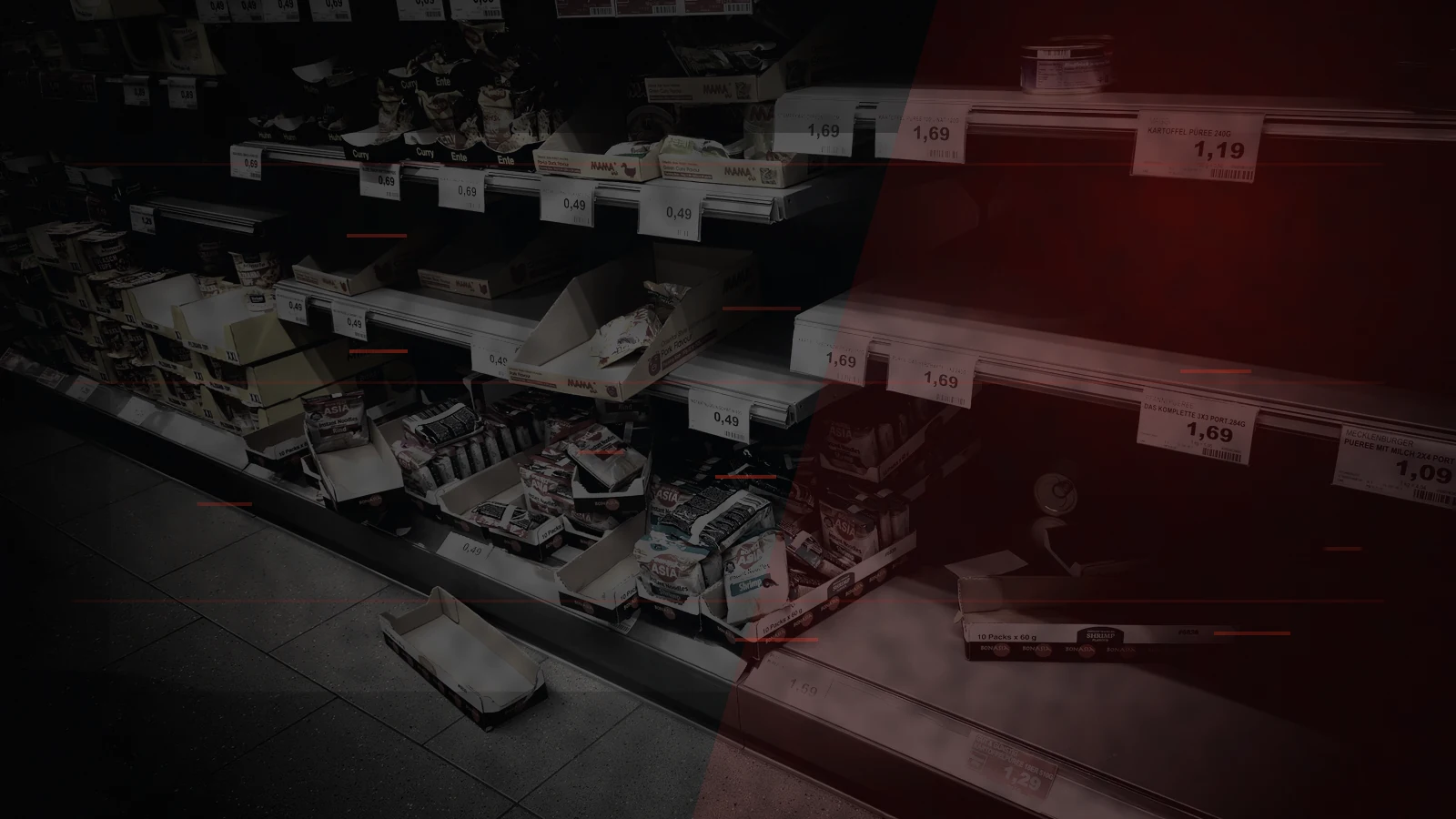
When shelves thin out, the useful response is not panic buying. It is to understand what your household already has, protect food that may spoil first, switch to a simple ration-and-meal routine and stop depending on one shop, one cooking method or one delivery chain.
DAY 5 — THE SHELVES ARE EMPTY
The supermarket is open, but that no longer means food is coming. The warehouse management system is down, fuel deliveries are erratic and card terminals work only intermittently. Every trolley in the car park looks like panic made physical.
Food shortage survival is mostly about not joining the rush. A household buffer buys time while the logistics system decides whether it can still recover.
Scenario: this is a deliberately extreme “what if?” exercise, not a claim that these events are happening or certain to happen.
Count what you already have before buying anything
Start with a fast household inventory: fridge, freezer, cupboards, pet food, infant supplies, dietary essentials and any medically necessary nutrition. Write down quantities in meals, not just packets. A cupboard can look full while containing only snacks and ingredients that depend on electricity, refrigeration or missing accompaniments. The first objective is to know how many complete meals you can make without another shop. That gives you a real planning horizon and stops duplicate buying when pressure rises.
Eat perishables in the right order
If electricity is stable, use normally. If power is unreliable, prioritise food that depends on refrigeration before opening shelf-stable reserves. Keep fridge and freezer doors shut as much as possible and follow Food Standards Agency advice if safe storage temperatures cannot be maintained. Do not let scarcity pressure persuade you to gamble with food that smells, looks or has been stored unsafely. Food poisoning during wider disruption can create a much more serious household emergency than throwing away one questionable meal.
Build meals around calories, protein and familiarity
Emergency food does not need to be exotic. Familiar tinned foods, rice, pasta, oats, pulses, nut butters, UHT milk, crackers, canned fish or meat, fruit and vegetables can make simple meals with predictable storage. Balance matters because a cupboard full of one category creates appetite fatigue and nutritional gaps. Include foods household members will actually eat, plus any allergen, religious, medical or texture requirements. A reserve that exists only on paper because nobody can tolerate it is not a reserve.
Reduce dependence on one cooking method
A food plan fails if every stored meal needs a working electric hob. Keep some meals that can be eaten cold and, where safe and legal, have an alternative outdoor or appropriately ventilated cooking method. Never use barbecues, camping stoves or other combustion appliances indoors or in enclosed spaces because of carbon-monoxide risk. Match the menu to the equipment you can safely operate, then test one no-grid meal before you need it.
Ration by menu, not by fear
Create a simple daily meal schedule and allocate ingredients to it. This reduces constant snacking, accidental overuse and the anxiety caused by repeatedly checking supplies. Adults doing heavy physical work, children, pregnant people and people with health conditions may need different intake. Do not impose aggressive calorie restriction on vulnerable people. The goal is predictable consumption and waste reduction, not punishment. Recalculate every few days as new food becomes available or the situation changes.
Move from shortage response to resilience
If disruption persists, diversify where food can come from: local shops, community support, official distribution points, family networks and shelf-stable reserves. Preserve cash and payment flexibility because card systems may be affected in a wider infrastructure crisis. Rotate stored food into normal meals so nothing becomes forgotten emergency stock. Long-term resilience is less about owning a giant pile and more about having multiple routes to meals when the normal weekly shop stops being reliable.
Reduce waste before increasing stock
During a shortage, getting more food is only half the problem. Using what you already have efficiently can extend the household buffer without spending anything. Plan meals around opened packages, older stock and ingredients that can be combined in several ways. Store leftovers safely and avoid preparing more than can be eaten if refrigeration is uncertain.
A simple inventory can reveal forgotten food before the next shopping trip and reduce panic buying.
Substitute by function
If a specific product disappears, ask what role it plays in the meal. Another carbohydrate, protein source, vegetable or cooking fat may work even if the brand or recipe changes. Thinking in food groups makes the household less dependent on one product remaining available.
Medical diets, infant feeding and allergies are different: use suitable alternatives and seek professional guidance when the substitute could affect health.
Use local recovery information
Shortages often ease unevenly. One shop may receive deliveries before another, or a product may return in a different size or brand. Check reliable local availability before making long journeys and avoid treating one empty shelf as proof that the whole region has run out.
A modest rotating reserve gives the household enough time to wait through those gaps without joining every queue or chasing rumours about stock.
Protect the reserve from gradual everyday erosion
Emergency food often disappears one tin or packet at a time because it is convenient. That is fine if the item is replaced, but without a simple inventory the buffer can shrink unnoticed. Treat every ordinary use as a prompt to add the item back to the shopping list.
This keeps the reserve active and rotated instead of sealed away or slowly emptied.
Keep the response proportional to the shortage
A missing product or temporary delivery gap is not the same as a system-wide food crisis. Use local evidence, actual stock and verified information to decide how much the household needs to change its routine.
Proportionate planning prevents fear from turning a manageable shortage into unnecessary spending, travel and waste.
Continue from here
Build this topic into a wider plan, then see how the same dependency could fail in an AI-collapse scenario.
Evidence desk
Practical food-safety and preparedness actions on this page use current UK emergency-planning and food-safety principles. AI-triggered national food-system collapse is scenario analysis, not a claim that such an event is happening or inevitable.
Practical guidance reviewed: August 2026 · In a real emergency, follow official local instructions and emergency services.