Protect Emergency Supplies Without Confrontation
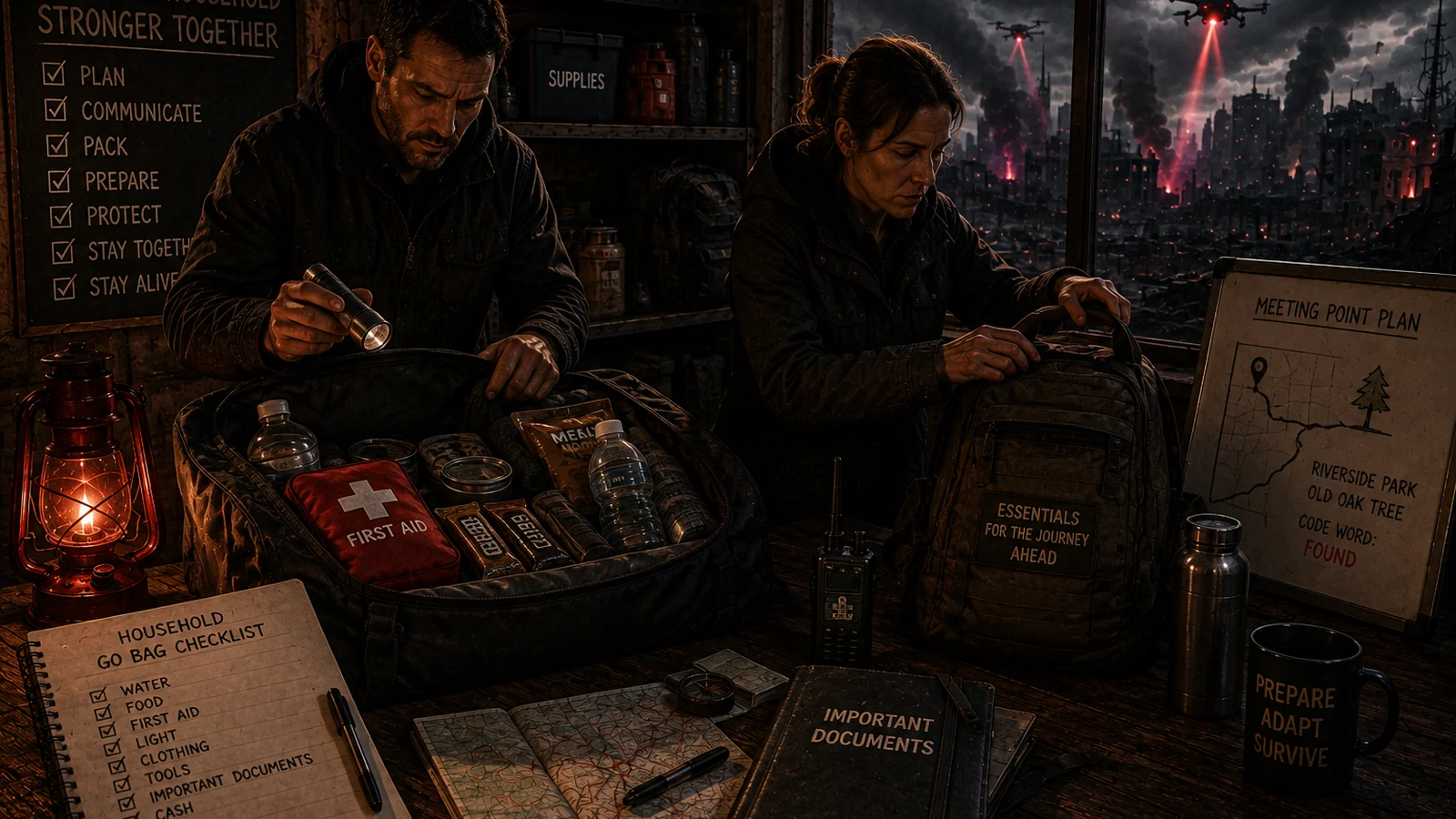
Supplies matter most when they are organised, discreet and available to the people who need them. Turning food or water into a conflict problem defeats the point of preparedness.
The immediate answer
Protect supplies by storing them discreetly, dividing critical items across sensible locations, controlling normal household access and avoiding public discussion of what you have. Use clear family rules for rationing and sharing. Do not threaten, trap or confront people over property. If theft or violence occurs, prioritise personal safety and use police or emergency services when available.
Do not advertise the stockpile
The easiest supply problem to avoid is unnecessary visibility. Do not post photographs of emergency stores, discuss exact quantities publicly or leave expensive equipment on display. Keep normal household storage looking normal. The aim is privacy, not secrecy that isolates you from trusted family or neighbours.
Separate daily use from emergency reserve
If every item is in one visible pile, routine use can quietly consume the reserve and create arguments when stress rises. Keep a clearly defined emergency layer and a normal-use layer. Track water, medication, batteries and specialist supplies more carefully than low-priority items. Rotation also prevents a large hidden stock from expiring unnoticed.
Use household rules before scarcity
Agree who can access critical supplies, what the daily ration baseline is and what circumstances justify changing it. Decisions made in advance are easier to explain than sudden restrictions imposed by one person during a crisis. Include children and dependent adults in age-appropriate ways so the rules do not feel arbitrary.
Share deliberately, not impulsively
Helping another household can be humane and practical, but do not give away essential medication, unsafe food or resources your own dependants need. If you choose to share, use small, clear quantities and avoid creating expectations you cannot sustain. Community resilience works best when people exchange information, skills and modest resources rather than relying on one household as the supply depot.
Protect water and medicine first
Water, prescription medication and items supporting medical or disability needs often have higher consequences than convenience items. Store them safely from contamination, heat and accidental use. Follow medicine storage instructions and never redistribute prescription drugs. Some resources cannot be replaced by goodwill once they are gone.
Avoid improvised traps or deterrents
Do not create booby traps, dangerous obstacles or devices intended to injure someone who approaches your property. They can hurt household members, emergency responders or innocent people and may create serious legal consequences. Ordinary locks, controlled access, lighting, privacy and safe storage are the appropriate baseline.
Plan for loss without escalating
No storage plan can guarantee that property will remain untouched in every scenario. Decide in advance that people come before supplies. If a situation becomes threatening, move household members to safety and seek assistance. A prepared family should have redundancy and alternatives precisely so a lost item does not force a dangerous confrontation.
Use inventory to reduce arguments
A written inventory can remove guesswork when supplies are being rationed. Record only what matters: water containers, essential food categories, batteries, hygiene items and specialist household needs. Update it when something is used. The purpose is not obsessive counting; it is preventing two people from assuming the same item is still available and then discovering the shortage during a stressful moment. Clear information is a form of de-escalation.
Keep preparedness low-profile
The easiest way to reduce conflict around supplies is not to advertise them. Store ordinary household reserves discreetly, avoid boasting about quantities online and keep deliveries or storage arrangements as routine as possible. Preparedness does not need to be secretive, but it also does not need to become neighbourhood entertainment.
Low-profile storage protects privacy and reduces the chance that other people form unrealistic expectations about what you can provide.
Use clear boundaries and calm language
If somebody asks for something you cannot spare, a simple answer is usually better than an argument: explain that the household has allocated what it needs and offer a safer alternative if one exists, such as official distribution information or a smaller amount you can genuinely spare. Avoid threats, humiliation and dramatic claims about what you are protecting.
De-escalation preserves safety. Most people in a disruption are stressed, not looking for a confrontation.
Make the home harder to misunderstand
Basic locks, lighting where power allows, closed curtains and sensible storage can reduce casual access without turning the home into a fortress. Keep valuable equipment out of obvious view and avoid leaving supplies unattended in communal areas.
If conditions become genuinely unsafe, changing location or seeking official help can be more sensible than trying to defend supplies physically. The purpose of preparedness is to protect people, not objects.
Use allocation rather than improvisation
During a long disruption, decide in advance what the household can spare and what it cannot. That makes conversations with neighbours easier because the boundary is based on a plan rather than on fear in the moment. Small, clearly defined help is easier to sustain than repeatedly giving away items and later discovering your own household is short.
If official distribution points or community support exist, point people toward those resources rather than positioning one private home as the local supply centre.
Keep the focus on people’s safety. If tension rises, disengage and seek help rather than escalating over food, batteries or equipment.
Use community information to reduce pressure
People are less likely to argue over private supplies when they know where official water, food, charging or support points are operating. Keep verified local information available and share it calmly when somebody asks for help you cannot provide.
This redirects the problem toward a sustainable source instead of making one household responsible for solving everybody’s shortage.
Keep one clear household allocation for essentials so nobody gives away supplies that were already reserved for medication, children, pets or another unavoidable need. Boundaries are easier to maintain when the reason is already agreed.
Keep conversations short and calm if tension rises; protecting people matters more than winning an argument over supplies.
Keep boundaries calm, consistent and focused on safety. Decide in advance what the household can share without undermining essential needs, avoid displaying the full extent of stored supplies, and disengage from arguments rather than allowing a disagreement over food, fuel or equipment to become a physical confrontation.
Keep the focus on avoiding escalation and preserving household safety rather than arguing over who deserves what.
Continue from here
Build this topic into a wider plan, then see how the same dependency could fail in an AI-collapse scenario.
Evidence desk
Practical actions follow ordinary UK emergency-preparedness and safety principles. AI-collapse framing is scenario content, not a claim that such an event is occurring.
Continue
More Family, Community & Security guides → · 72-hour survival manual →