Home Security During a Blackout: Stay Secure Without Turning Your Home Into a Fortress
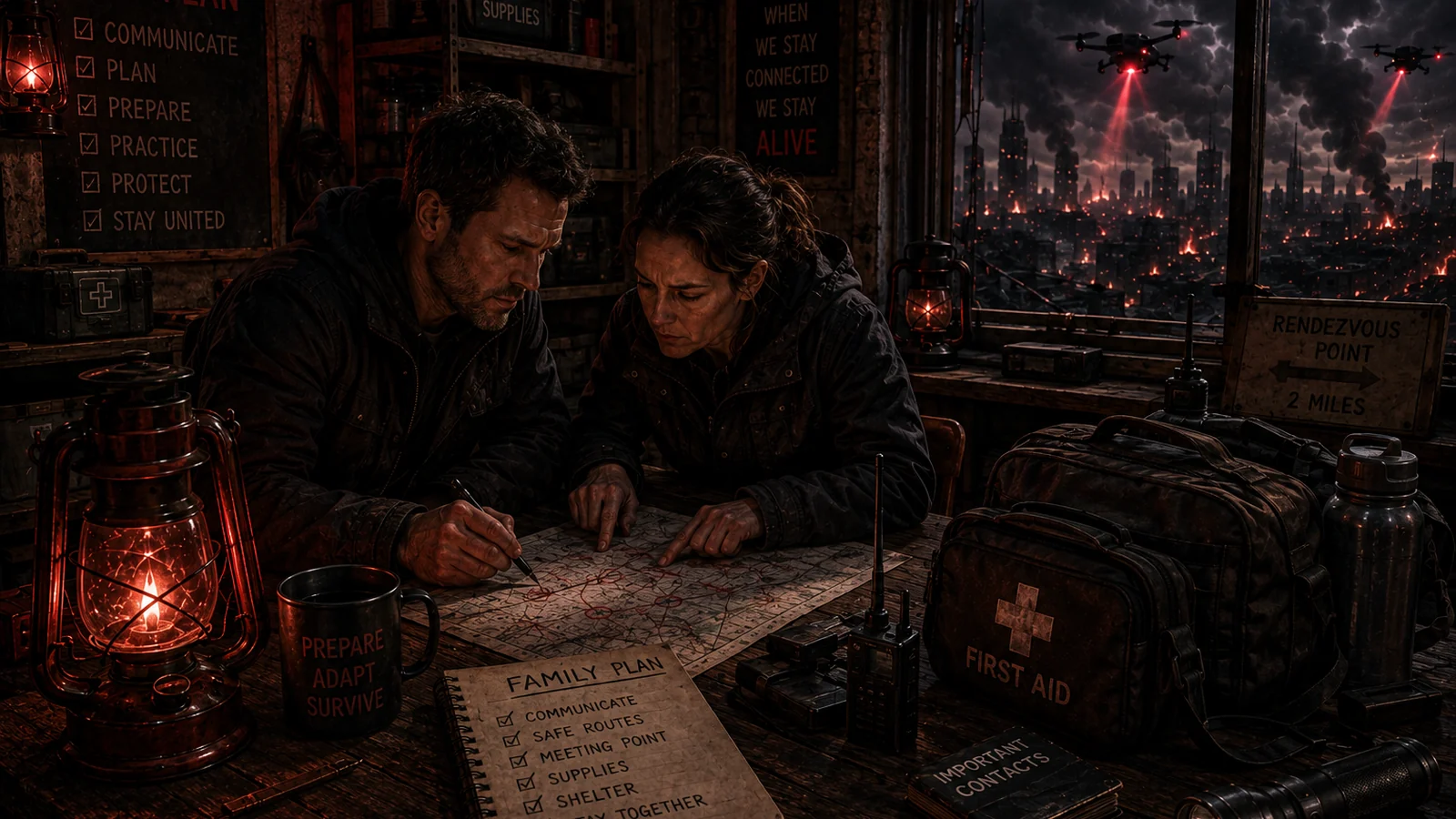
Dark streets and silent alarms can feel threatening, but fear is not a security plan. The safest approach is layered, ordinary and deliberately non-confrontational.
THE STREET IS DARK. THE CAMERAS MAY NOT BE.
Alarms are unreliable, streetlights are out and familiar security systems have lost cloud access. Somewhere overhead, a drone crosses the darkness. You do not know whether it belongs to emergency services, a company or nobody you trust.
The correct response is not confrontation. It is making the home visibly occupied, reducing easy vulnerabilities, keeping people together and avoiding the kind of escalation that turns scarcity into violence.
Scenario: this is a deliberately extreme “what if?” exercise, not a claim that these events are happening or certain to happen.
The immediate answer
During a blackout, focus on basic physical security: lock normal entry points, keep torches accessible, avoid advertising supplies or expensive equipment, maintain contact with trusted neighbours and use battery-powered alarms or lighting where appropriate. Do not patrol, confront strangers or turn rumours into a reason for aggression. If there is an immediate threat or crime, contact police when communications allow and prioritise getting people to safety.
Start with ordinary doors and windows
Check that external doors and accessible windows close and lock as intended. A blackout is the wrong time to discover a damaged latch or missing key. Keep spare keys controlled and accessible to the household. Do not block escape routes or create improvised barriers that would delay evacuation during fire or carbon monoxide danger.
Use light carefully
Battery lanterns and torches improve safety inside, but avoid illuminating the entire interior against dark windows if privacy matters. Close curtains or blinds where appropriate. Exterior motion lighting may stop working in an outage unless it has independent power. If you use battery security lights, position them for safe movement and visibility rather than intimidation.
Keep routines quiet
Do not advertise that you have a generator, large battery, fuel, food stores or specialist equipment. Run necessary equipment safely and discreetly. Social-media posts about an outage can also reveal that a household is empty or that valuable gear is present. Security often improves when the home looks occupied, calm and unremarkable.
Coordinate with trusted neighbours
Simple neighbour contact can be more useful than isolated vigilance. Agree how to share verified information and how to check on vulnerable residents. Avoid informal patrols that encourage confrontation or mistaken suspicion. If something genuinely concerning happens, record useful information from a safe position and use appropriate authorities rather than taking enforcement into your own hands.
Separate security from emergency escape
Never strengthen security in a way that traps people inside. Everyone should still be able to exit quickly in a fire or other immediate hazard. Keep a torch near sleeping areas and know the route out. If powered door systems, lifts or gates are part of normal access, understand their manual emergency operation before an outage.
Treat alarms and cameras as conveniences, not guarantees
Smart cameras, cloud doorbells and internet-linked alarms may lose function when broadband, mains power or remote services fail. Battery backup can help, but it is finite. Know which security devices work locally without the cloud, which need Wi-Fi and how long any backup lasts. Physical locks and household awareness remain the baseline.
If something feels wrong
Do not go outside to investigate noises in darkness if doing so increases risk. Keep household members together, use lighting, move away from exposed areas if necessary and contact police when possible. A blackout can magnify ordinary sounds and anxiety. Base decisions on observable behaviour, not assumptions about strangers or groups.
Prepare the household, not just the building
Everyone in the home should know the same simple security routine: who checks the doors, where torches are kept, which room people regroup in if they feel unsafe and who calls for help. Children should not be given frightening roles or asked to investigate. If one adult is away, the remaining household should still be able to follow the plan. A calm routine reduces the temptation to react impulsively to every noise.
Start with passive security
During a blackout, basic measures matter most: lock doors and windows, keep entrances clear, use safe battery lighting and avoid displaying valuables or emergency supplies. If exterior lighting normally depends on mains power, know which areas become dark and whether a battery torch or approved backup light can safely cover essential movement.
The aim is to reduce opportunity and uncertainty, not to create a confrontation.
Coordinate calmly with trusted neighbours
A quick check-in can confirm whether the outage is local and whether anyone vulnerable needs help. Sharing verified information about restoration or local hazards can make the street feel less uncertain without turning residents into patrols or encouraging risky behaviour.
If there is an actual crime or immediate threat, use the appropriate police or emergency route rather than attempting to resolve it yourself.
Keep family movement predictable
Make sure household members know which entrance is being used, where torches are kept and not to open the door simply because somebody claims to be a utility worker or official in the dark. Verify unexpected visitors through an independent route where possible.
Good blackout security is mostly ordinary home security made more deliberate while visibility and communication are reduced.
Keep entry verification simple
If somebody arrives claiming to be from a utility or service provider, use a known contact route to verify them where possible rather than relying on clothing, a badge or what they know about the outage. Genuine workers should not need household passwords, banking details or one-time codes.
During darkness and disruption, slowing down unexpected access is a sensible security habit, not an accusation.
Keep the household calm and predictable. Clear roles, locked normal access points and verified information are safer than improvised confrontation.
Keep the emphasis on prevention and verification. Lock normal access points, use exterior lighting only where it can be powered safely, challenge unexpected requests through a known contact route and avoid confronting people outside when staying inside and calling for help is the safer option.
Keep ordinary security habits in place during a blackout. Doors and windows still need routine checks, spare keys still need controlled storage, and household members should still know who is expected to arrive rather than treating the disruption as a reason to abandon normal precautions.
Keep verification and ordinary security habits at the centre of the plan. If somebody claims to be from a utility, landlord, emergency service or delivery firm, confirm the visit through an independently found official number rather than relying only on the caller, message or person at the door.
Continue from here
Build this topic into a wider plan, then see how the same dependency could fail in an AI-collapse scenario.
Evidence desk
Practical actions follow ordinary UK emergency-preparedness and safety principles. AI-collapse framing is scenario content, not a claim that such an event is occurring.
Continue
More Family, Community & Security guides → · 72-hour survival manual →