How To Help Neighbours in an Emergency Without Creating More Risk
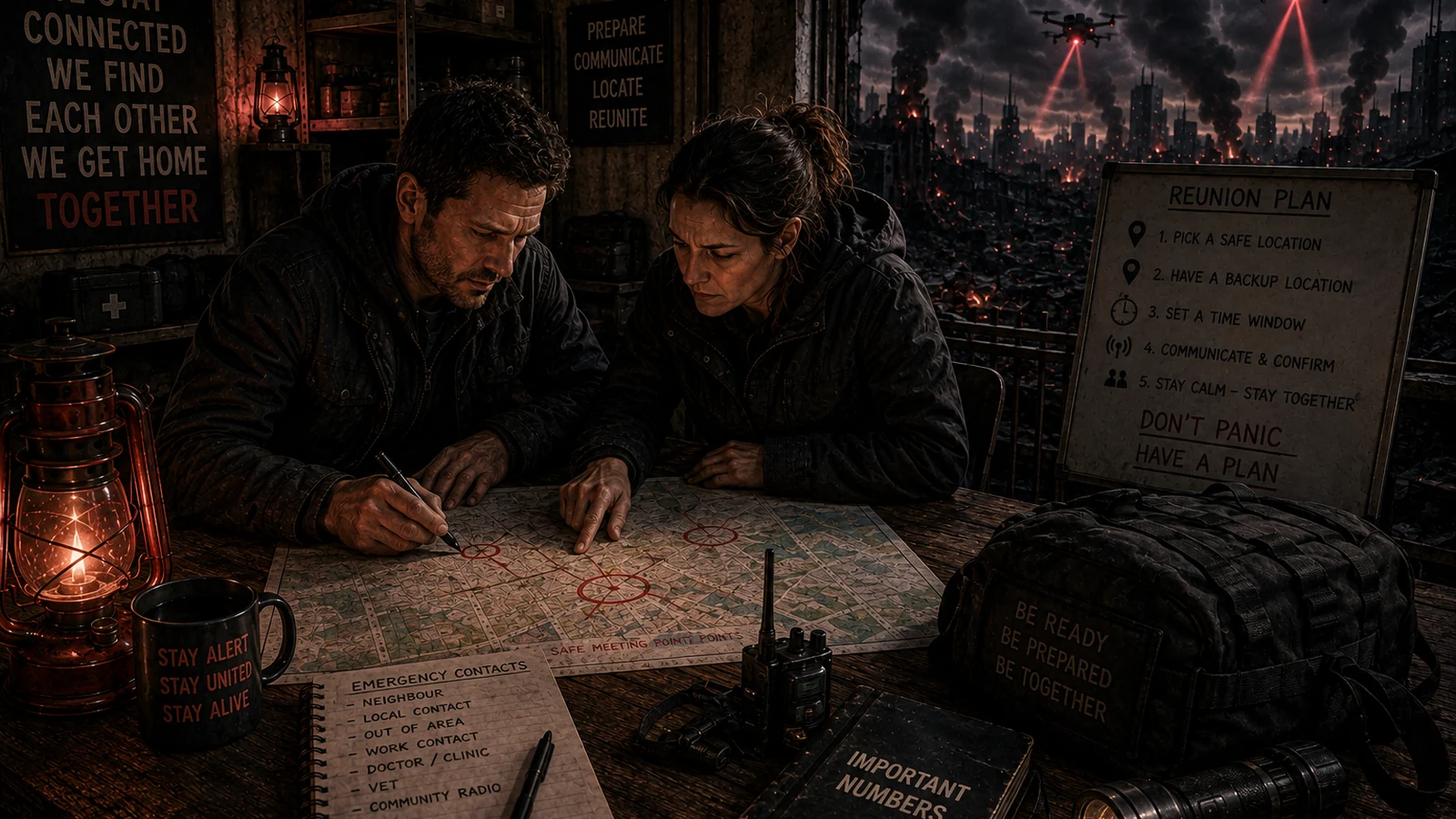
When systems fail, nearby people become part of the resilience network. Help works best when it is organised, consent-based and focused on welfare rather than heroics.
The immediate answer
Start with a simple welfare-check system: know who may need extra support, agree how information will be shared, keep help voluntary, and avoid creating crowds or conflict. During a prolonged outage, the most useful neighbour is often the person who can quietly confirm who is safe, pass on verified information, lend a basic item or call for professional help when services are available. Do not assume someone wants assistance; ask first, protect privacy and keep any support within your competence.
Map needs before the emergency
A neighbourhood plan does not require a committee, database or public list of medical conditions. It can be as simple as knowing which nearby households contain older people, disabled residents, young children or people who may struggle with stairs, heating, communication or collecting supplies. Encourage people to identify their own preferred contact person. The aim is awareness without turning private information into gossip.
Use a check-in rhythm
Agree a simple rhythm during prolonged disruption: for example a morning and evening knock, message or agreed visual signal where appropriate. Regular check-ins reduce repeated journeys and panic. If someone misses a check-in, treat it as a prompt to investigate calmly, not proof of an emergency. If there is immediate danger, use emergency services whenever they are available.
Share verified information, not rumours
Power cuts and communications failures create an information vacuum. One person repeating an unverified social-media post can push an entire street toward bad decisions. Share the source as well as the claim, distinguish official instructions from speculation, and write down important updates where people without smartphones can see them. In an AI-disruption scenario, assume convincing fake audio, video and messages are possible.
Pool capability, not control
Useful shared capabilities include a radio, charging capacity, a first-aid kit, spare torches, basic tools, transport for an agreed purpose and local knowledge. Sharing should remain voluntary. No household should become a self-appointed authority over other people’s property, movement or supplies. Cooperation works because it reduces duplicated effort, not because one person takes command of everyone else.
Protect vulnerable people without exposing them
Do not announce who keeps medication, cash, fuel, batteries or specialist equipment. If a neighbour needs regular help, agree a discreet system. A resilience plan should reduce exposure, not advertise vulnerability. Where safeguarding concerns arise, use appropriate professional services rather than trying to solve complex welfare issues informally.
Know when to stop helping directly
Fire, carbon monoxide, violent behaviour, contaminated water, serious medical symptoms and structurally unsafe buildings are not neighbour-help tasks. Keep distance, contact the appropriate service and follow official instructions. Mutual aid is valuable precisely because it keeps ordinary problems from becoming emergencies; it should not pull untrained people into hazards they cannot control.
Make the plan sustainable
The first day often produces a burst of enthusiasm. A week-long disruption needs something calmer: short shifts, clear boundaries, rest, simple records and no pressure on one household to provide everything. If power or communications return intermittently, use that window to update contacts, recharge essential devices and verify information rather than assuming the crisis has ended.
Start with information and welfare, not heroics
The most useful first help is often simple: checking whether somebody is safe, sharing verified local information, helping them contact family or identifying a practical need that can be solved without putting anyone else at risk. You do not need to become an unofficial emergency responder. If the situation involves serious illness, fire, violence or another immediate danger, the appropriate emergency service remains the right escalation route.
Keep offers specific. “Do you need water carried upstairs?” or “Shall I check the official outage update for you?” is easier to answer than a vague offer of help.
Protect dignity and privacy
Neighbours may need assistance without wanting their medical, financial or family circumstances shared with the street. Pass on only the information necessary to coordinate help. Avoid posting who has medication, generators, cash or large supplies in group chats.
Good community resilience depends on trust, and trust is easier to maintain when help does not become gossip or surveillance.
Know your own limits
Do not give away resources your household genuinely needs or take on care tasks beyond your ability. Sustainable mutual aid means helping in ways that do not create a second vulnerable household. Small repeatable contributions—checking in, carrying an item, sharing a verified notice—can be more valuable than one dramatic effort.
If the emergency lasts, rotate who checks on people so one helpful neighbour does not become exhausted or indispensable.
Prioritise people who may be isolated
Older neighbours, people with mobility limitations, carers, new parents and people living alone may benefit from a simple check-in sooner than others. That does not mean assuming they cannot cope. Ask what would actually help and respect the answer.
Where practical, coordinate checks so several neighbours are not all knocking on the same door while another person is missed. A simple written rota can be enough.
Helping is most effective when it remains calm, specific and voluntary. The objective is to make the street more connected, not to create a hierarchy of who is “in charge.”
Keep help practical during recovery too
When services return, neighbours may still need help charging devices, replacing spoiled food, contacting insurers or reaching appointments. Recovery is often uneven, so support does not end when the lights come back on.
Check whether the original problem has genuinely been resolved before assuming somebody no longer needs assistance, especially if they rely on medication, mobility support or care visits.
Keep help coordinated enough that vulnerable households are not missed while others receive repeated visits. A short shared check-in list can prevent that imbalance.
Keep the help sustainable enough that it can continue for several days if the disruption lasts longer than expected.
Keep one simple record of who has been checked so nobody is accidentally missed. Note only what the team genuinely needs to coordinate help, avoid collecting unnecessary personal information, and pass urgent welfare concerns to the appropriate official service rather than trying to manage serious cases informally.
Keep help specific, coordinated and safe enough that it can continue for several days without exhausting the people providing it.
Continue from here
Build this topic into a wider plan, then see how the same dependency could fail in an AI-collapse scenario.
Evidence desk
Practical actions follow ordinary UK emergency-preparedness and safety principles. AI-collapse framing is scenario content, not a claim that such an event is occurring.
Continue
More Family, Community & Security guides → · 72-hour survival manual →