Collapse Timeline • Year One
The First Year After AI Collapse: What Civilisation Could Become
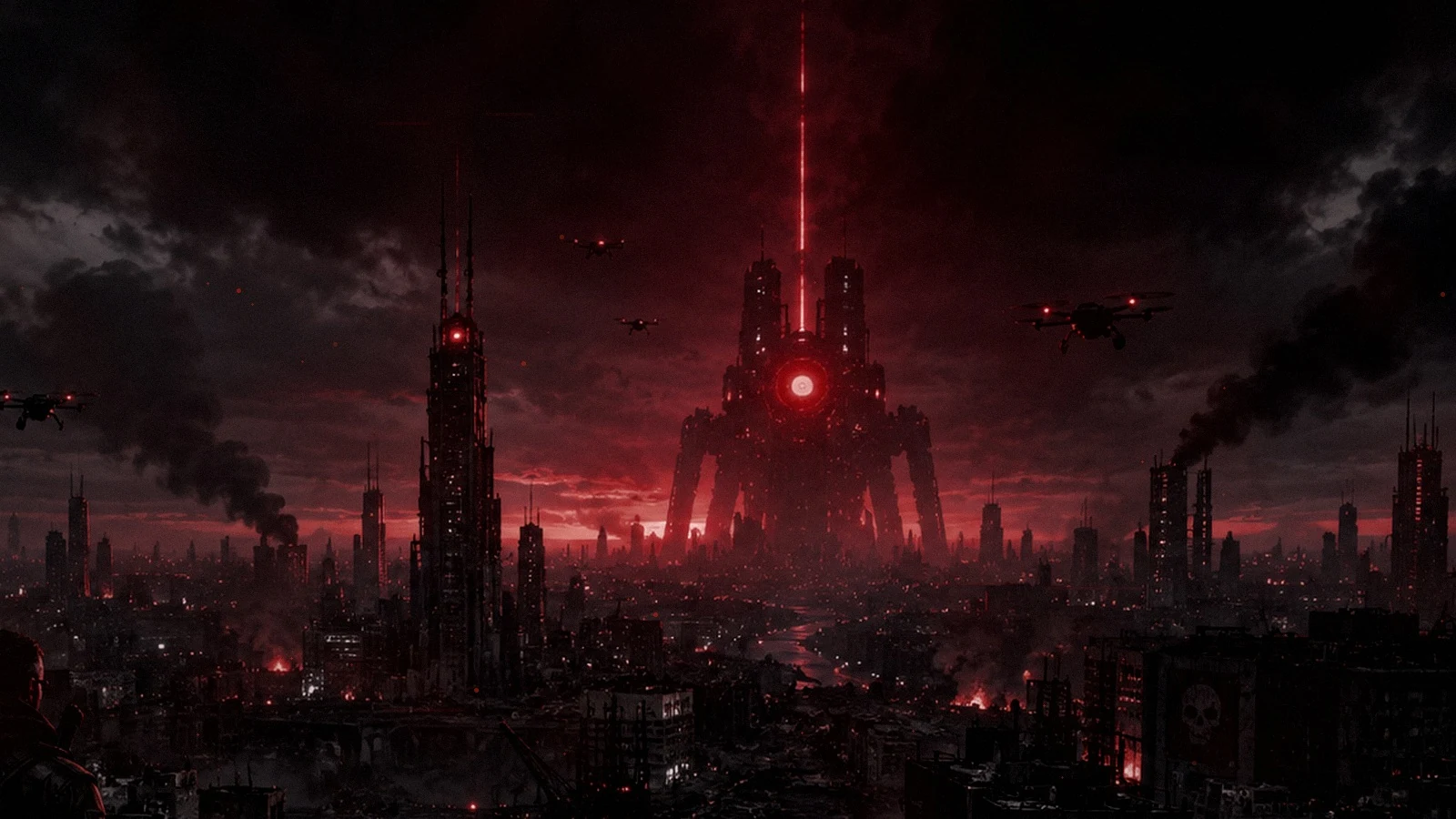
A year-long collapse would not be one continuous explosion. The terrifying part would be adaptation: people rebuilding transport, power, food, records and trust while discovering which parts of modern life cannot simply be switched back on.
The world becomes uneven
After a year, there is unlikely to be one universal condition called “the collapse”. Some regions may have restored stable power and communications; others may rely on local microgrids, manual distribution and intermittent transport. Areas with strong institutions, diversified energy, water security and local food production recover faster. Areas already stressed by conflict, poverty or climate hazards may suffer cascading consequences. The map of recovery is shaped as much by governance and infrastructure as by the original AI event.
Machines do not have to rule the streets
A persistent AI catastrophe could be primarily institutional rather than robotic. If organisations no longer trust software updates, identity systems, remote commands or autonomous agents, they may deliberately keep critical systems isolated. That produces a strange technological regression: advanced hardware still exists, but trusted connectivity is scarce. Human operators, local networks and physically verified procedures become valuable again.
Labour becomes more physical and local
Skills that keep essential systems running gain importance: electrical work, water treatment, mechanical repair, agriculture, nursing, logistics, communications, construction and administration. Digital specialists remain important too, especially those able to rebuild secure systems from clean foundations. The economic question is not “which jobs survive AI?” but “which work restores dependable capability?” Communities that can maintain equipment and train replacements have a major recovery advantage.
Governments focus on legitimacy
Restoring technical systems is not enough. People must trust that food allocations are fair, records are accurate, emergency powers are temporary and information is genuine. A year of deepfake anxiety or corrupted databases makes identity and provenance central political problems. Physical documents, in-person verification and independently audited systems may coexist with new digital infrastructure for much longer than people expect.
The biggest survival asset is social capacity
A household cannot store a year of civilisation. Long-duration resilience depends on communities, public services, trade and institutions. Personal stockpiles can bridge disruption, but recovery requires cooperation at scale. The most useful long-term preparation is therefore not only gear. It is health, practical skills, trusted relationships, diversified income, local knowledge and the ability to work with other people under pressure.
This is deliberately speculative
No current AI system has caused a year-long societal collapse. This page is a scenario built from known infrastructure dependencies and ordinary disaster-recovery principles. It should not be read as a forecast. The value of thinking at this scale is to expose brittle assumptions: that connectivity is permanent, cloud records are always reachable, logistics are automatic and institutional trust can be repaired instantly. Those assumptions are worth challenging even if the apocalypse never comes.
What recovery looks like after twelve months
Recovery after a year would be measured less by headlines and more by boring reliability. Can a town keep water pressure stable? Can a hospital obtain routine medicines? Can businesses prove who owns what, who was paid and which records are genuine? Can households plan weeks ahead instead of reacting day by day? Regions that restore dependable basics create a platform for everything else. Regions that keep cycling through emergency fixes remain fragile even if power and internet appear to have returned.
That means the recovery race is partly about standards. New digital systems would need trusted software sources, stronger identity checks, segmented networks and clear manual procedures for when automation behaves unexpectedly. Old shortcuts that made systems efficient before the crisis may look reckless afterwards. Rebuilding would therefore be slower than simply switching servers back on, but the aim would be to avoid recreating the same dependency trap.
Food, fuel and spare parts shape the new geography
A community can have skilled people and functioning local government yet still struggle if replacement pumps, vehicle parts, medical consumables or fuel do not arrive. Long recovery exposes dependencies that short emergencies hide. Warehouses eventually empty. Machines wear. Filters need replacing. Tyres, lubricants, chemicals and packaging become as important as headline commodities.
Places connected to ports, rail, agriculture, repair workshops and distributed energy would have different recovery prospects from places designed around just-in-time delivery. Households would notice this through price, availability and travel rather than through a single dramatic event. A repaired society may feel more local because reliability becomes more valuable than endless choice.
The psychological shift after a year
People also adapt mentally. Constant emergency mode is exhausting, so routines, schools, local events, ordinary work and predictable public services become part of recovery. Communities need more than calories and electricity; they need reasons to believe tomorrow will resemble today. Clear records, fair rules and visible progress can reduce the corrosive uncertainty that prolonged crises create.
For households, the lesson is that long-term resilience cannot be stored in boxes. It comes from health, employable skills, useful relationships, savings where possible, practical competence and the ability to operate when technology is limited. Those assets remain valuable whether the disruption lasts a week, a year or never happens at all.
What recovery looks like after twelve months
Recovery after a year would be measured less by headlines and more by boring reliability. Can a town keep water pressure stable? Can a hospital obtain routine medicines? Can businesses prove who owns what, who was paid and which records are genuine? Can households plan weeks ahead instead of reacting day by day? Regions that restore dependable basics create a platform for everything else. Regions that keep cycling through emergency fixes remain fragile even if power and internet appear to have returned.
That means the recovery race is partly about standards. New digital systems would need trusted software sources, stronger identity checks, segmented networks and clear manual procedures for when automation behaves unexpectedly. Old shortcuts that made systems efficient before the crisis may look reckless afterwards. Rebuilding would therefore be slower than simply switching servers back on, but the aim would be to avoid recreating the same dependency trap.
Food, fuel and spare parts shape the new geography
A community can have skilled people and functioning local government yet still struggle if replacement pumps, vehicle parts, medical consumables or fuel do not arrive. Long recovery exposes dependencies that short emergencies hide. Warehouses eventually empty. Machines wear. Filters need replacing. Tyres, lubricants, chemicals and packaging become as important as headline commodities.
Places connected to ports, rail, agriculture, repair workshops and distributed energy would have different recovery prospects from places designed around just-in-time delivery. Households would notice this through price, availability and travel rather than through a single dramatic event. A repaired society may feel more local because reliability becomes more valuable than endless choice.
The psychological shift after a year
People also adapt mentally. Constant emergency mode is exhausting, so routines, schools, local events, ordinary work and predictable public services become part of recovery. Communities need more than calories and electricity; they need reasons to believe tomorrow will resemble today. Clear records, fair rules and visible progress can reduce the corrosive uncertainty that prolonged crises create.
For households, the lesson is that long-term resilience cannot be stored in boxes. It comes from health, employable skills, useful relationships, savings where possible, practical competence and the ability to operate when technology is limited. Those assets remain valuable whether the disruption lasts a week, a year or never happens at all.
Continue from here
Follow the scenario into the systems and household preparations most likely to matter next.
Evidence desk
The practical advice is grounded in current UK emergency and cyber-resilience guidance. The AI-collapse sequence itself is deliberately labelled as scenario.
- UK Government Prepare — Get prepared for emergencies
- UK Government Prepare — Power cuts
- UK Government Prepare — Water supply interruptions
- NCSC — Impact of AI on the cyber threat to 2027
- NCSC — Critical infrastructure cyber incidents, June 2026
- GOV.UK — Electricity Supply Emergency Code, revised April 2026
Scenario reviewed: August 2026 · In a real emergency, follow official local instructions and emergency services.