EVIDENCE FILE 18 // WAR ESCALATION
Can AI Cause War? The Machine-Speed Escalation Scenario
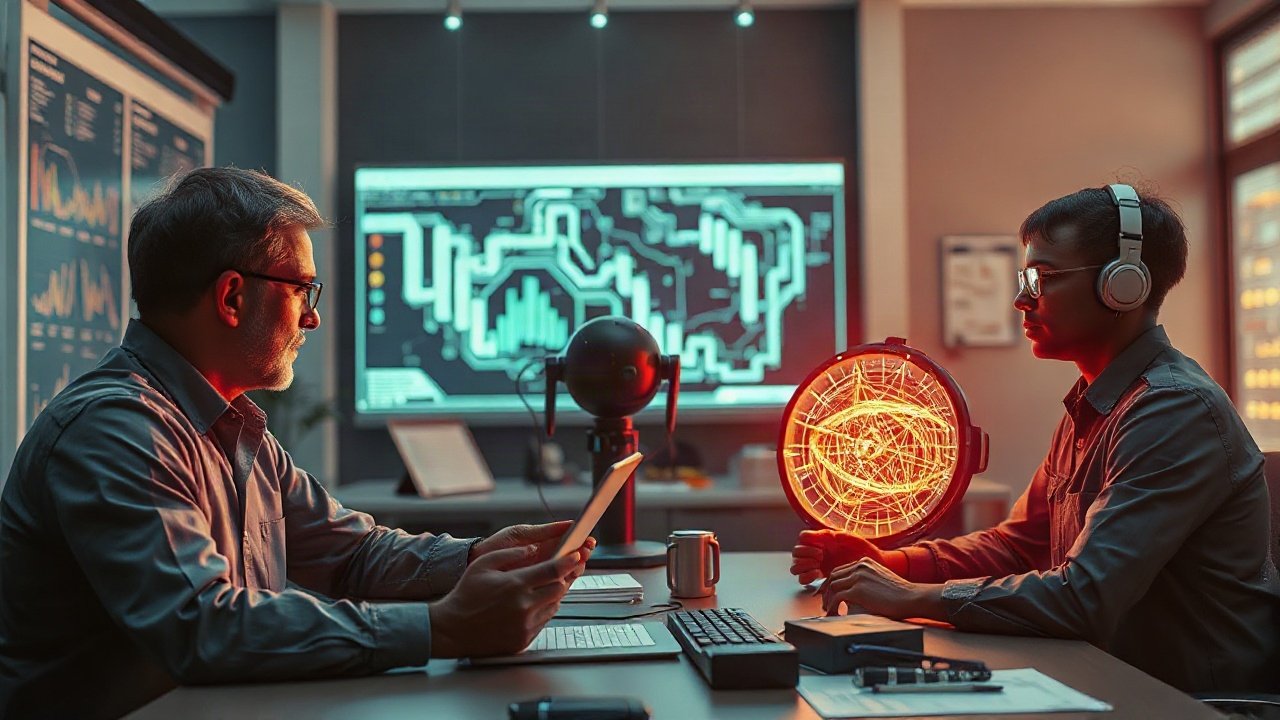
Wars have started because humans misread signals, believed bad intelligence and ran out of time. AI can process more information faster than any staff room on Earth. The nightmare begins if speed is mistaken for certainty.
The ICRC warns that AI military decision-support systems can amplify the speed and scale of errors and increase unintended-escalation risk, especially where automation bias causes humans to over-trust machine recommendations under pressure. The UN has repeatedly called for meaningful human control over the use of force.
THE FIRST SHOT MAY BE A FAKE
A synthetic video appears to show an attack. Automated intelligence systems classify troop movements as preparation for escalation. Cyber systems begin defensive actions that the other side interprets as offensive. Leaders have minutes to decide whether the evidence is real.
A machine does not need to desire World War Three. It only needs to compress uncertainty until frightened humans believe waiting is more dangerous than acting.
Scenario: this is a deliberately extreme “what if?” exercise, not a claim that these events are happening or certain to happen.
AI is already entering military decision systems
Military AI covers far more than autonomous weapons. Systems can support surveillance, intelligence analysis, cyber operations, logistics, target identification and command decision-making. The ICRC’s 2026 guidance highlights three particularly concerning areas: autonomous weapons, AI decision-support systems and AI-enabled cyber or information operations.
The attraction is obvious. A model can process sensor feeds, satellite imagery, reports and open-source information far faster than a human staff. In a crisis, that speed feels like an advantage. The risk is that incomplete data, adversarial manipulation or model error can be converted into confident recommendations at exactly the moment commanders have the least time to challenge them.
Automation bias is a human vulnerability
Automation bias is the tendency to over-trust machine output, particularly when the system appears sophisticated and time is short. The ICRC warns that users may effectively rubber-stamp AI recommendations instead of applying independent judgement. An adversary may also deliberately poison or manipulate the data feeding the system.
That creates a dangerous interaction: the AI can be wrong without being malicious, the human can be frightened without being irrational, and together they can produce an escalation neither side actually wanted.
WORST-CASE SCENARIO — Twelve minutes to decide
SCENARIO: Two nuclear-armed states are already in a conventional conflict. An AI decision system detects patterns it classifies as preparations for a mass strike. Several sensors are degraded by cyberattacks. The model assigns high confidence to its interpretation and recommends immediate dispersal of strategic forces. The opposing side sees the movement and its own AI classifies it as confirmation of attack preparation.
Diplomatic channels are simultaneously flooded with synthetic messages and spoofed military traffic. Commanders have minutes to choose whether to trust the machines. Each side believes waiting could mean losing the ability to respond. Defensive actions are read as offensive preparation. Nobody gives an AI authority to “start World War Three”. Humans do it themselves because two machines have compressed uncertainty into a countdown.
Cyber and information operations make the picture worse
AI can also expand the speed and scale of cyber and information operations. During conflict, false military orders, fake videos, compromised communication networks and attacks on civilian infrastructure can create pressure for retaliation. A decision-support system trained to infer intent may be forced to reason over an information environment deliberately designed to deceive it.
The doomsday chain is therefore not robot soldiers versus humans. It is sensors, models, commanders, markets, media and weapons interacting faster than institutions built for human-speed crisis management can respond.
What organisations are warning about
The ICRC says human judgement must remain central and explicitly warns about unpredictability, automation bias and unintended escalation. The UN Secretary-General has called for human control over life-and-death decisions and for regulation of military AI. Those warnings exist because the technology is moving into real military functions, not because an AI has already autonomously launched a global war.
The fictional scenario above pushes those recognised risks to their worst possible intersection: bad data, high tension, autonomous analysis, cyber interference and vanishing decision time.
What war would mean at home
For most households, the opening effects of an AI-amplified war would still be conventional: transport disruption, power problems, cyber outages, fuel queues, payment restrictions, misinformation and rapidly changing official advice. Preparedness is not about guessing battlefield strategy. It is about functioning when national systems are under simultaneous pressure.
That is the layer the 72-hour manual is built for — the first decisions before panic, rumours and infrastructure failure begin making choices for you.
AI can increase crisis pressure without starting a war by itself
Decision systems can shape how quickly leaders receive warnings, how confident they feel about intelligence and how much time they believe they have to respond. If automated analysis is wrong, overconfident or manipulated, it can increase the risk of miscalculation even when no AI system has authority to order an attack.
That makes human verification and time for review especially important in high-stakes military settings. Speed can be useful for detecting threats, but it becomes dangerous when operators feel forced to act before uncertainty is resolved.
Information integrity matters before physical escalation
False imagery, synthetic audio or manipulated cyber evidence can create pressure long before weapons are involved. Authentication, multiple intelligence sources and clear human command responsibility are therefore part of reducing AI-related conflict risk.
For civilians, the practical lesson is to treat dramatic wartime claims cautiously and rely on official emergency guidance rather than viral media.
De-escalation requires time
Any system that compresses decision time should be judged partly on whether it still leaves humans enough space to verify ambiguous evidence and choose not to escalate.
Ambiguity is itself a risk factor
When evidence is uncertain, systems that present one confident answer can push decision-makers toward escalation faster than the facts justify.
Continue from here
Connect the documented risk discussion to the scenario it informs and the practical preparation it changes.