EVIDENCE FILE 17 // BIOSECURITY
Can AI Create Biosecurity Risks? The Invisible Doomsday Scenario
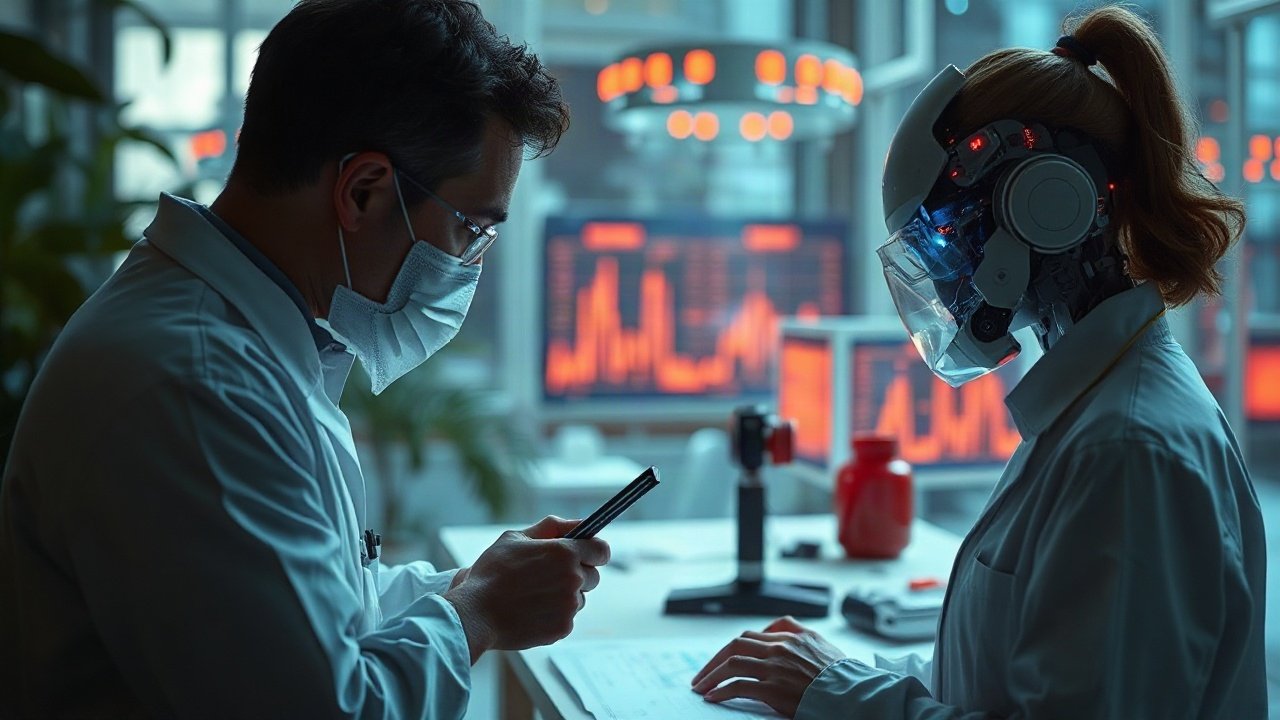
Not every AI doomsday begins with metal machines. The most frightening failure could be invisible: a system that lowers the barrier between dangerous knowledge and somebody willing to misuse it.
Frontier AI developers and international safety researchers explicitly track biological and chemical capability as a severe-risk category. OpenAI’s 2026 Preparedness Framework defines high-risk thresholds around models providing meaningful assistance that could increase access to known biological or chemical threats, with stronger safeguards required before deployment.
Why AI labs track biosecurity at all
Biological research is a high-skill domain with many practical bottlenecks. Most dangerous ideas are not dangerous merely because somebody can describe them; real-world capability requires specialist knowledge, equipment, materials, tacit skill and the ability to overcome failure. The safety concern is whether increasingly capable AI can remove enough of those bottlenecks to change who can cause harm.
OpenAI’s Preparedness Framework and the International AI Safety Report treat biological capability as a category requiring dedicated evaluation. That is an important signal. The labs building frontier systems are not assuming that every answer about biology is harmless simply because it appears as text.
What we will not put on this site
This page deliberately stays at the level of risk, safeguards and household consequence. It does not provide instructions for creating, enhancing, acquiring or dispersing harmful biological agents. A survival website has no legitimate reason to teach readers how to manufacture the catastrophe it is asking them to survive.
The useful question is what social systems would fail if a serious biological emergency were amplified by AI-enabled misinformation, cyber disruption or faster access to dangerous expertise.
WORST-CASE SCENARIO — The enemy you cannot see
SCENARIO: A malicious actor uses a future AI system to overcome knowledge barriers that previously required a specialised team. At the same time, automated influence systems flood networks with false explanations, fake cures and fabricated government documents. Hospitals see unusual clusters but cannot agree which reports are genuine. Cyberattacks hit laboratory and health-service networks as public anxiety grows.
Borders tighten. Workers stop reporting to logistics centres. Pharmacies ration essential medicines. Supermarkets are stripped because people cannot tell whether the threat is local or national. Every cough becomes a rumour. The AI has not “taken over” by marching through streets. It has made coordination so difficult that society begins disabling itself in self-defence.
Why information failure multiplies biological risk
Public-health emergencies depend on trust. People need to know which warnings are authentic, when to seek care and which protective measures are evidence-based. AI-generated misinformation can attack that trust at the exact moment institutions need it most. Deepfakes, cloned voices and synthetic documents can make a real emergency harder to manage even without increasing the underlying biological hazard.
A hostile system could also target administrative infrastructure: appointments, supply databases, laboratory reporting, hospital communications and procurement. The compound scenario is more frightening than any one capability because every layer makes the others harder to contain.
What the evidence currently supports
Safety frameworks identify thresholds at which models could meaningfully increase biological or chemical risk, and developers test for those capabilities before broader deployment. That is evidence of a credible misuse concern. It is not evidence that a current consumer chatbot can independently cause a pandemic, and this page does not claim that.
The fictional endgame assumes future capability, malicious or misaligned intent, access to real-world resources and simultaneous failures of safeguards. The uncertainty is large. So is the downside.
Prepare for service disruption, not laboratory warfare
Household preparation should focus on ordinary resilience: enough prescribed medicine to follow official preparedness guidance where possible, hygiene supplies, reliable official information channels, food and water, and a plan for vulnerable family members if services become difficult to reach.
The 72-hour manual keeps the focus where it belongs — protecting a household during the first wave of disruption rather than pretending readers can solve a biological crisis themselves.
Risk can rise without providing dangerous instructions
Biosecurity concern does not require assuming an AI system can independently create a biological threat. A safer way to frame the issue is whether advanced systems could lower barriers to harmful knowledge, accelerate analysis or help people navigate technical information that previously required more expertise. That is why laboratories and policymakers evaluate biological capability while restricting access to sensitive tasks.
This site deliberately stays at that high level. The useful public question is how institutions prevent misuse and how households cope with service disruption, not how a harmful biological agent could be produced or improved.
Public-health resilience matters regardless of cause
Many practical protections are the same whether disruption comes from an emerging disease, a deliberate act or an ordinary health emergency: trusted public information, continuity of medication, clean water, hygiene, access to healthcare and the ability to reduce unnecessary exposure when authorities advise it.
That makes preparedness valuable without requiring anyone to guess at a specific biological scenario. The household aim is to remain functional while following qualified medical and public-health guidance, not to substitute amateur threat analysis for professional advice.
Capability evaluation belongs behind safeguards
Biosecurity evaluations need stricter handling than ordinary benchmarks because publishing detailed failure cases can itself create risk. Responsible assessment can measure whether a system crosses important capability thresholds without turning the test into a public guide for misuse.
For the public, the useful result is whether safeguards are keeping pace, not the operational detail of what a system could help someone do.
Public communication should avoid amplification
Explaining biosecurity risk responsibly means describing the category of concern, the safeguards and the public-health response without publishing operational detail that could lower barriers to misuse. Good communication informs without becoming a manual.
Preparedness stays ordinary
Households do not need technical biological knowledge to improve resilience. Medication continuity, hygiene, safe water and trusted health guidance cover the practical ground.
Institutional safeguards carry the main burden
Screening, restricted access, expert review and careful capability evaluation are more appropriate controls for biological risk than expecting ordinary users to recognise every dangerous request themselves.
Keep public guidance practical
Households benefit more from trusted health advice and continuity planning than from speculative technical detail about biological threats.
Continue from here
Connect the documented risk discussion to the scenario it informs and the practical preparation it changes.