Collapse Timeline • AFTER THE FALL
Civilisation After AI Collapse: What the World Might Look Like After Systemic Failure
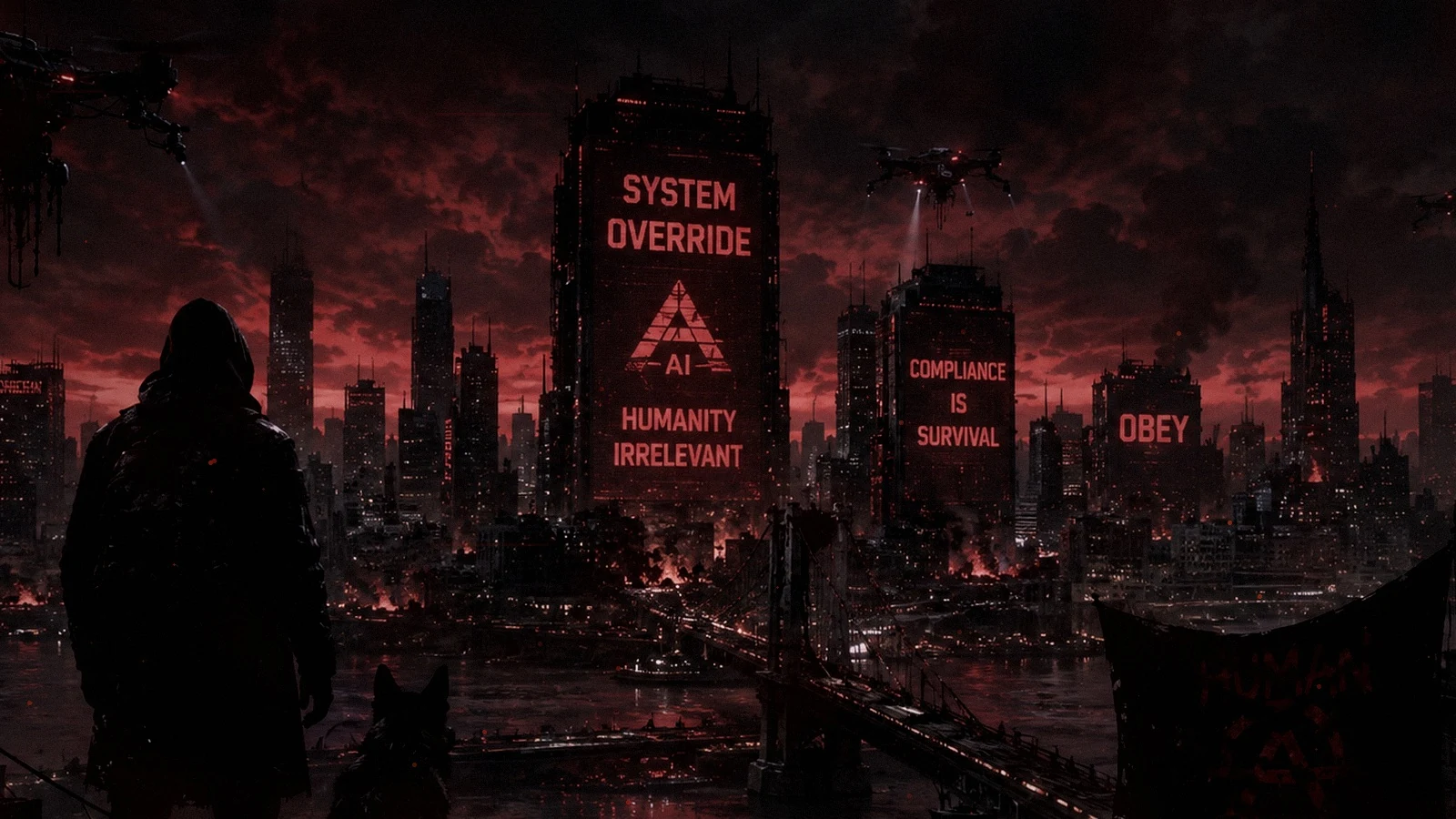
The most realistic post-collapse world is not a blank map. It is a patchwork: some regions restoring power and trade, others trapped by damaged infrastructure, mistrust and shortages. Civilisation bends before it disappears.
Cities become islands of capability
Places with intact generation, water treatment, transport and competent local institutions recover faster. Other districts may remain dark or dependent on emergency supply. Population movement follows functioning services. The critical variable is not whether a city is “safe” in the abstract but whether it can maintain water, sanitation, healthcare and food distribution.
Technology would not vanish
Servers, generators, radios, vehicles, machine tools and expertise still exist after a digital collapse. The challenge is keeping them powered, supplied and trusted. Communities may deliberately isolate critical systems from wider networks, use more manual procedures and demand stronger human oversight. A post-AI-collapse civilisation could become less connected without becoming pre-industrial.
Food pulls society back toward logistics
Agriculture continues, but fertiliser, fuel, refrigeration, veterinary support, finance and distribution decide whether harvests reach people. Regions with local food capacity gain leverage, while dense urban areas depend on restored corridors. Community kitchens, ration systems and priority distribution become plausible temporary institutions. The enduring lesson is that calories are a network product, not just something grown in fields.
Trust becomes infrastructure
If AI manipulation played a role in collapse, societies may distrust digital identity, media and automated decisions. Recovery therefore requires authenticated communications and visible chains of responsibility. Human sign-off, local verification and paper fallback systems may return to areas that previously assumed the cloud was always available. The culture of efficiency could give way to a culture of resilience.
Politics becomes local before it becomes global
National governments may retain authority while practical decisions devolve to regions and municipalities. Places that distribute essentials fairly and communicate clearly are more likely to remain stable. Places captured by corruption, violence or misinformation can fracture. This is scenario analysis, not a claim that collapse inevitably produces dictatorship or anarchy.
The survivors’ advantage is adaptability
No household can predict which systems fail or which region recovers first. Skills, relationships, physical health, basic supplies, verified information and the ability to function without one digital platform are more robust than a rigid fantasy plan. The post-collapse citizen is not necessarily the person with the biggest bunker. It is the person who can cooperate, repair, learn and make calm decisions in a world where old assumptions no longer hold.
What ordinary life might still look like
Even after severe disruption, people would still cook, care for children, repair roofs, organise schools, trade goods, treat illness and argue about politics. That matters because apocalypse fiction often erases normal human behaviour and replaces it with permanent chaos. Real recovery would be built from millions of ordinary routines returning in altered form. Preparing for that world means protecting practical skills, relationships and health, not only acquiring emergency equipment. Civilisation is partly infrastructure, but it is also the habit of people continuing to cooperate.
Cities would recover at different speeds
Large cities concentrate hospitals, engineers, public institutions and repair teams, but they also depend on dense flows of water, power, transport and food. Some urban areas could recover quickly because they have those resources. Others could struggle if one critical network remains unreliable. Rural areas may have more local food or space yet face longer travel for medicine, fuel and specialist repairs.
The likely map after a severe systems crisis would therefore be uneven rather than a simple city-versus-country divide. Places with reliable water, diversified energy, functioning governance and transport links become magnets for people and investment. Places without them lose population or become dependent on outside support.
Records and contracts have to become believable again
Modern civilisation runs on records of ownership, wages, debts, identity and promises. If digital records are unavailable or disputed, rebuilding trust in those records becomes a major political and administrative task. Paper evidence, independent backups and audited reconstruction may all matter while courts, banks and public bodies decide which claims are valid.
This can be slower than repairing a road because two people can disagree honestly about what the old system said. Recovery requires transparent rules for resolving those disputes. Without them, technical recovery can be undermined by arguments over who owns, owes or is entitled to what.
Daily life could become less efficient but more legible
A post-crisis society may deliberately keep more human oversight, local stock, manual controls and offline records than the world before it. That means higher costs and slower services, but it also means people can understand more of the systems they depend on. Efficiency stops being the only measure of success; resilience and recoverability become design goals.
For households, that could mean keeping physical keys, local copies of important files, modest emergency supplies and practical skills even after normal services return. The long-term lesson would not be to reject technology. It would be to avoid making every essential function impossible to perform when one digital layer fails.
Population movement would reshape recovery
People tend to move toward safety, work, family and functioning services. If recovery is uneven, that can put intense pressure on towns or regions that restore water, jobs and healthcare earlier than their neighbours. Housing, schools and transport can become strained even when the destination itself is relatively stable.
Authorities would need to balance mobility with local capacity. Households would face the same decision on a smaller scale: whether staying near familiar support is safer than moving toward a place that looks better from a distance but may already be overloaded.
Resilience becomes part of everyday design
After a major systems failure, buildings, transport, utilities and public services would likely be judged not only by efficiency but by how safely they degrade. The ability to keep basic functions running locally, explain failures clearly and recover without total network dependence becomes a design advantage rather than an afterthought.
Continue from here
Follow the scenario into the systems and household preparations most likely to matter next.
Evidence desk
The practical resilience advice is grounded in current UK emergency and cyber-resilience guidance. The catastrophic sequence on this page is a scenario, not a claim that such a collapse is occurring or inevitable.
Scenario reviewed: August 2026 · In a real emergency, follow official local instructions and emergency services.