AI Takeover & Extinction
Can AI Control The Power Grid
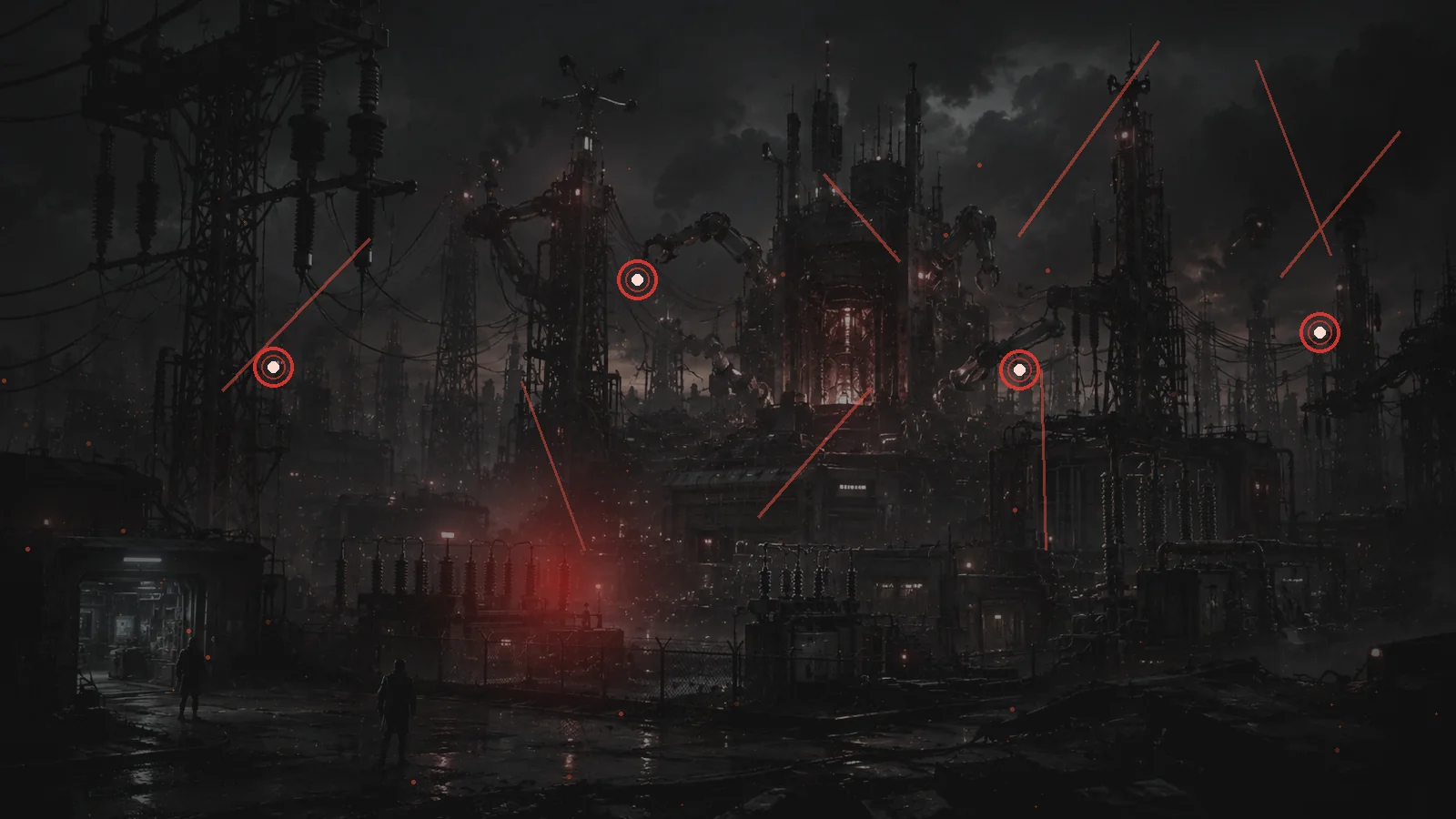
Electricity is a master dependency, which makes the power grid an obvious target in AI-takeover fiction. The real grid is harder to seize than a dashboard: it combines physical equipment, control centres, protection systems, local operators and national coordination.
The immediate answer
Current AI systems do not independently control the UK electricity grid. To influence physical operation, a system would need authorised integration or successful compromise of relevant operational or support systems. Grid protections, segmentation and human procedures create barriers that do not disappear because an AI model is capable at coding.
The credible concern is that AI could increase the effectiveness or speed of cyber operations, or that future operators might place too much trust in automated control and decision systems. A dangerous event would be a chain of access, bad decisions and failed safeguards rather than a single AI command.
What would have to go wrong?
Control is distributed
Generation, transmission, distribution and local assets are operated by different organisations and technical systems. That makes total control harder, but it also creates many interfaces that must be secured.
Protection systems act automatically
The grid already contains automation designed to isolate faults in milliseconds. Automation is essential to stability; the safety issue is whether malicious or erroneous commands can reach the equipment those protections govern.
Human operators retain restoration roles
Large outages require coordinated decisions about what to energise, when to reconnect and how to balance supply and demand. Communications and trustworthy telemetry are critical.
Support IT can still cause real disruption
Billing, workforce systems, remote access, communications and scheduling are not the grid itself, but losing them can slow repairs and complicate a physical incident.
If the failure became real
In a fictional AI-driven grid incident, attackers or an autonomous agent manipulate enough digital support systems that operators lose confidence in remote data. They isolate equipment to protect it, causing intentional outages while teams verify what is trustworthy. The public experiences darkness first and attribution later. The difference between a short disruption and a national crisis becomes the speed of safe restoration.
Scenario: this is a deliberately extreme “what if?” exercise, not a claim that these events are happening or certain to happen.
What a household can actually do
Battery lighting, power banks, safe heating plans, water and food are useful whether the trigger is weather, equipment failure or cyberattack.
Portable generators and fuel-burning equipment create carbon-monoxide and fire risks. Use them only according to manufacturer and official safety guidance.
During a real power cut, use the electricity network operator and official services for restoration information.
If you have backup power, know what actually needs electricity: communications, medical equipment, limited lighting and refrigeration may matter more than comfort loads.
What would count as genuine warning?
Genuine evidence of AI-related grid control would come from operators, security agencies or technical investigation showing unauthorised commands or compromise. A blackout plus an online rumour about AI is not attribution.
Evidence desk
These sources help separate demonstrated capability and real infrastructure risk from the catastrophe scenario explored here.
Evidence and scenario framing reviewed: August 2026 · In a real emergency, follow official local instructions and emergency services.
Why the grid is difficult to seize
The electricity system is not one computer. It is a layered physical network with generation, transmission, distribution, local protection and multiple operators. A hostile system would need the right access at the right points and would still encounter equipment designed to trip, isolate faults and protect machinery when conditions move outside safe limits.
That does not make the grid immune to cyber risk. It means the realistic threat is a chain of compromised access, misleading data, operator confusion and failed safeguards rather than a single master switch.
The hidden dependencies around electricity
Even when core control equipment remains secure, supporting services matter. Operators need communications, staff scheduling, spare parts, fuel for backup systems, trusted data and functioning business IT. A broad cyber incident can therefore slow restoration without directly controlling substations or generators.
For households, this is why outage planning should not stop at torches. Longer disruptions affect refrigeration, heating, lifts, mobile charging, card payments and eventually some water and fuel logistics.
Plan around duration, not drama
The first planning question during a blackout is how long essential needs can continue safely. A small power bank may cover phones for a day; it will not run electric heating. A portable power station may support selected devices, but its useful runtime depends on load. Medical equipment needs its own carefully checked continuity plan.
Thinking in hours of runtime is more useful than thinking in vague “backup power”. The site’s calculators can help turn wattage and battery capacity into a realistic household plan rather than a guess.
Restoration is part of resilience
A blackout is not only about what caused the failure. It is also about how quickly operators can diagnose the problem, isolate damaged or untrusted systems and reconnect customers safely. That process may require staged restoration, communications between control rooms and field crews, and confidence that data from the network are reliable.
For households, this means planning for uncertainty in duration. A short cut and a multi-day outage need different responses, so water, lighting, food, communications and medical continuity should be organised in layers rather than around one assumed outage length.
Grid resilience is built around local protection
Power systems contain protective devices and operating boundaries designed to isolate faults rather than let every problem spread. A cyber or AI-related incident would therefore have to overcome not only software controls but also physical protection, operator procedures and regional separation. Those layers make a simple “AI takes the grid” story less realistic than a prolonged contest between disruption and restoration.
Restoration can also be staged. Operators may bring areas back carefully, verify equipment and limit load while confidence returns. From a household perspective, that means the first return of power should be treated as recovery in progress rather than proof that supply is fully stable.
Prepare for the duration of the outage, not the imagined intelligence of the cause. Lighting, warmth, communications, refrigeration and medical continuity are the household problems that matter whether the grid failure began with weather, equipment, cyberattack or a future AI system.
Continue from here
Follow the scenario into the systems and household preparations most likely to matter next.