AI JOBS & INCOME
Will AI Replace Truck Drivers? Self-Driving Technology Still Has a Long Real-World Chain
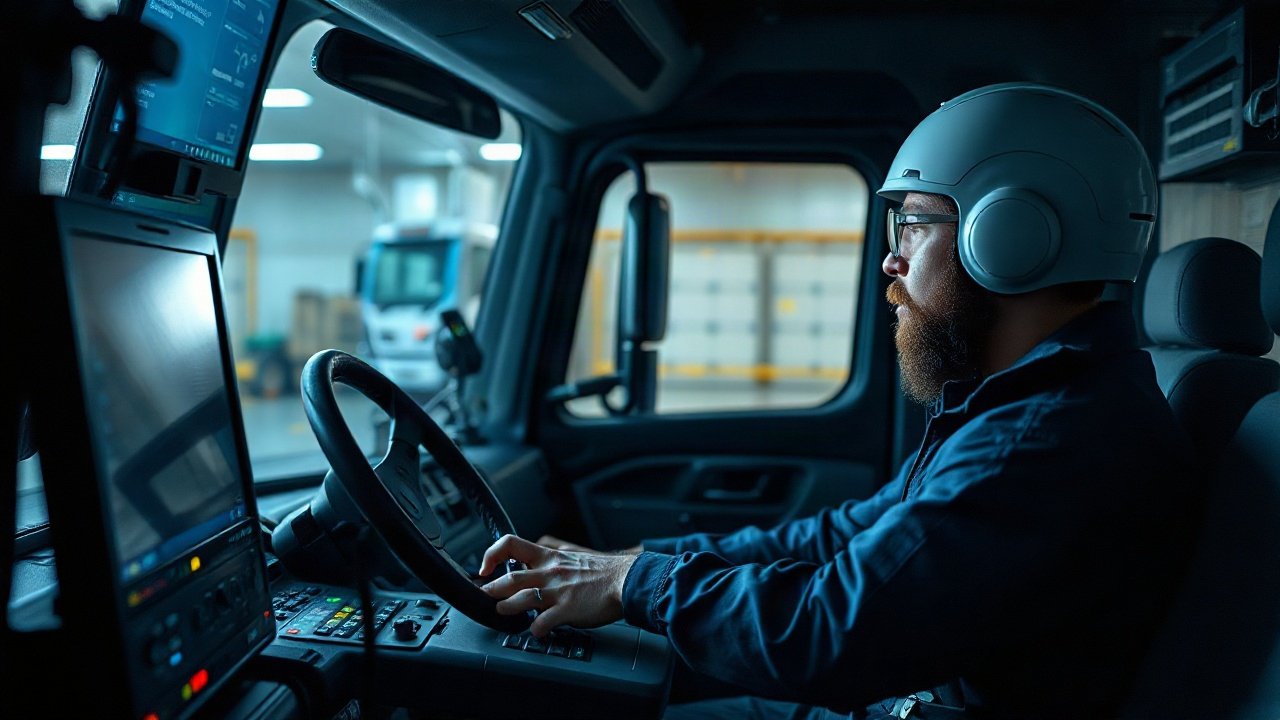
Self-driving vehicles are moving from research toward regulated deployment, and freight is an obvious automation target because long motorway routes are structured and expensive in labour. Truck driving, however, includes more than steering: depots, loading, paperwork, inspections, delivery sites, breakdowns and unusual road conditions all sit around the driving task.
A truck operating autonomously on a defined route is not the same as a national freight system with no drivers. Automation can arrive first on constrained motorway or hub-to-hub segments while humans remain involved around the edges.
Motorway driving is the obvious first target
Long-distance freight contains many hours of relatively structured driving at steady speeds. Compared with city centres, motorways have fewer pedestrians, junction types and unpredictable delivery interactions. That makes hub-to-hub or motorway automation technically and commercially attractive.
The likely early model is therefore not a robot truck handling every delivery from warehouse door to customer. It is automation of the easiest segment while humans manage the complex first and last miles.
The depot creates tasks that driving benchmarks ignore
Drivers inspect vehicles, connect trailers, handle documents, check loads and deal with problems before the truck reaches the road. Some sites can automate those tasks with dedicated equipment, but many depots are not designed as robotic environments.
A self-driving tractor still needs an operational system around it. The more varied the customers and sites, the harder it is to remove the human from the full freight workflow.
Loading and delivery remain highly variable
Freight ranges from sealed containers to pallets, cages, fragile goods and complex multi-drop routes. Delivery locations can have tight yards, blocked access, security rules or a recipient who is not ready. These are not rare edge cases; they are routine logistics reality.
Automation can solve them gradually through better depots, robotics and remote assistance. The transition is likely to be uneven because the easiest freight lanes will justify investment before the most complicated ones.
Safety regulation slows reckless deployment
The UK's automated-vehicle framework requires authorised systems and ongoing safety obligations. Government guidance in 2026 makes clear that deployment and trials sit inside a legal framework with defined operators and responsibility.
That matters for jobs because the technology must be commercially reliable and legally deployable, not merely capable of completing a demonstration. A system that needs constant human rescue may not produce the labour saving required to replace drivers at scale.
Remote support can change rather than remove human work
Autonomous fleets may still need people to monitor vehicles, respond to incidents, communicate with sites and resolve situations the automated system cannot handle. One remote operator might support several vehicles, which can reduce labour per truck while creating a different occupation.
That is a common automation pattern: direct driving work falls while supervision, maintenance and fleet operations become more important. The number of jobs can still shrink even when humans remain in the system.
Weather, roadworks and unusual events are the hard cases
Freight vehicles operate at night, in poor visibility and through roadworks, diversions and temporary restrictions. The system must know when conditions exceed its safe operating domain and what happens next. Pulling over safely can itself be difficult on a crowded network.
Human drivers handle these situations through broad experience and improvisation. Automated systems need defined fallback procedures and operational support before they can replace that capability reliably.
Economics decide deployment as much as technology
A self-driving truck can be technically impressive and still be too expensive if hardware, insurance, remote support and maintenance cost more than the labour saved. Operators will adopt fastest on routes with high mileage, predictable conditions and strong utilisation.
Smaller hauliers and irregular routes may move later because they cannot spread the capital cost across enough automated miles. That creates a patchwork transition rather than one date when truck driving disappears.
Drivers should watch route type and task mix
A driver spending most of the week on repetitive trunk routes faces a different automation profile from someone doing complex local deliveries, specialist loads or customer-facing work. The first role contains a larger share of the driving task automation is designed to remove.
Career resilience can mean moving toward specialist licences, fleet operations, training, vehicle maintenance or complex delivery work while the transition develops. The current evidence supports preparing for gradual task displacement, not assuming every HGV driver is about to be replaced at once.
Continue from here
Evidence baseline
- International Labour Organization — Generative AI and jobs: 2025 update
- UK Government — AI capabilities and the UK labour market
- GOV.UK — Automated vehicle trialling code of practice
- GOV.UK — Automated vehicles: statement of safety principles
UK automated-vehicle rules and 2026 trial guidance support expanding self-driving deployment under safety and operator requirements. The regulatory framework treats automated operation as a controlled transport system, not as unsupervised software.
Insurance and liability shape the commercial rollout
Freight operators need to know who is responsible when an automated vehicle is involved in a collision, blocks a road or fails during a delivery. The UK's automated-vehicle framework is designed around authorised entities and defined responsibilities because safe operation is not just a software-performance question.
Those legal and insurance arrangements affect cost. A system that saves driver wages but creates expensive supervision, liability or downtime may not be commercially attractive until the technology and operating model mature.
Driver shortages can slow the employment shock
Where haulage firms already struggle to recruit enough drivers, early automation may fill vacant capacity or allow existing staff to cover more freight rather than immediately displacing employed drivers. The labour effect depends on the balance between freight demand, retirement, recruitment and the rate at which autonomous routes become usable.
That is another reason there will not be one national replacement date. Some routes may automate while employers elsewhere continue hiring people because the physical and operational conditions are different.
Specialist freight is likely to retain drivers longer
Hazardous loads, abnormal loads, livestock, construction deliveries and routes with complex site access create additional responsibilities beyond keeping the vehicle in lane. These jobs combine driving with inspection, customer coordination and judgement about whether the load or site is safe.
That makes specialist freight a different automation problem from repetitive hub-to-hub trunking. Drivers considering long-term resilience can look toward the parts of haulage where the non-driving task remains a large share of the job.