AI JOBS & INCOME
Will AI Replace Neurosurgeons? Planning and Robotics Can Advance, but Brain Surgery Still Needs Human Clinical Control
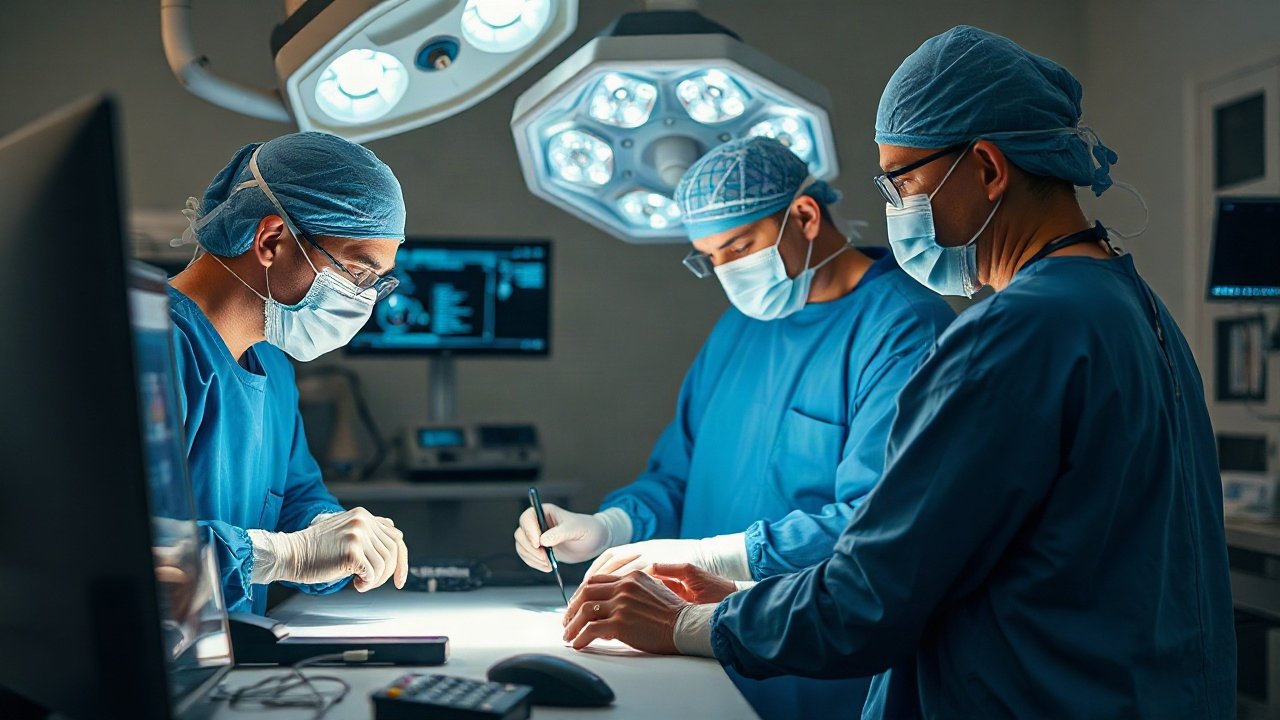
AI can segment brain images, identify anatomy, support surgical planning and improve robotic guidance. Surgery is also one of the highest-accountability areas in medicine. The Royal College of Surgeons continues to support advanced technology while insisting on rigorous training, clinical governance and national standards. Neurosurgery combines imaging with live anatomy, physiology and irreversible decisions where unexpected findings can change the plan immediately.
AI can recommend a trajectory without becoming the surgeon who opens the patient, recognises unexpected anatomy and decides whether continuing is safer than stopping.
Imaging analysis can accelerate planning
AI can identify tumours, vessels and anatomical boundaries on MRI and CT, helping surgeons review complex studies more quickly.
The neurosurgeon still interprets those images in relation to symptoms, previous treatment and the exact goal of surgery. A segmentation is a tool, not the clinical decision.
Trajectory planning is a strong optimisation problem
Algorithms can compare possible paths to a target while avoiding known critical structures. This is useful in biopsy, stimulation and other precise procedures.
Real anatomy can differ from pre-operative imaging because tissue shifts and operative conditions change. Surgeons need to adapt rather than follow the original plan mechanically.
Robotics can improve precision without owning the operation
Robotic systems can stabilise instruments and execute carefully planned movements. They reduce some mechanical variability.
The surgeon remains responsible for setup, patient selection, interpretation and what happens when the operation does not proceed as expected. Precision does not remove clinical judgement.
Intraoperative decisions are highly contextual
Bleeding, swelling or unexpected tissue may require a change in approach. These decisions happen with incomplete information and can carry permanent neurological consequences.
AI can provide support, but the surgeon must integrate visual, tactile and physiological cues in real time.
Complication management is a core part of expertise
The safest operation is not defined only by the planned technical steps. Neurosurgeons train to recognise and respond to complications that may be rare but catastrophic.
Systems can warn and monitor, but experienced judgement determines whether to continue, convert technique or stop.
Patient selection matters as much as technical execution
Not every abnormal scan should be operated on. Age, symptoms, tumour biology, function, prognosis and patient goals affect whether surgery is worthwhile.
AI can estimate outcomes, but deciding whether benefit justifies risk is a shared decision between clinicians and patient.
Consent remains a human conversation
Neurosurgical consent involves uncertainty about survival, function, cognition and quality of life. Patients may value those outcomes differently.
A generated explanation can support understanding, but the surgeon needs to discuss realistic alternatives and answer questions about their own recommendation.
Multidisciplinary work shapes the plan
Neurosurgeons work with neurologists, oncologists, radiologists, anaesthetists and rehabilitation teams. The operation sits inside a larger pathway.
AI can summarise the case, but specialists still negotiate the plan when evidence or priorities conflict.
Training cannot skip the fundamentals
Robotics and AI may reduce exposure to some manual steps. Trainees still need deep anatomy and operative skill so they can recognise when the technology is wrong or unavailable.
The profession therefore has to use automation without allowing it to erode the independent judgement future consultants need.
The resilient neurosurgeon becomes more technologically augmented
AI and robotics are likely to improve planning, visualisation and precision. They do not remove the need for an accountable surgeon who can handle uncertainty and irreversible consequences.
Neurosurgery is therefore more likely to become technology-intensive than autonomous.
Continue from here
Evidence baseline
- International Labour Organization — Generative AI and jobs: 2025 update
- UK Government — AI capabilities and the UK labour market
- Royal College of Surgeons — NHS AI and robot pilot response
- GMC — Artificial intelligence and innovative technologies
Royal College of Surgeons guidance around AI and robotic surgery in 2026 emphasises training, evidence, governance and clinician-led adoption rather than autonomous replacement of surgeons.
Operating-room teamwork is a safety system
Neurosurgery depends on anaesthetists, theatre nurses, neurophysiology staff, radiographers and assistants coordinating around one patient. Each team member contributes information the surgeon may not be able to observe directly.
AI can integrate signals, but safe surgery still relies on communication, challenge and shared situational awareness among trained people.
Brain function cannot always be inferred from structure
Two lesions that look similar on imaging may have very different functional consequences depending on individual anatomy and network organisation.
Functional imaging, stimulation and awake techniques can help, but the surgeon still interprets those findings alongside the patient's goals and the planned extent of surgery.
Post-operative care changes the outcome
The operation is only one phase. Neurological examination, imaging, fluid balance, pain, seizures and rehabilitation all affect recovery.
AI can monitor trends and flag deterioration, but clinicians need to decide which change is expected and which represents a complication requiring urgent intervention.
Rare operations limit training data
Some neurosurgical procedures are uncommon even in specialist centres. AI systems may therefore have fewer representative examples for unusual anatomy or complications.
Experienced surgeons rely on principles, anatomy and transferable operative judgement when a case does not resemble the common patterns in a dataset.
Emergency neurosurgery leaves little room for fully automated workflow
Head injury, haemorrhage and acute pressure can require rapid decisions while information is still arriving. The surgeon may need to weigh imaging, neurological decline, anticoagulation and available theatre capacity in minutes.
AI can prioritise scans and calculate risk, but the decision to operate still depends on an accountable clinician who can adapt as the patient's condition changes.
Microsurgical skill remains embodied expertise
Fine dissection around vessels and nerves depends on visual depth, instrument feedback and learned motor control. Robotics can stabilise or assist, but the surgeon interprets tissue behaviour continuously.
That embodied skill is difficult to replace because the operation is not simply a fixed series of coordinates. Each movement is informed by what happened a moment before.
Outcome review drives future judgement
Surgeons learn from pathology, follow-up imaging, complications and functional recovery. Those outcomes refine when to operate and how aggressive a future procedure should be.
AI can aggregate outcome data, while human specialists connect statistics with the nuances of individual cases and technique.
Surgical judgement includes choosing restraint
The technically possible operation is not always the right operation. Neurosurgeons must know when the likely harm of intervention exceeds the benefit.