AI JOBS & INCOME
Will AI Replace Logistics Jobs? Planning Is Automating, but Supply Chains Still Meet Physical Reality
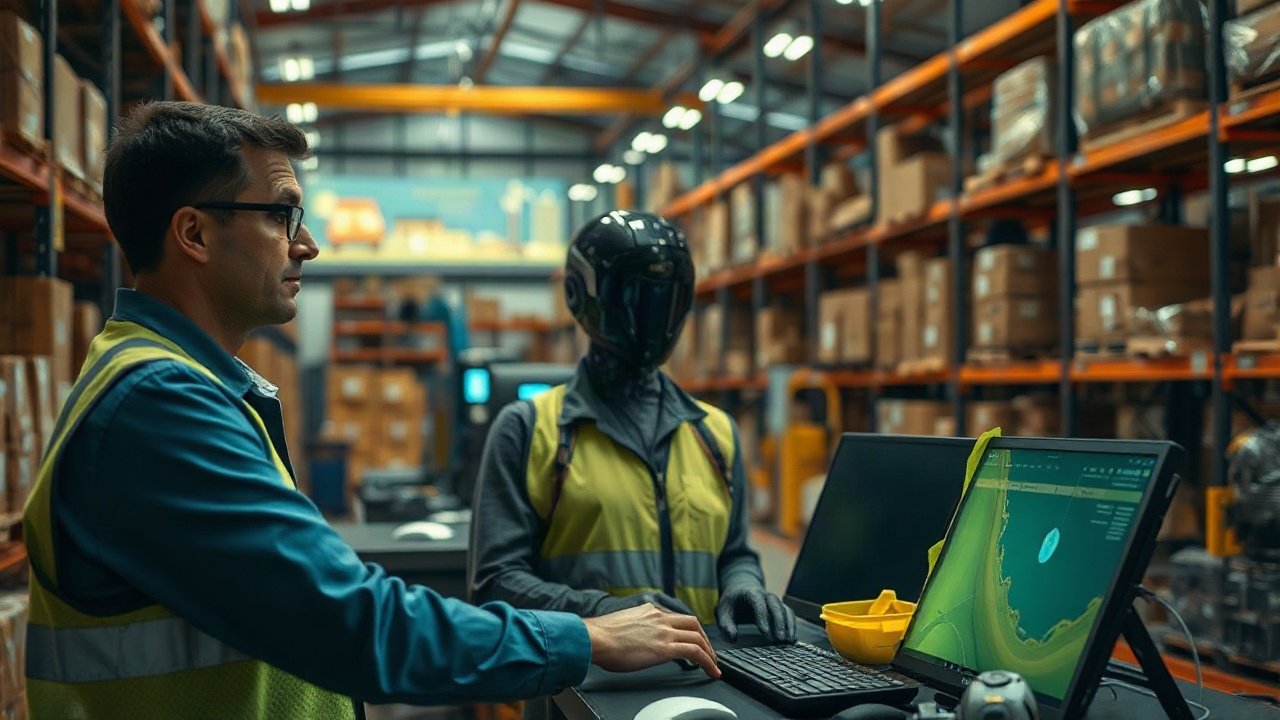
Transport and logistics is moving rapidly toward AI-assisted planning, forecasting and automation. CILT UK's September 2026 magazine is dedicated to the question of where AI belongs in transport and logistics and on whose terms. Repetitive scheduling and warehouse tasks are exposed, but supply chains remain physical systems shaped by traffic, weather, customs, equipment, suppliers and customer promises. Human roles move toward exception handling, network design and commercial coordination.
AI can produce an optimal route or inventory plan without controlling the road closure, damaged pallet, customs hold or supplier failure that makes the plan impossible.
Route planning is highly automatable
AI can optimise routes across distance, traffic, delivery windows and vehicle constraints faster than manual planners.
The plan still needs live adjustment when drivers are delayed, customers change requirements or roads become unavailable. Dispatch moves from planning every route toward managing exceptions.
Demand forecasting can reduce inventory waste
Models can combine sales history, promotions and external signals to predict where stock will be needed.
Unexpected events and product changes can break historical patterns. Planners need to understand when the forecast is no longer a safe basis for purchasing or staffing.
Warehouses can automate repetitive movement
Robots and vision systems can pick, sort and move standard goods with less labour, especially in controlled environments.
Irregular products, damaged packaging and maintenance failures still create manual work. Automation changes warehouse headcount more directly than many office roles.
Transport capacity is a commercial market
Planners need vehicles, drivers, carriers and warehouse space at the right time and price. AI can compare options and automate tendering.
Relationships still matter when capacity is scarce and a supplier decides which customer receives the last available slot.
Customs and border processes can be digitised but remain consequential
AI can classify documents and identify missing information before a shipment reaches the border.
Complex origin, valuation and regulatory questions still need specialists because one mistake can stop the physical goods and disrupt downstream production.
Supply-chain visibility creates more alerts
Sensors and tracking systems make delays visible earlier. AI can predict late arrival and recommend alternatives.
Operations teams need to decide which exception matters. Rerouting every at-risk shipment can cost more than accepting some delay.
Last-mile delivery is difficult to optimise perfectly
Addresses, parking, access, recipient availability and urban restrictions create local friction that is hard to represent completely in planning data.
Drivers and dispatchers use practical knowledge and communication to complete deliveries when the planned stop does not match reality.
Resilience can conflict with efficiency
A highly optimised network may depend on one supplier, port or distribution centre. Redundancy looks inefficient until disruption occurs.
Logistics leaders decide how much spare capacity and diversification the organisation is willing to pay for as insurance against failure.
Customer communication remains important during disruption
When a critical shipment is late, customers want a credible explanation and revised plan rather than another automated status message.
Human coordinators negotiate priorities and alternatives, especially in business-to-business supply chains where one delay can stop production.
Entry-level coordination roles face pressure
Manual booking, status chasing and spreadsheet planning are strong automation targets. Fewer people may manage larger volumes.
New entrants need data literacy, systems knowledge and exception management earlier rather than building a career around repetitive transaction processing.
The resilient logistics professional becomes a network and exception manager
AI will automate planning and information flow aggressively. Durable value lies in physical constraints, supplier relationships, resilience and decisions made when the plan stops matching reality.
The sector may need fewer routine coordinators while placing more value on people who understand the whole supply chain.
Continue from here
Evidence baseline
- International Labour Organization — Generative AI and jobs: 2025 update
- UK Government — AI capabilities and the UK labour market
- CILT UK — Logistics & Transport Focus, September 2026 AI edition
CILT UK's September 2026 AI edition reflects a profession already moving beyond whether AI will be used toward how it should be integrated into transport and logistics operations.
Inventory allocation becomes a network decision
When stock is limited, businesses need to choose which warehouse, store or customer receives it. AI can optimise service levels, but commercial priorities may change during a shortage.
Logistics teams understand which customers are contractual priorities, which production line will stop and which substitution is acceptable.
Cold chain creates hard physical constraints
Food, medicines and other temperature-sensitive goods require storage and transport within defined limits. Sensors can monitor conditions and AI can predict risk.
If refrigeration fails, people still need to decide whether product remains usable, how to replace capacity and how to document the incident for customers or regulators.
Returns and reverse logistics are messy
Returned goods vary in condition and may need inspection, repair, repackaging, disposal or resale. Standard forward-flow automation does not automatically solve that variability.
Human operations staff design rules and handle exceptions where the value of the item, customer promise and environmental cost point in different directions.
Industrial disputes and labour shortages change the plan
Supply chains depend on drivers, warehouse staff, ports and carriers. Strikes, illness or recruitment shortages can remove capacity suddenly.
AI can reschedule around the disruption, but managers still negotiate priorities and decide which service promises can be broken with the least damage.
Production logistics connects planning with factories and sites
Manufacturing and construction can depend on components arriving in a precise sequence. One late or damaged delivery may stop expensive labour and machinery.
Logistics professionals understand which shipment is truly critical and can prioritise scarce transport accordingly rather than treating every late load as equally important.
Packaging decisions affect the whole network
Packaging changes cube utilisation, damage rates, handling time and returns. AI can optimise dimensions, but the solution also needs to work with suppliers, equipment and customer expectations.
Operations teams balance those constraints across the physical chain.
Regulation differs by goods and route
Hazardous materials, food, pharmaceuticals and oversized loads create specialist requirements that generic routing does not capture completely.
Human specialists remain valuable where compliance failure can stop a shipment or create safety risk.
Supplier performance still needs human escalation
Dashboards can show that a carrier or warehouse is missing targets, but logistics managers still need to decide whether to coach, renegotiate or replace the supplier without destabilising the wider network.