AI JOBS & INCOME
Will AI Replace Animators? Generative Tools Threaten Production Tasks, but Animation Still Needs Creative Direction
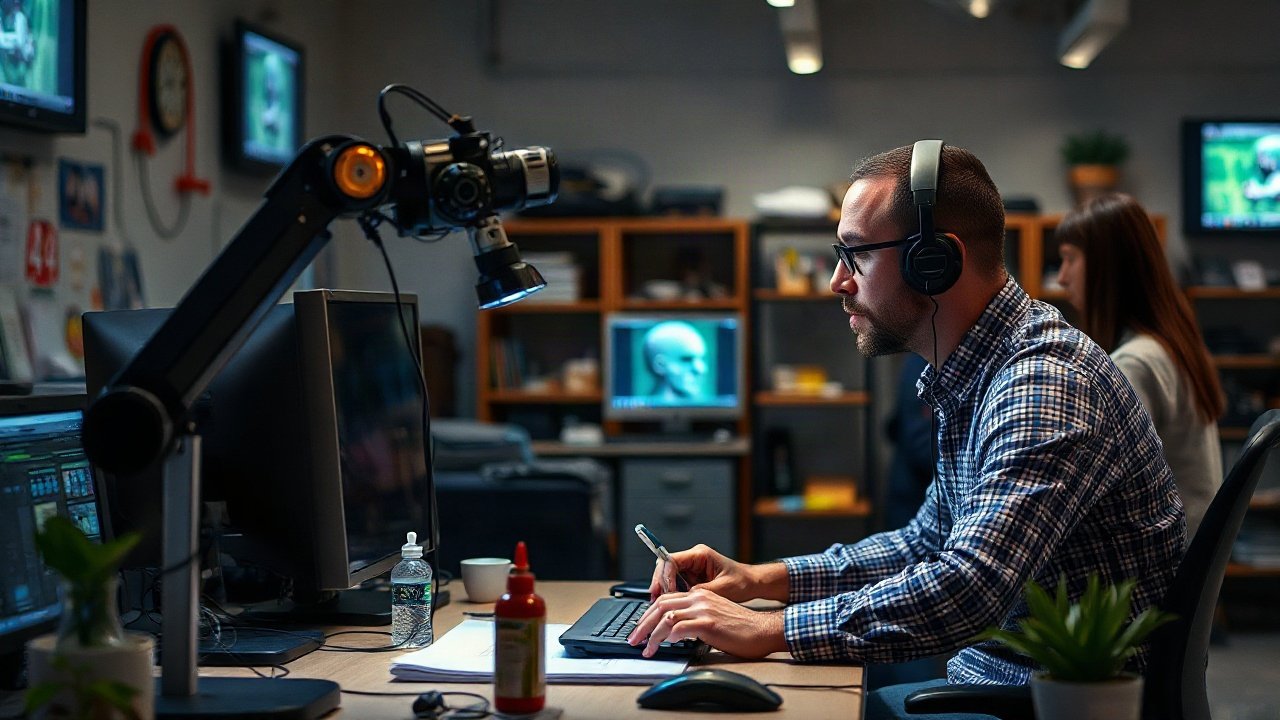
Animation is directly exposed to generative AI because images, motion, backgrounds and variations can be produced faster than traditional frame-by-frame or asset-heavy workflows. UK industry research already identifies AI as a technology automating repetitive work, including tasks often performed by junior staff. Animation remains a collaborative storytelling discipline in which character performance, visual language, continuity and creative direction have to survive thousands of individual decisions.
Generating moving images is not the same as directing a coherent performance across a production, maintaining character and style continuity, or taking responsibility for the creative and legal provenance of the finished work.
In-betweening and repetitive production work are obvious automation targets
Animation pipelines contain tasks that turn approved creative decisions into large volumes of consistent output. AI-assisted interpolation, cleanup and variation can reduce the manual labour required between key creative stages.
That pressure is strongest where the task is repetitive and the desired result is already well defined. Studios have a strong incentive to automate hours that do not themselves determine the story or performance.
Concept generation becomes abundant
Generative tools can create character ideas, environments, colour treatments and shot concepts in seconds. Art departments can explore a much wider visual space before committing to production.
The challenge shifts to selection and authorship. A useful production still needs a clear visual language and someone who can reject attractive images that do not serve the story, world or audience.
Character consistency remains a production problem
A single generated image can look impressive while a series of shots drifts in anatomy, costume, proportion or expression. Animation requires consistency across scenes, camera angles and emotional beats.
Tools are improving quickly, but production teams still need model sheets, rig logic, asset control and review. The more shots a project contains, the more valuable disciplined continuity becomes.
Performance is more than smooth movement
Animating a character involves timing, weight, anticipation, reaction and choices about what the audience should feel. Technically plausible motion can still produce a flat performance.
Experienced animators interpret direction and shape movement around personality and story. AI can propose motion, but the animator or director still decides which gesture communicates the intended emotion.
Rigging and technical animation can be heavily assisted
AI can help automate skinning, retarget motion and identify deformation problems. This can shorten setup time and make sophisticated tools accessible to smaller teams.
Complex characters still need technical decisions around controls, topology and how the rig behaves under extreme poses. Specialists become troubleshooters and system designers rather than people manually building every component.
Background and crowd production faces strong substitution pressure
Large numbers of incidental characters, props or background variations are expensive to create manually. Generative systems can produce volume quickly where individual assets are not the focus of the audience's attention.
This can reduce work in lower-context production categories. The human role moves toward setting style constraints, checking continuity and correcting generated material that breaks the visual world.
Copyright and training data affect commercial adoption
Animation UK has pushed for creator control, transparency and licensing around AI training. Studios cannot treat provenance as irrelevant when generated assets may incorporate protected creative work or imitate distinctive styles.
Legal uncertainty creates a practical role for controlled pipelines and human review. A cheap generated asset can become expensive if a distributor, client or rights-holder cannot establish how it was created.
Junior animation pathways are vulnerable
Repetitive production tasks have traditionally helped new animators learn timing, pipeline discipline and how senior artists solve problems. Those are precisely the tasks most likely to automate first.
The industry may need new apprenticeships and supervised training so junior artists still build craft. Animation UK continues to highlight skills shortages, which makes eliminating the learning pipeline commercially risky.
Directors and supervisors may control larger automated teams
As tools create more variations and handle more mechanical production, a smaller number of experienced people may oversee greater output. That can increase productivity while reducing headcount on some projects.
The supervisory workload changes from creating every asset to defining constraints, reviewing results and maintaining a coherent creative standard across machine-assisted production.
The resilient animator combines craft, storytelling and technical fluency
Purely repetitive production work is exposed. Animators who understand acting, composition, story and the pipeline deeply enough to direct and correct AI outputs retain stronger leverage.
AI is likely to change staffing and entry routes substantially, but animation still needs human creative leadership. The scarce skill becomes not producing more frames, but making thousands of frames communicate one intentional story.
Continue from here
Evidence baseline
- International Labour Organization — Generative AI and jobs: 2025 update
- UK Government — AI capabilities and the UK labour market
- Animation UK — BFI Skills Scoping Study for UK digital content production
- Animation UK — Technology and AI resource hub
Animation UK and BFI-linked skills research describe AI as already automating repetitive digital-production tasks and likely to redefine roles rather than simply remove the whole profession, while industry bodies continue to focus on skills, copyright and responsible AI use.
Storyboard and layout work becomes faster but still shapes the entire production
AI can generate shot ideas, camera angles and rough boards quickly, allowing teams to test more alternatives before expensive animation begins. That reduces some manual thumbnail and layout work.
The sequence still needs visual storytelling: where the audience looks, when information is revealed and how shots connect emotionally. A director or senior artist must turn generated possibilities into a readable scene rather than a collection of attractive frames.
Client and studio feedback remains iterative
Commercial animation rarely moves from prompt to final delivery. Clients, directors and producers request changes that can conflict with timing, budget or earlier approvals.
Animators and supervisors interpret vague notes such as making a character feel warmer or a scene more energetic, then translate them into specific performance and design changes. That collaborative interpretation is harder to automate than producing another variation.
Pipeline knowledge becomes more valuable as tools multiply
Studios use modelling, rigging, lighting, compositing, rendering and asset-management systems that must exchange data reliably. Adding AI tools creates more interfaces and more potential failure points.
Artists who understand the whole pipeline can decide where automation genuinely saves time and where it creates rework. Technical fluency therefore becomes part of creative resilience.