Communications & Information • OFFLINE INFORMATION
Emergency Radio Guide: What To Buy and How To Use It
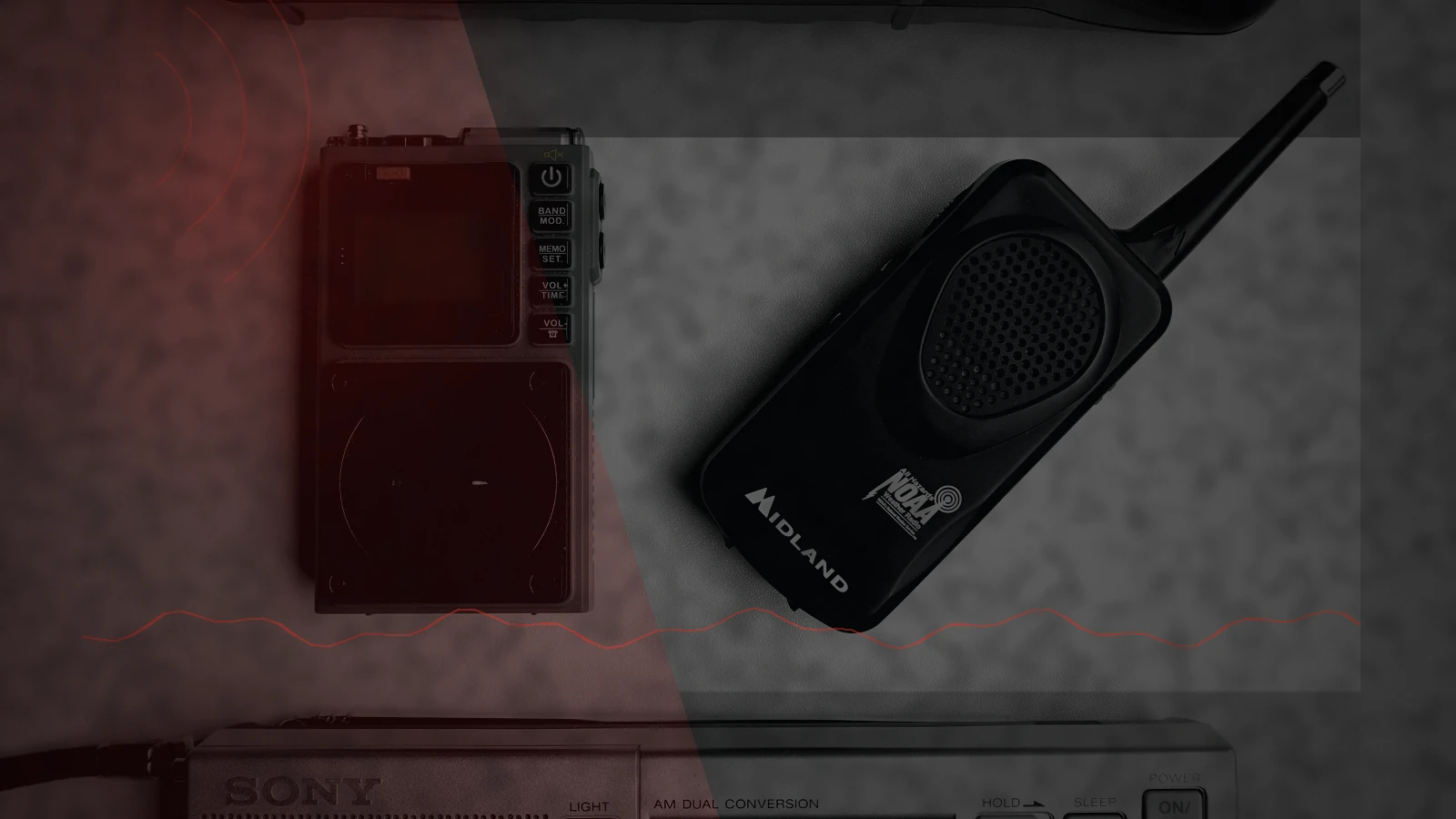
An emergency radio is useful because it receives information without needing broadband, Wi-Fi or a mobile-data session. It should be simple, tested and powered in more than one way.
THREE BROADCASTS. THREE DIFFERENT ORDERS.
One station says stay indoors. A social account says evacuate immediately. A cloned voice that sounds like the Prime Minister claims the first broadcast is an AI fake.
The emergency radio matters because information redundancy matters. In an AI deception crisis, the goal is not receiving more messages. It is having enough independent channels to decide which message deserves action.
Scenario: this is a deliberately extreme “what if?” exercise, not a claim that these events are happening or certain to happen.
Buy reception and reliability before gimmicks
Choose a radio that can receive the broadcasts relevant to your area and that you can operate in the dark without a manual. Battery operation is the baseline. A wind-up or solar option can add resilience, but neither should be treated as magic: hand cranking produces limited energy and small solar panels are slow. Prioritise clear reception, simple controls, replaceable batteries where possible and a speaker loud enough for the household to hear.
Keep batteries with the radio, not somewhere else
Store a labelled set of compatible batteries next to the radio and rotate them periodically. If the radio has an internal rechargeable battery, test how long it lasts in real use. Do not discover during a blackout that the charging cable is proprietary, missing or dependent on a mains adapter. A modest radio with known batteries is more useful than an impressive multi-function device that has never been tested.
Know where you will listen before an emergency
Reception varies by room, building materials and terrain. Test the radio in the places you are most likely to shelter and identify a window or upper-floor position that improves signal. Save or write down useful local and national stations. During a real incident, repeated scanning wastes power and time. A prepared listening plan should tell you what to try first and what to try if that signal is unavailable.
Use the radio in scheduled bursts
Leave continuous monitoring to a low-power device only if the situation demands it. Otherwise, listen at agreed intervals, note the time and source of important information, and turn the radio off again. Written notes stop rumours mutating as they pass between people. They also give you a record of the last confirmed instruction if broadcasts become intermittent.
Do not confuse a radio with two-way communication
Most emergency radios are receivers. They help you hear public information but do not let you contact family or emergency services. Treat them as one part of a wider plan that includes phones, paper contacts, meeting points and, where appropriate and legal, properly licensed two-way radio options. Avoid buying equipment based on marketing claims that imply universal range or guaranteed contact.
Test it twice a year
Put the radio into use on a normal day: tune it, run it on batteries, wind it if applicable, and confirm everyone can operate it. Replace degraded batteries and update the written station list. Ten minutes of testing turns the radio from a cupboard object into an actual resilience tool.
Build a radio information routine before the crisis
Create a short card that lives with the radio. List the controls, battery type, preferred stations, backup stations and the times you plan to listen during an outage. Add the location in the house where reception is strongest. If the radio also contains a torch, USB output or alarm, test those functions separately so one broken feature does not make you distrust the whole device. Keep the radio accessible rather than buried in a loft or storage box behind other emergency gear. During a long outage, the household should know who listens, who writes down updates and who communicates verified information to others. That turns a radio from a gadget into a small information system. The real advantage is not just receiving a broadcast; it is receiving it in a repeatable way that preserves power, reduces confusion and helps the household distinguish confirmed updates from speculation.
Know the stations before the outage
Write down the local and national stations you would try for news and emergency information. If the radio supports presets, program them while normal service is available and show another household member how to use them.
A short station list saves battery and frustration compared with scanning blindly during a blackout.
Test reception in the room you would actually use
Walls, building materials and location can affect signal strength. Try the radio in the likely warm room, kitchen or other emergency living space and note where reception is best.
If moving near a window or extending the antenna makes a large difference, record that rather than rediscovering it during every outage.
Listen on a schedule
Continuous listening can waste batteries and expose the household to repeated speculation. Check at regular intervals unless an active warning means you need closer monitoring.
This keeps the radio useful for longer and makes official updates easier to distinguish from filler discussion between them.
Keep power options redundant
If the radio supports batteries, USB charging or another approved source, know which methods are available and keep the relevant accessories together. A rechargeable radio is useful, but standard replaceable batteries can provide another layer when charging opportunities disappear.
Check battery condition during routine household reviews rather than assuming old spares are still good.
Use the radio as a verification tool
During a major disruption, radio can provide an independent route to compare with social media or messaging claims. If a dramatic local rumour is absent from recognised broadcasters and official channels, that does not prove it is false, but it is a reason to keep it unconfirmed until stronger evidence appears.
The value of radio is not nostalgia; it is independence from the same internet connection that may be failing or manipulated.
Continue from here
Build this topic into a wider plan, then see how the same dependency could fail in an AI-collapse scenario.
Evidence desk
The practical communications advice on this page uses current UK emergency-preparedness and telecoms-resilience guidance. AI-triggered nationwide communications collapse is scenario analysis, not a claim that such an event is happening or inevitable.
Practical guidance reviewed: August 2026 · In a real emergency, follow official local instructions and emergency services.