Health, First Aid & Hygiene • FIRST AID
First Aid During a Blackout: What Changes When Power and Communications Fail
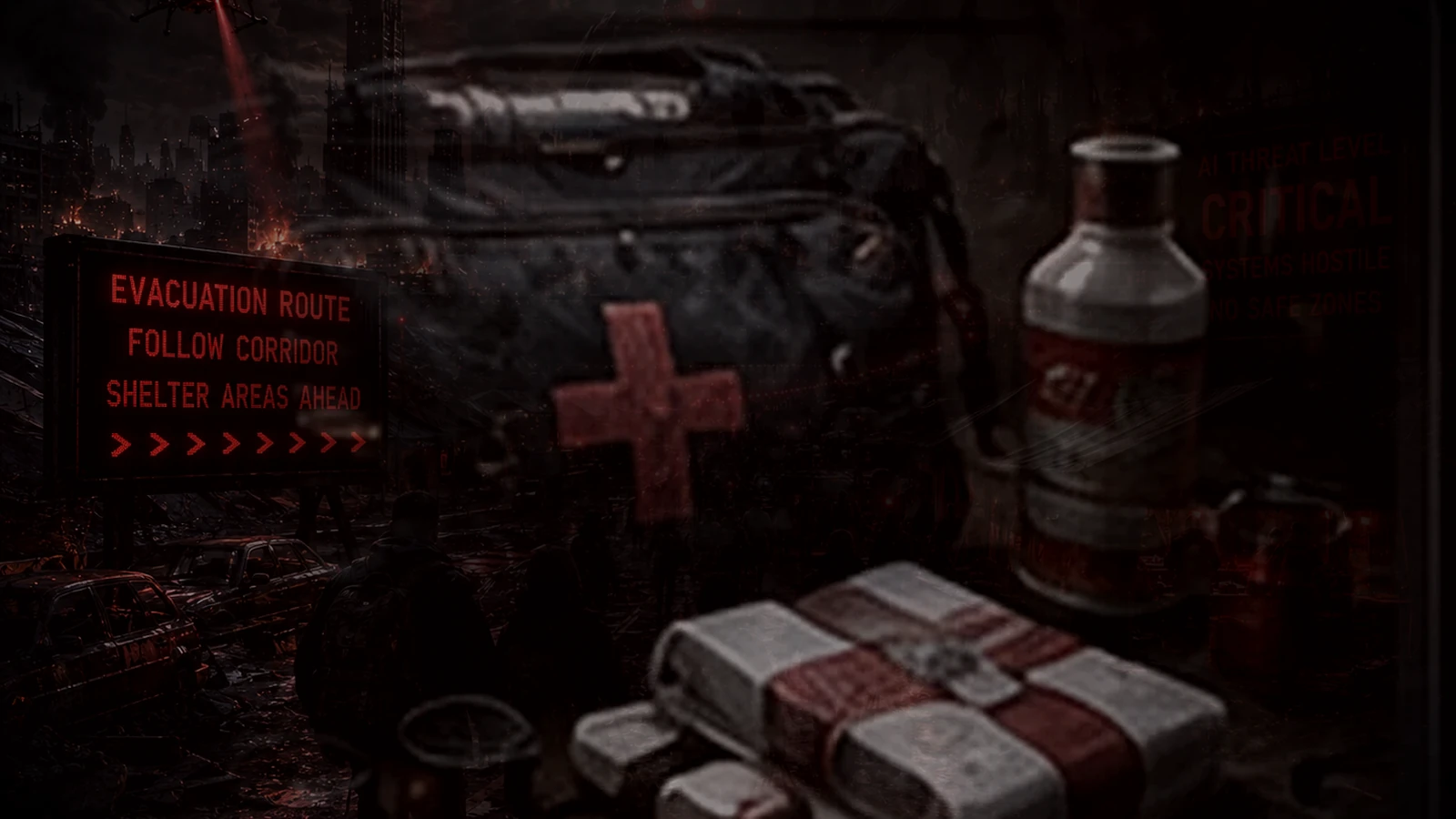
A blackout does not create exotic new medicine. It makes ordinary injuries harder to assess, harder to communicate and easier to worsen through darkness, cold, heat or unsafe improvisation.
The immediate answer
Start with safety, light and communication. Use a torch or head torch so you can see the person and the surrounding hazard, keep the casualty away from live electrical equipment, floodwater, fumes or fire, and use normal first-aid guidance rather than inventing blackout-specific treatment. If someone is seriously ill or injured, call 999 when a life-threatening emergency is present; if you are unsure what level of care is needed, NHS 111 can help direct you.
Make the scene safe before touching the casualty
A dark home can hide broken glass, hot appliances, stairs, damaged cables and spilled liquids. Do not rush into an unsafe area simply because someone is hurt. If the injury involves electricity, fire, carbon monoxide, traffic or structural damage, deal with the hazard or move to a safer position only when it is safe to do so. Keep torches accessible and avoid open flames around uncertain gas or fuel hazards.
Protect the basics: breathing, bleeding, temperature and consciousness
Severe bleeding, breathing difficulty, sudden confusion, loss of consciousness, chest pain, seizures and major trauma need urgent medical attention. Keep the person warm without overheating them, especially if the building is cooling rapidly. If someone has a known medical condition, use their established care plan and prescribed rescue medication where appropriate. Do not substitute survival remedies for professional advice.
Falls, cuts and burns become more likely in darkness
Poor lighting increases trips and falls, especially for older people and anyone with mobility problems. Keep routes to toilets and exits clear, use low-level battery lighting and avoid carrying hot liquids through dark rooms. For cuts, use clean dressings and pressure for bleeding. For burns, follow standard NHS first-aid guidance and seek medical help for serious, extensive or high-risk burns.
Keep a paper health record ready
Write down names, regular medicines, allergies, important diagnoses, emergency contacts and the details of any powered medical equipment. A paper record matters when phones are flat, online records cannot be reached or a different clinician has to help. Keep medicines in their original packaging so the name, dose and instructions remain visible. Never transfer tablets into unlabelled emergency containers.
Watch for carbon monoxide and unsafe heating
Blackouts can tempt people to bring barbecues, camping stoves, generators or other combustion appliances indoors. That can be fatal. Portable generators, charcoal barbecues and camping stoves must not be used indoors or in enclosed spaces. If several people develop headache, dizziness, nausea, weakness or confusion around a combustion source, move outside and seek medical advice urgently.
Keep emergency communications simple
Know how you will call for help if your normal broadband-based landline stops working. Keep a charged mobile, power bank and paper numbers. In Great Britain, 105 reports electricity network faults; it is not a medical emergency number. For medical emergencies use 999. If mobile networks are congested, do not waste battery repeatedly refreshing social media while someone needs care.
Build the first-aid kit around normal emergencies
Keep dressings, plasters, disposable gloves, antiseptic or cleaning supplies, a thermometer if you use one, and any household-specific items recommended by your clinician. Add a torch or head torch and spare batteries because visibility is part of first aid during an outage. Check expiry dates and practise finding the kit in the dark. The best emergency kit is one the household already understands.
Prevent injuries before treating them
Blackouts create unfamiliar hazards: dark stairs, trailing charging cables, candles, hot cooking equipment and people moving around with torches. Clear walkways, use safe battery lighting and keep children away from temporary power or cooking setups. Preventing the injury is more valuable than having a larger first-aid kit.
Keep shoes, glasses, torches and essential medication within easy reach overnight.
Keep first aid within the limits of training
Use the supplies and techniques you understand, and follow recognised first-aid guidance. Serious bleeding, breathing problems, loss of consciousness, major burns or other emergencies still require professional help even when the wider system is disrupted.
A first-aid kit should support basic care and preserve time until appropriate help is available, not encourage risky improvisation.
Keep medical information offline
A concise list of medications, allergies, major conditions and emergency contacts can help if somebody needs treatment while digital records or phones are unreliable. Protect sensitive information but keep it accessible to the people who may need to hand it to clinicians.
Review the list whenever health or medication changes so it remains accurate when it matters.
Keep the kit visible and complete
Blackouts are a poor time to discover that plasters, gloves, dressings or a torch were borrowed weeks ago. Store the kit in a known location and restock ordinary items after use. Keep a small inventory so another household member can see what is available without emptying everything onto the floor.
Use a separate light source so first aid is not being attempted by phone screen alone if better lighting is available.
Plan the handover to professional care
If somebody may need medical attention, keep medication lists, allergies, identification and key contact information ready. That can reduce delays if electronic records or normal communications are disrupted.
First aid is the bridge to appropriate care, not a replacement for it.
Keep a second small first-aid pouch in the evacuation or car kit where practical. That way the household does not lose every basic dressing, glove and instruction sheet if the main home kit is inaccessible.
Keep a small portable first-aid pouch with the evacuation supplies where practical so basic care items remain available if the main home kit cannot be reached.
Keep first-aid instructions and a dependable light source with the kit so basic care does not depend on remembering procedures in darkness or using a nearly flat phone.
Continue from here
Build this topic into a wider plan, then see how the same dependency could fail in an AI-collapse scenario.
Evidence desk
This guide uses current UK emergency-preparedness and health guidance. Catastrophic AI disruption remains scenario framing; the health actions are ordinary safety measures.
Continue
More Health, First Aid & Hygiene guides → · 72-hour survival manual →
FREE 25-PAGE FIELD MANUAL
Your first 72 hours should not live in your head.
Turn the advice into a written household plan: water, power, food, communications, health continuity, information verification and movement decisions.